The global
Cath Lab Services market is a rapidly expanding cornerstone of modern cardiovascular care, driven by the increasing burden of heart diseases worldwide and a decisive shift toward minimally invasive procedures. From a regulatory standpoint, the global landscape is complex and varies significantly by region. In the European Union, the
Medical Device Regulation mandates stringent conformity assessments, with recent amendments under Regulation 2024/1860 extending transition periods for legacy devices and making the EUDAMED database mandatory from May 2026. The United Kingdom, under the MHRA, has enhanced post-market surveillance and continues to recognize CE-marked devices for market access. In the United States, the FDA has introduced new
cybersecurity guidelines for medical devices, requiring the submission of software documentation for premarket approval, and is emphasizing sex-specific data in clinical evaluations. The most notable recent development is Medtronic's acquisition of CathWorks for up to USD 585 million, completed in April 2026 following a 2022 co-promotion agreement. This strategic move enhances Medtronic’s coronary physiology portfolio with CathWorks' FFRangio system, an AI-powered platform that assesses coronary artery stenosis from routine angiograms without the need for invasive pressure wires, effectively transforming cath lab diagnostics. Other major consolidations include Boston Scientific's acquisition of Penumbra, and broader industry trends where
medtech giants are aggressively pursuing complementary technologies to drive growth.
According to the research report "Global Cath Lab Services Market Outlook, 2031," published by Bonafide Research, the Global Cath Lab Services market was valued at more than USD 56.55 Billion in 2025, and expected to reach a market size of more than USD 78.91 Billion by 2031 with a CAGR of 5.86% from 2026 to 2031.The most notable recent development is Medtronic's acquisition of CathWorks for up to USD 585 million, completed in April 2026 following a 2022 co-promotion agreement. This strategic move enhances Medtronic’s coronary physiology portfolio with CathWorks' FFRangio system, an AI-powered platform that assesses coronary artery stenosis from routine angiograms without the need for invasive pressure wires, effectively transforming cath lab diagnostics. Other major consolidations include Boston Scientific's acquisition of Penumbra, and broader industry trends where medtech giants are aggressively pursuing complementary technologies to drive growth. In terms of market growth, the rising incidence of cardiovascular diseases, expanding geriatric population, and improved reimbursement policies are the key
catalysts. The cath lab supply chain is heavily dependent on specialized raw materials and components, including high-purity
copper for electrical systems, rare-earth elements for imaging detectors, and advanced polymers for
catheters and balloons. At the forefront, Luma Vision has successfully completed 15 Verafeye 4D-guided persistent atrial fibrillation ablation procedures in collaboration with Cardiofocus, demonstrating a new standard for AI-driven anatomical modeling and automatic catheter tracking, with the platform now planned for broader global commercialization in 2026.
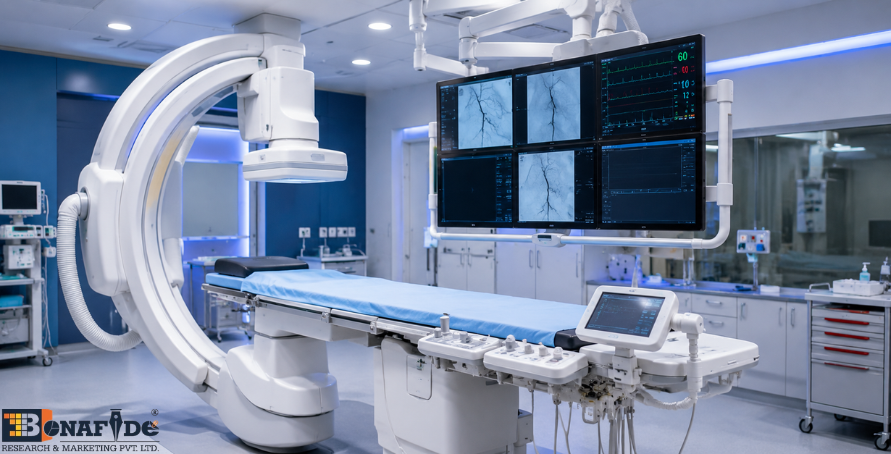
The expansion of therapeutic services within the global cath lab services ecosystem reflects a fundamental transformation in cardiovascular medicine, where catheterization laboratories are no longer used primarily for diagnosis but have become central treatment hubs for a wide range of life-threatening heart conditions. Across healthcare systems worldwide, there is a consistent rise in the prevalence of cardiovascular diseases driven by aging populations, urban lifestyles, sedentary behavior, and increasing incidence of risk factors such as hypertension, diabetes, and obesity. These conditions often progress to coronary artery disease, myocardial infarction, and structural heart disorders that require immediate and effective intervention. As a result, medical practice has increasingly shifted toward procedures that directly restore blood flow, repair heart structures, and correct electrical abnormalities using catheter-based techniques. Therapeutic interventions such as percutaneous coronary intervention, stent placement, balloon angioplasty, transcatheter valve repair and replacement, and electrophysiology ablation procedures are now widely performed in cath labs due to their ability to reduce patient trauma, shorten hospital stays, and improve recovery outcomes compared to traditional open-heart surgery. Continuous advancements in interventional cardiology technology, including high-resolution imaging systems, drug-eluting stents, intravascular
ultrasound, and robotic-assisted catheter navigation, have significantly expanded the complexity and success rates of therapeutic procedures.
The dominance of hospitals in the global cath lab services market is closely linked to their central role in delivering both emergency and planned cardiovascular care within a fully integrated clinical environment. Cardiovascular diseases often present as acute, life-threatening events such as myocardial infarction, unstable angina, and sudden cardiac complications, which require immediate diagnosis and intervention. Hospitals are uniquely positioned to manage these conditions due to the availability of round-the-clock emergency departments, intensive care units, and specialized cardiac catheterization laboratories, ensuring rapid transition from diagnosis to treatment. This integrated setup is essential for time-sensitive procedures like primary percutaneous coronary intervention, where delays can significantly impact patient survival and recovery outcomes. In addition, hospitals serve as referral hubs for complex cardiac cases from smaller healthcare facilities, leading to a consistently high volume of cath lab procedures. The presence of multidisciplinary heart teams, including interventional cardiologists, cardiac surgeons, anesthesiologists, and radiologists, allows hospitals to manage a wide spectrum of cardiovascular conditions, from routine diagnostic angiography to complex structural heart interventions. Continuous investment in hospital infrastructure across developed and emerging healthcare systems has led to widespread adoption of advanced cath lab technologies such as high-resolution
fluoroscopy systems, intravascular imaging tools, and robotic-assisted intervention platforms.
The expansion of structural heart interventions in the global cath lab services landscape is driven by a significant transformation in the treatment of complex cardiac conditions that previously required open-heart surgery. Across healthcare systems worldwide, there is an increasing prevalence of degenerative valve diseases such as aortic stenosis and mitral regurgitation, particularly in aging populations, which has created a growing need for effective yet less invasive treatment options. Structural heart procedures, including transcatheter aortic valve implantation, transcatheter mitral valve repair, left atrial appendage closure, and closure of septal defects, are increasingly performed in cath labs because they offer clinically effective outcomes with reduced procedural risk, shorter recovery times, and lower hospital burden compared to traditional surgical approaches. Continuous advancements in medical device technology have played a crucial role in enabling this shift, with improvements in catheter delivery systems, bioprosthetic valve design, and real-time imaging guidance significantly enhancing procedural safety and precision. At the same time, the expansion of clinical evidence supporting the effectiveness of transcatheter techniques has led to broader guideline recommendations, allowing more patient groups, including those at intermediate and even lowers surgical risk, to become eligible for structural interventions.





 We are friendly and approachable, give us a call.