The global
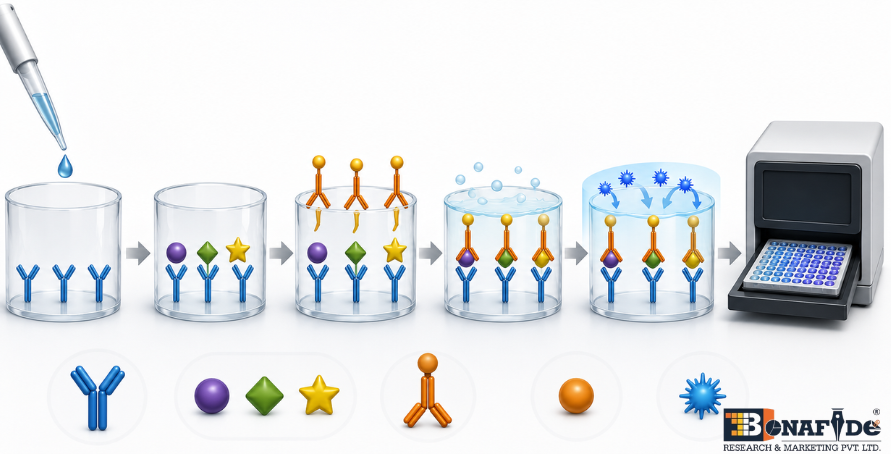
immunoassays market comprises analytical tests and related instruments that use highly specific antigen-antibody interactions to detect and quantify a wide range of biological molecules, including hormones, proteins, infectious disease markers, tumor
biomarkers, therapeutic drugs, and cardiac biomarkers. Immunoassays are widely used in clinical diagnostics, pharmaceutical and biotechnology research,
food safety testing,
environmental monitoring, and veterinary diagnostics because they provide high sensitivity, specificity, and rapid turnaround times. The market is experiencing sustained growth due to the increasing global prevalence of chronic diseases such as cancer, diabetes, cardiovascular disorders, and autoimmune diseases, along with the continued burden of infectious diseases that require accurate and timely diagnosis. Rising demand for early disease detection, personalized medicine, and companion diagnostics has further accelerated the adoption of advanced immunoassay technologies, including chemiluminescent immunoassays (CLIA), enzyme-linked immunosorbent assays (ELISA), fluorescence immunoassays (FIA), and multiplex immunoassays. Continuous automation of clinical laboratories, integration of
artificial intelligence into laboratory workflows, and the expansion of high-throughput diagnostic platforms are improving testing efficiency and laboratory productivity worldwide. Growth is also supported by expanding healthcare infrastructure in emerging economies, increasing investments in life sciences research, and the growing production of
biologics and biosimilars that require immunoassay-based quality control. Regulatory agencies such as the U.S. Food and Drug Administration (FDA), the European Medicines Agency (EMA), and standards organizations including the Clinical and Laboratory Standards Institute (CLSI) play a significant role in establishing quality, validation, and performance requirements for immunoassay products. Industry associations such as the American Association for Clinical Chemistry (AACC) now known as the Association for Diagnostics & Laboratory Medicine (ADLM) and the International Federation of Clinical Chemistry and Laboratory Medicine (IFCC) actively promote laboratory best practices, scientific collaboration, and technological innovation.
According to the research report "Global Immunoassays Market Outlook, 2031," published by Bonafide Research, the Global Immunoassays Market was valued at more than USD 35.66 Billion in 2025, and expected to reach a market size of more than USD 49.63 Billion by 2031 with the CAGR of 5.81% from 2026-2031. The global immunoassays market is characterized by continuous innovation, strong recurring reagent demand, and a highly consolidated competitive landscape led by Abbott Laboratories, F. Hoffmann-La Roche, Siemens Healthineers, Danaher Corporation (through Beckman Coulter), Thermo Fisher Scientific, bioM?rieux, BD (Becton, Dickinson and Company), Sysmex, and QuidelOrtho. These companies compete by expanding assay menus, launching automated analyzers, enhancing laboratory automation, and strengthening
digital connectivity for diagnostic workflows. Recent developments underscore the market's technological momentum. In 2025, Roche received U.S. FDA clearance for its Tina-quant Lipoprotein(a) Gen.2 Molarity assay, while Beckman Coulter introduced new blood-based biomarker assays for Alzheimer's disease research. bioM?rieux also completed the acquisition of SpinChip Diagnostics, adding a rapid whole-blood immunoassay platform for acute-care testing, and Thermo Fisher Scientific expanded its
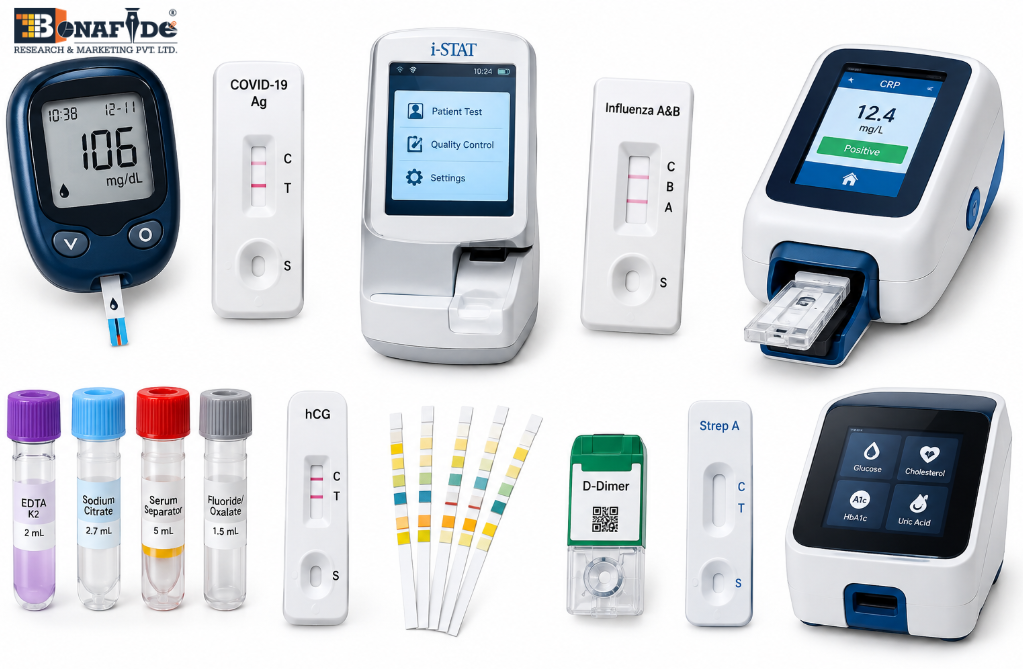
proteomics capabilities through the acquisition of Olink Holding AB, strengthening high-plex biomarker analysis offerings. The market presents significant opportunities in companion diagnostics, multiplex immunoassays, point-of-care testing,
oncology biomarker detection, infectious disease surveillance, and personalized medicine. Emerging economies across Asia-Pacific, Latin America, and the Middle East are creating additional demand through healthcare infrastructure expansion and increased laboratory automation. The immunoassay supply chain begins with raw materials such as monoclonal antibodies, recombinant antigens,
enzymes, chemiluminescent substrates, magnetic beads, plastics, and precision optical components sourced from specialized biotechnology and chemical suppliers. These materials are integrated into reagent kits and automated analyzers by manufacturers before distribution through regional distributors, direct sales teams, hospital procurement networks, and independent diagnostic laboratories. A defining feature of the market is its reagent-rental business model, where analyzers are often placed at low upfront cost while manufacturers generate recurring revenue from reagents, calibrators, quality-control materials, consumables, software, and maintenance contracts.
Multiplex immunoassays have become increasingly important because modern clinical practice and biomedical research rely on comprehensive biomarker profiling rather than evaluating a single analyte in isolation. Diseases such as cancer, autoimmune disorders, neurodegenerative conditions, and infectious diseases involve multiple biological pathways, making multi-analyte testing more clinically valuable than conventional single-target assays. Multiplex platforms can simultaneously detect
cytokines, chemokines, hormones, antibodies, and disease-specific proteins using one small sample, reducing specimen collection requirements and minimizing laboratory processing steps. This capability is particularly beneficial for pediatric patients, critically ill individuals, and research studies where sample availability is limited. Pharmaceutical companies also depend on multiplex immunoassays during biomarker discovery,
clinical trials, vaccine evaluation, and immune-response monitoring because they generate broader biological insights within shorter analytical timelines. Advances in bead-based assays, microarray technologies, and digital detection systems have significantly improved analytical sensitivity, reproducibility, and throughput, allowing laboratories to process large sample volumes while maintaining high-quality results.
Precision medicine initiatives increasingly require panels of biomarkers instead of isolated measurements, further expanding the role of multiplex technologies in patient stratification and therapeutic monitoring. Academic research institutions and translational medicine centers are also adopting multiplex assays to investigate disease mechanisms, inflammatory pathways, and treatment responses across large patient cohorts. Integration with laboratory automation and sophisticated data analysis software has simplified workflow management while reducing manual errors.
Cancer management increasingly depends on laboratory biomarkers that provide clinicians with actionable information throughout the patient's treatment journey. Immunoassays are widely used to measure tumor-associated biomarkers such as prostate-specific antigen (PSA), cancer antigen 125 (CA-125), carcinoembryonic antigen (CEA), alpha-fetoprotein (AFP), CA 19-9, and several other proteins that support diagnosis, prognosis, and treatment monitoring. Although imaging and molecular diagnostics remain critical, immunoassays offer rapid, standardized, and cost-effective biomarker quantification that complements other diagnostic techniques. Advances in cancer immunotherapy have further increased demand for immune-related biomarker assessment, including cytokines, immune checkpoint proteins, and inflammatory markers that help evaluate treatment response and immune activation. Pharmaceutical companies developing targeted therapies require validated immunoassays during clinical trials to identify eligible patient populations, assess pharmacodynamic responses, and monitor treatment safety. Growing adoption of companion diagnostics has strengthened the importance of biomarker-based testing in selecting appropriate therapies for individual patients. Improvements in assay sensitivity now allow earlier detection of subtle biomarker changes that may indicate disease progression or recurrence before clinical symptoms become apparent. Hospitals and cancer centers are expanding specialized oncology laboratories capable of integrating immunoassays with molecular pathology, flow cytometry, and genomic testing to provide comprehensive diagnostic information. Increasing global cancer incidence, aging populations, and expanding access to oncology services have naturally increased laboratory testing volumes. Research into
liquid biopsy biomarkers and novel protein signatures continues to create additional opportunities for immunoassay development.
Modern immunoassay laboratories depend on much more than analytical instruments and reagent kits to deliver reliable diagnostic results. Laboratories now operate multiple analyzers, robotic sample handling systems, laboratory information systems, middleware platforms, and hospital electronic medical records that must communicate efficiently with one another. Specialized software enables automated sample tracking, quality control management, calibration monitoring, instrument performance analysis, result verification, and regulatory documentation while reducing manual intervention. Artificial intelligence and advanced analytics are also being incorporated into laboratory software to identify instrument trends, predict maintenance requirements, optimize workflow scheduling, and flag potential analytical inconsistencies before they affect patient results. Service offerings have expanded beyond routine maintenance to include remote diagnostics,
cybersecurity support, software updates, cloud connectivity, operator training, validation assistance, and workflow consulting. Many manufacturers now provide continuous service contracts that ensure analyzer uptime, rapid troubleshooting, and compliance with laboratory accreditation requirements such as ISO 15189 and other quality management standards. The growing complexity of immunoassay menus and laboratory automation systems has increased demand for vendor expertise throughout the instrument lifecycle. Pharmaceutical companies, clinical laboratories, and reference laboratories also require software capable of managing large biomarker datasets generated during research studies and clinical trials while maintaining complete audit trails. Cloud-enabled laboratory management has facilitated centralized oversight across multi-site healthcare networks, improving operational consistency and resource utilization. Digital integration additionally supports faster reporting, reduced transcription errors, and better interoperability with hospital systems.
The rapid expansion of biologics, monoclonal antibodies, cell therapies, gene therapies,
vaccines, and
biosimilars has significantly increased the dependence of pharmaceutical and biotechnology companies on advanced immunoassay technologies. Drug developers routinely use immunoassays during every stage of product development, beginning with target identification and biomarker discovery before progressing to preclinical studies, clinical trials, manufacturing validation, and post-market surveillance. Immunoassays enable accurate measurement of drug concentrations, anti-drug antibodies, cytokines, immune responses, pharmacodynamic biomarkers, and therapeutic proteins, all of which are critical for evaluating safety, efficacy, and mechanism of action. Regulatory agencies require extensive analytical validation for biologic products, making highly reproducible immunoassay methods essential for generating reliable data during regulatory submissions. Companion diagnostic development has also strengthened collaboration between pharmaceutical companies and diagnostic manufacturers, particularly for targeted oncology therapies where biomarker identification determines patient eligibility. Increasing outsourcing to contract research organizations and contract development and manufacturing organizations has expanded demand for standardized immunoassay platforms capable of supporting multicenter global studies. Advances in multiplex assays, automation, and digital laboratory systems allow researchers to generate larger datasets while improving analytical consistency across development programs. Vaccine research similarly relies on immunoassays to quantify antibody responses, neutralizing activity, and immune biomarkers throughout clinical evaluation.
Saliva has become an increasingly valuable clinical specimen because it contains numerous measurable biomarkers, including antibodies, hormones, enzymes, nucleic acids, inflammatory proteins, metabolites, and certain therapeutic drugs. Unlike blood collection, saliva sampling is painless, requires minimal training, and eliminates the risks associated with needles, making it especially suitable for pediatric patients, elderly individuals, anxious patients, and repeated longitudinal monitoring. Saliva collection can often be performed outside traditional healthcare settings, enabling decentralized testing, home-based diagnostics, workplace screening, and population health surveillance. During the COVID-19 pandemic, saliva-based diagnostic approaches demonstrated the practicality of self-collected specimens for large-scale infectious disease testing, accelerating broader interest in saliva diagnostics. Technological advances have improved assay sensitivity sufficiently to detect low-abundance biomarkers despite the naturally lower analyte concentrations found in saliva compared with serum or plasma. Saliva immunoassays are increasingly used in endocrine testing for cortisol monitoring, reproductive hormone assessment, infectious disease antibody detection, oral health evaluation, and substance abuse screening. Researchers are also investigating salivary biomarkers for early detection of neurodegenerative diseases, cardiovascular disorders, metabolic diseases, and several cancers. Standardized saliva collection devices, improved sample stabilization methods, and optimized analytical protocols have enhanced specimen reliability while reducing preanalytical variability. Integration with portable immunoassay platforms and point-of-care devices has further expanded clinical and research applications by enabling rapid testing outside centralized laboratories.





 We are friendly and approachable, give us a call.