The global clinical workflow solutions market comprises software platforms, communication tools,
workflow automation systems,
data integration solutions, clinical decision-support applications, analytics platforms, and care coordination technologies that help healthcare providers manage patient care processes more efficiently across hospitals, clinics, ambulatory centers, and other care settings. These solutions are designed to streamline clinical and administrative workflows by integrating electronic health records (EHRs), laboratory systems,
radiology platforms, patient engagement tools, and healthcare communication networks into a unified ecosystem. The market has become increasingly important as healthcare organizations face rising patient volumes, workforce shortages, clinician burnout, and growing demands for high-quality, coordinated care. Key growth drivers include the rapid adoption of
digital health technologies, expanding use of
artificial intelligence (AI) in clinical operations, increasing emphasis on interoperability, and the need to reduce documentation burdens and operational inefficiencies. Globally, healthcare providers are shifting from isolated departmental systems toward integrated enterprise-wide platforms; a recent international
healthcare IT survey found that 84% of organizations are moving toward end-to-end digital healthcare architectures, while 92% consider interoperability a top procurement priority for new healthcare technology investments. AI is also becoming a major
catalyst, with clinical workflow tools increasingly supporting documentation, imaging triage, scheduling,
predictive analytics, and operational optimization. Industry organizations and standards bodies such as the Healthcare Information and Management Systems Society (HIMSS), Health Level Seven International (HL7), and initiatives promoting FHIR-based interoperability play a significant role in advancing workflow standardization and data exchange across healthcare systems. The market's core activities include patient scheduling, care coordination, clinical documentation, secure messaging, workflow orchestration, real-time decision support, resource management, and analytics-driven performance monitoring.
According to the research report "Global Clinical Workflow Solutions Market Outlook, 2031," published by Bonafide Research, the Global Clinical Workflow Solutions Market was valued at more than USD 16.14 Billion in 2025, and expected to reach a market size of more than USD 31.66 Billion by 2031 with the CAGR of 12.19% from 2026-2031. The global clinical workflow solutions market encompasses software, communication platforms, workflow automation tools, clinical decision-support systems, patient flow management applications, care collaboration solutions, and data integration technologies that help healthcare organizations coordinate, manage, and optimize clinical operations. These solutions form a critical layer between electronic health records (EHRs), laboratory systems, imaging platforms, pharmacies, clinicians, and patients, enabling faster decision-making, reduced administrative burden, and improved care delivery. The market is being driven by increasing healthcare digitization, rising chronic disease prevalence, clinician shortages, growing patient volumes, interoperability requirements, and the need to reduce medical errors and operational costs. Hospitals worldwide are increasingly adopting integrated platforms rather than standalone systems, while interoperability and FHIR-based data exchange have become key purchasing priorities for healthcare providers. The value chain of the market begins with infrastructure providers (cloud, networking, and data storage), followed by software developers, system integrators, interoperability vendors, healthcare providers, and end users such as physicians, nurses, administrators, and patients. Major companies operating across this value chain include Epic Systems, Oracle Health, Philips Healthcare, Veradigm, McKesson Corporation, Cisco Systems, Stryker Vocera, and athenahealth. Significant opportunities exist in AI-powered clinical documentation, predictive analytics, virtual care integration, workflow orchestration, cloud migration, and cross-platform interoperability. Recent developments include expanded investments by Epic in ambient clinical documentation and AI-enabled productivity tools, Oracle Health's integration of workflow platforms with cloud infrastructure, and strategic collaborations such as the partnership between Wipro GE Healthcare and AIIMS to develop intelligent clinical workflow systems. Industry activity is increasingly focused on secure clinical communications, patient flow optimization, real-time care coordination, analytics-driven decision support, and enterprise-wide workflow automation.
Healthcare organizations across the world are facing a growing imbalance between patient demand and available clinical resources, making workflow automation an essential operational requirement rather than a technology upgrade. Hospitals and healthcare networks manage thousands of daily tasks, including patient registration, appointment scheduling, referrals, documentation, clinical notifications, medication administration, discharge planning, and billing processes. Traditionally, many of these activities required manual intervention, creating delays, duplication of work, communication gaps, and increased risk of human error. Workflow automation solutions address these challenges by automatically routing information, generating alerts, assigning tasks, coordinating care activities, and integrating data across multiple healthcare systems. The growing adoption of electronic health records has further increased the volume of clinical data that healthcare professionals must process, making automated workflows necessary to ensure information reaches the right clinician at the right time. Automation also helps reduce clinician burnout by minimizing repetitive documentation and administrative activities that consume significant portions of healthcare workers’ schedules. Another important factor driving adoption is the increasing complexity of care delivery, particularly for patients with chronic diseases who require coordinated treatment across multiple departments and specialists. Automated workflows support seamless communication among care teams and improve compliance with clinical protocols. Regulatory requirements related to patient safety, quality reporting, and documentation accuracy have also encouraged healthcare organizations to implement standardized automated processes.
The healthcare industry is generating unprecedented volumes of clinical, administrative, imaging, laboratory, and patient-generated data, creating a need for infrastructure that can support rapid data access and system connectivity across multiple care settings. Cloud-based clinical workflow solutions have emerged as the preferred deployment model because they provide flexibility, centralized data management, and easier integration with healthcare applications. Unlike traditional on-premise systems, cloud platforms allow healthcare organizations to access workflow tools from multiple locations, which is particularly valuable for large health systems operating across hospitals, clinics, ambulatory centers, and remote care environments. The expansion of
telehealth, virtual consultations, remote monitoring, and mobile healthcare applications has further increased the importance of cloud-enabled accessibility. Cloud deployment also simplifies software maintenance, security updates, and feature enhancements, allowing healthcare providers to benefit from technological improvements without significant disruption to operations. Another key driver is interoperability, as cloud environments facilitate data exchange between electronic health records, laboratory systems, imaging platforms, pharmacy applications, and third-party healthcare technologies. This capability supports coordinated patient care and improves information availability across the continuum of care. In addition, cloud infrastructure offers greater scalability, allowing healthcare organizations to adapt quickly to fluctuations in patient volumes and service demands. Major healthcare technology vendors increasingly design new workflow solutions using cloud-native architectures, accelerating adoption among providers seeking modern digital ecosystems.
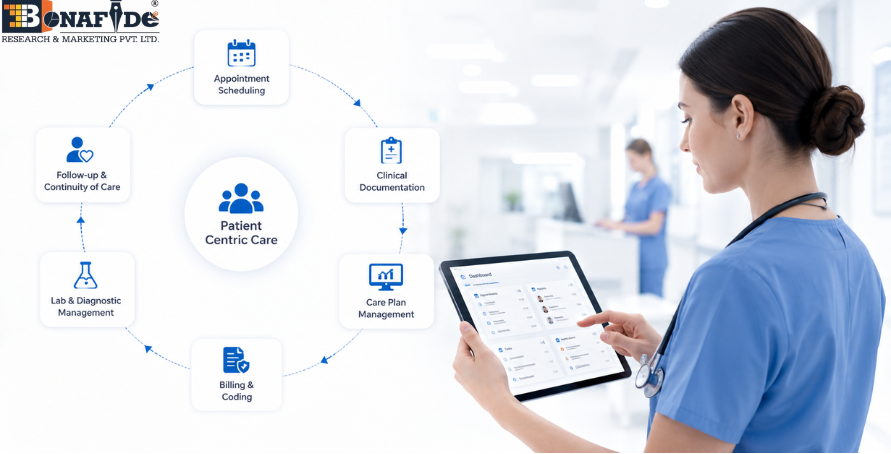
The global healthcare landscape is undergoing a significant transition toward outpatient care delivery, driven by advances in medical technology, minimally invasive procedures, improved treatment protocols, and efforts to reduce healthcare expenditures. Many services that previously required inpatient hospitalization can now be performed safely and effectively within ambulatory care environments, creating increased demand for sophisticated workflow management capabilities. Ambulatory care centers typically operate with lean staffing structures and high patient throughput requirements, making operational efficiency critical to maintaining quality care and financial sustainability. Clinical workflow solutions help these facilities manage scheduling, patient intake, clinical documentation, referrals, billing processes, provider communications, and follow-up care activities within a streamlined digital environment. The need to coordinate large numbers of patient visits within limited timeframes has made automation and workflow optimization particularly valuable in outpatient settings. Additionally, ambulatory centers frequently interact with hospitals, primary care physicians, diagnostic laboratories, imaging facilities, and specialty providers, creating a strong need for interoperable systems that support seamless information exchange. The rising prevalence of chronic diseases has further increased outpatient monitoring and treatment activities, requiring efficient care coordination tools that enable continuity of care across multiple touchpoints. Regulatory requirements related to documentation accuracy, patient safety, and quality reporting also encourage the adoption of structured workflow technologies. Many ambulatory organizations are embracing cloud-based and mobile-enabled solutions that allow clinicians to access patient information and manage workflows from various locations.





 We are friendly and approachable, give us a call.