The global
veterinary reference Laboratory market is witnessing significant transformation as
animal healthcare systems worldwide place greater emphasis on diagnostic accuracy, preventive health management, research collaboration, and integrated laboratory services. These Laboratory operate as centralized diagnostic facilities equipped to perform comprehensive analytical procedures that require specialized expertise, controlled environments, and stringent quality protocols. Their services extend across diagnostic pathology, microbiological analysis, clinical investigations, biological testing, and research-oriented evaluations, supporting a wide range of veterinary applications. Unlike conventional veterinary Laboratory that primarily focus on routine testing, reference Laboratory are structured around advanced analytical capabilities, scientific interpretation, and large-scale testing operations. The establishment of a reference laboratory requires significant investment in specialized equipment, laboratory infrastructure, biosafety systems, skilled technical personnel, and quality management processes.
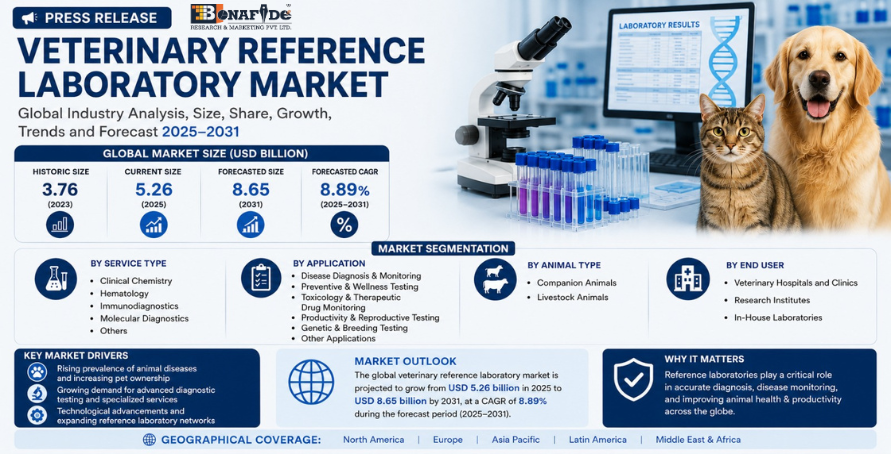
According to the research report, “Global Veterinary Reference Laboratory Market Overview, 2031” published by Bonafide Research, the Global Veterinary Reference Laboratory market is expected to cross USD 8.65 Billion market size by 2031, with 8.89% CAGR by 2026-31..Depending on testing capacity and operational scope, the development of advanced veterinary diagnostic facilities may involve investments ranging from US$2 million to more than US$15 million, particularly for Laboratory incorporating high-throughput analytical systems and specialized research capabilities. Leading veterinary reference Laboratory operate through centralized and regional networks, allowing standardized testing procedures, consistent reporting practices, and broader accessibility for veterinary professionals and animal health organizations. Regulatory compliance, accreditation standards, and laboratory validation procedures remain fundamental elements of operations, particularly for facilities involved in disease confirmation, research studies, and official animal health programs. The industry continues to develop as veterinary healthcare systems require more reliable scientific support for complex diagnostic requirements, research activities, and evidence-based animal health management.
The veterinary reference laboratory industry functions through a coordinated ecosystem comprising commercial diagnostic providers, government Laboratory, veterinary universities, research organizations, pharmaceutical companies, and specialized animal healthcare institutions. The operating model of these Laboratory depends on efficient sample handling, analytical expertise, scientific validation, and accurate reporting systems that connect laboratory findings with practical veterinary applications. Large diagnostic organizations have established extensive laboratory networks supported by centralized facilities, regional testing centers, specialized departments, and dedicated scientific teams capable of managing diverse testing requirements.
In recent years, veterinary Laboratory have expanded their collaboration with biotechnology firms and research institutions, particularly in areas involving animal health studies, pharmaceutical evaluation, and diagnostic method development. The growing complexity of laboratory operations has increased the importance of standardized workflows, data security practices, and comprehensive quality management systems. As veterinary healthcare becomes more scientifically driven, reference Laboratory are establishing themselves as essential knowledge centers that provide analytical expertise, research support, and diagnostic reliability across the broader animal healthcare ecosystem.
Clinical Chemistry Maintains Market Leadership Through High Testing Frequency and Broad Veterinary Diagnostic Applications
Clinical chemistry remains the largest segment within the global veterinary reference laboratory market due to its extensive application across routine health evaluations, disease diagnosis, treatment monitoring, and preventive veterinary care for companion animals and livestock species. Unlike specialized diagnostic categories that are performed only for specific medical conditions, clinical chemistry testing represents a core diagnostic procedure used across veterinary hospitals, clinics, reference Laboratory, and animal health management programs.
These tests provide essential insights into biochemical parameters associated with liver function, kidney performance, glucose metabolism, electrolyte balance, protein levels, and metabolic disorders, enabling veterinarians to evaluate overall animal health conditions. In
companion animal healthcare, clinical chemistry panels are routinely conducted for wellness examinations, geriatric screening, pre-operative assessments, and chronic disease management for conditions including renal disorders, diabetes, and liver abnormalities. Within livestock operations, biochemical analysis supports herd health evaluation, nutritional assessment, reproductive management, and disease investigation across cattle,
poultry, and swine populations.
The segment benefits from established laboratory workflows, high sample volumes, and widespread availability of automated diagnostic platforms. Veterinary diagnostic companies such as IDEXX Laboratory, Zoetis, Antech Diagnostics, and Heska have developed advanced chemistry analyzers integrated into reference Laboratory and veterinary practices worldwide. The compatibility of clinical chemistry testing with both centralized laboratory networks and in-house diagnostic systems has strengthened its adoption across developed and emerging veterinary markets. Its routine clinical importance, broad animal coverage, and integration into standard veterinary examination protocols continue making clinical chemistry the dominant diagnostic segment globally.
Genetic & Breeding Testing Emerges as the Fastest-Growing Segment with Advancements in Veterinary Genomics
Genetic and breeding testing is emerging as the fastest-growing segment within the global veterinary reference laboratory market as genomic technologies become increasingly integrated into animal health management, breeding programs, and disease prevention strategies. Unlike conventional diagnostic methods that identify existing health conditions,
genetic testing enables predictive analysis by identifying inherited disorders, genetic traits, breed characteristics, and reproductive potential.
In companion animal healthcare, DNA-based testing is increasingly utilized for hereditary disease screening, breed identification, and responsible breeding practices. Pet owners and breeders are adopting genetic analysis to understand inherited health risks and make informed decisions regarding animal selection and healthcare planning. In livestock production, genomic testing supports precision breeding programs by identifying animals with desirable characteristics such as improved productivity, disease resistance, fertility, and adaptability.
The advancement of
next-generation sequencing, molecular diagnostics, and
bioinformatics platforms has significantly improved the accessibility of veterinary genetic testing. Companies including Zoetis, Neogen, and Thermo Fisher Scientific have developed specialized genomic solutions for cattle, equine, canine, and other animal species. Agricultural economies across North America, Europe, Australia, and South America are increasingly incorporating genomic information into breeding strategies to improve animal quality and production efficiency.
Companion Animals Lead Veterinary Reference Laboratory Demand Through Advanced Pet Healthcare Adoption
The companion animals segment represents the largest and fastest-growing application category within the global veterinary reference laboratory market, supported by increasing veterinary healthcare utilization, rising
pet care expenditure, and growing adoption of advanced diagnostic services for dogs and cats. The changing perception of pets as family members has significantly influenced veterinary healthcare practices, with owners increasingly seeking preventive examinations, early disease detection, and specialized medical treatments.
Veterinary reference Laboratory provide extensive diagnostic support for companion animals through clinical chemistry, hematology, infectious disease testing,
oncology diagnostics, pathology services, allergy analysis, endocrine testing, and genetic screening. Routine laboratory evaluations have become an important component of preventive veterinary care, particularly among aging pets requiring continuous monitoring for chronic conditions such as kidney disease, diabetes, cardiovascular disorders, and cancer.
North America and Europe represent major companion animal diagnostic markets due to established veterinary healthcare infrastructure, high pet ownership rates, and greater spending on animal medical services. Meanwhile, urban markets across Asia-Pacific are adopting advanced veterinary diagnostics as companion animal ownership expands. Leading companies including IDEXX Laboratory, Antech Diagnostics, Mars Veterinary Health, and Zoetis have established specialized laboratory networks supporting companion animal healthcare providers.
The expansion of specialty veterinary hospitals, advanced treatment facilities, and personalized veterinary medicine is further strengthening diagnostic requirements in this segment. Increasing use of molecular testing, genetic analysis, and specialized pathology services is transforming companion
animal diagnostics from basic disease identification toward comprehensive healthcare management, positioning this segment as the leading application area in the veterinary reference laboratory market.
In-House Laboratory Expand Rapidly Through Faster Veterinary Diagnostics and Decentralized Testing Models
The in-house Laboratory segment represents the fastest-growing end-user category within the global veterinary reference laboratory market as veterinary clinics and hospitals increasingly adopt internal diagnostic capabilities to improve operational efficiency and accelerate clinical decision-making. The growing preference for immediate test availability has encouraged veterinary practices to integrate compact diagnostic systems capable of performing essential laboratory procedures within their own facilities.
In-house laboratory solutions commonly include hematology analyzers, clinical chemistry systems,
urinalysis platforms, coagulation testing equipment, and rapid infectious disease diagnostic tools. These systems are particularly valuable in emergency care, critical patient management, surgical preparation, and routine examinations where quick access to laboratory results supports timely treatment decisions.
The expansion of corporate veterinary networks, multi-specialty animal hospitals, and technologically advanced clinics has accelerated adoption of internal laboratory systems. Veterinary practices increasingly utilize these platforms to reduce dependence on external testing facilities, improve workflow control, and enhance patient monitoring. Companies including IDEXX Laboratory, Zoetis, Heska, and FUJIFILM have developed integrated veterinary diagnostic systems combining analyzers, software platforms, and consumable solutions.
Advancements in automation, compact instrument design, and
digital connectivity have improved accessibility of in-house testing technologies for veterinary practices of different sizes. These systems enable faster reporting, improved diagnostic accuracy, and seamless integration with veterinary practice management platforms. As veterinary healthcare continues shifting toward efficient, rapid, and decentralized diagnostic models, in-house Laboratory are becoming an increasingly important component of the global veterinary reference laboratory ecosystem.
Key technological developments shaping the veterinary reference laboratory industry include:
•
Artificial intelligence-assisted diagnostics improving disease identification, image interpretation, and laboratory decision support across veterinary pathology and microbiology applications.
• Next-generation sequencing technologies enabling advanced pathogen identification, genomic surveillance, and genetic characterization of animal diseases with greater accuracy.
• Multiplex PCR platforms expanding simultaneous detection of multiple pathogens, improving testing efficiency for infectious diseases affecting livestock and companion animals.
• Automated laboratory systems enhancing sample processing capacity, reducing manual intervention, and improving consistency across high-volume veterinary diagnostic workflows.
• Digital pathology solutions supporting remote diagnosis, AI-based image analysis, and collaboration between veterinary Laboratory and specialized pathology experts.
• Laboratory information management systems (LIMS) improving sample tracking,
data integration, reporting accuracy, and connectivity between veterinary clinics and reference Laboratory.
• Point-of-care diagnostic technologies enabling faster testing within veterinary clinics through compact analyzers for hematology, clinical chemistry, and infectious disease detection.
The convergence of artificial intelligence, molecular diagnostics, automation,
genomics, and digital laboratory infrastructure is reshaping the future of veterinary reference Laboratory worldwide. Increasing collaboration between diagnostic companies, veterinary research institutions, agricultural organizations, and biotechnology firms is accelerating the development of advanced testing platforms capable of improving disease surveillance, diagnostic accuracy, and animal health management across livestock, companion animals, and wildlife applications.
As veterinary healthcare systems increasingly focus on early disease detection, preventive animal health management, food safety assurance, and precision diagnostics, technological advancement will remain a key competitive differentiator within the global veterinary reference laboratory market. Laboratory investing in automated workflows, genomic capabilities, digital connectivity, and advanced diagnostic technologies are expected to strengthen their position by delivering faster, more accurate, and data-driven veterinary testing solutions.
North America Maintains Market Leadership Through Established Veterinary Networks, High Diagnostic Adoption, and Advanced Animal Healthcare Infrastructure
North America continues to hold a leading position in the global veterinary reference laboratory market due to its mature animal healthcare ecosystem, extensive network of commercial diagnostic Laboratory, strong veterinary spending, and widespread utilization of outsourced laboratory services. The region benefits from the presence of major veterinary diagnostic companies, advanced specialty hospitals, university-affiliated Laboratory, and government-supported animal health programs that collectively strengthen diagnostic accessibility and scientific capabilities. The United States represents the largest contributor, supported by a high companion animal population, advanced livestock production systems, and organizations such as the USDA Animal and Plant Health Inspection Service (APHIS) and the National Animal Health Laboratory Network (NAHLN), which support animal health preparedness and laboratory coordination. Canada contributes through established veterinary colleges, agricultural research institutions, and structured animal health management programs. Continuous expansion of specialty veterinary practices, increasing demand for complex diagnostic interpretation, and strong collaboration between Laboratory, pharmaceutical companies, and research institutions continue reinforcing North America’s position as one of the most advanced veterinary diagnostic markets worldwide.
Europe Strengthens Veterinary Reference Laboratory Development through Regulatory Standards, Scientific Research, and Integrated Animal Health Systems
Europe represents one of the most structured veterinary reference laboratory markets, supported by comprehensive animal health regulations, strong laboratory accreditation frameworks, and extensive scientific expertise. The region benefits from coordinated veterinary systems that connect government Laboratory, academic institutions, private diagnostic providers, and agricultural organizations. Countries including Germany, France, the United Kingdom, the Netherlands, and Switzerland maintain advanced laboratory capabilities supported by established veterinary research networks and strong livestock management practices. The European Union’s Animal Health Law and coordinated disease monitoring frameworks continue shaping laboratory operations by emphasizing quality control, traceability, and standardized diagnostic procedures. Germany remains a key market due to its advanced veterinary research environment and strong animal production sector, while the United Kingdom maintains significant capabilities through institutions such as the Animal and Plant Health Agency (APHA). Increasing attention toward food safety compliance, antimicrobial resistance monitoring, and scientific collaboration is supporting continued development of veterinary reference laboratory services across the region.
Asia Pacific Emerges as a High-Growth Regional Market Driven by Expanding Animal Healthcare Infrastructure and Rising Diagnostic Demand
Asia Pacific is expected to experience strong growth in the veterinary reference laboratory market as countries accelerate investments in animal healthcare systems, livestock productivity, biotechnology research, and veterinary service accessibility. The region’s large livestock population, expanding commercial farming operations, and increasing urban pet ownership are creating broader demand for reliable laboratory support. China represents one of the largest markets due to its extensive animal production industry, biotechnology capabilities, and government initiatives focused on improving animal disease management and food safety systems. Japan maintains a technologically advanced veterinary ecosystem supported by sophisticated companion animal healthcare services, research institutions, and high-quality laboratory practices. India presents significant growth potential due to its large livestock base, expanding private veterinary sector, and increasing focus on improving animal health infrastructure through veterinary universities and government programs. Australia and South Korea also contribute through advanced agricultural systems, research capabilities, and higher adoption of specialized
veterinary services. Although market development varies considerably across countries, improving healthcare access, rising awareness of animal health management, and increasing private sector participation are expected to support regional expansion.
South America and the Middle East & Africa Create Long-Term Opportunities Through Livestock Development, Food Security Priorities, and Veterinary Healthcare Expansion
South America continues developing its veterinary reference laboratory market through its strong agricultural
foundation, export-oriented livestock industry, and increasing emphasis on animal health
certification. Brazil remains the dominant regional contributor due to its position as a leading global producer of
beef and poultry, requiring extensive laboratory support for livestock management, trade compliance, and quality assurance programs. Argentina maintains a strong position through its established cattle industry and agricultural research capabilities, while countries such as Chile and Colombia are gradually improving veterinary diagnostic access through healthcare modernization initiatives. The Middle East & Africa region represents an emerging opportunity area as governments prioritize food security, livestock productivity, and healthcare infrastructure development. Saudi Arabia is advancing veterinary services through Vision 2030 initiatives, agricultural diversification programs, and investment in modern animal healthcare facilities. The United Arab Emirates is strengthening its position through private sector expansion, biotechnology investments, and advanced veterinary care facilities. South Africa remains one of the region’s most developed markets due to its established research institutions and commercial livestock sector. Despite challenges related to affordability, geographic accessibility, and specialist availability, continued investment in veterinary capacity building and laboratory development is expected to support long-term market opportunities across these regions.
Future Outlook
Over the coming year’s global veterinary reference Laboratory market, reference Laboratory are likely to become increasingly important as veterinary practices, livestock operators, and animal health organizations seek reliable diagnostic partners capable of supporting more complex healthcare decisions. The expansion of companion animal healthcare, particularly in developed economies, is expected to create additional demand for advanced laboratory services as pet owners increasingly pursue early disease detection, chronic condition monitoring, and specialized veterinary treatments. In parallel, the growing importance of livestock productivity, food safety, and international agricultural trade will continue supporting demand for laboratory-based verification, pathogen monitoring, and quality assurance services. Organizations such as the World Organisation for Animal Health (WOAH) and the Food and Agriculture Organization (FAO) continue emphasizing stronger veterinary laboratory capacity as a key requirement for managing transboundary animal diseases and improving global animal health preparedness.
Looking toward 2030–2031, the veterinary reference laboratory industry is expected to increasingly favor organizations that can provide comprehensive diagnostic capabilities, extensive service networks, and connected laboratory systems supported by advanced data management infrastructure. Strategic acquisitions, laboratory network expansion, and partnerships between diagnostic companies, biotechnology firms, and research institutions are likely to remain important growth strategies as companies seek to strengthen scientific capabilities and improve service accessibility. The increasing availability of genomic analysis, advanced biomarker testing, and data-driven diagnostic approaches is expected to expand laboratory applications beyond traditional disease confirmation toward predictive animal health management. Emerging areas such as wildlife disease surveillance, aquaculture diagnostics, exotic animal medicine, and conservation health are also expected to contribute new opportunities as governments and research organizations place greater emphasis on ecosystem health and zoonotic disease prevention.
About the Report
Bonafide Research's "Global Veterinary Reference Laboratory Market Outlook, 2031" provides analysis of market trends, competitive landscape, diagnostic advancements, regulatory developments, and growth opportunities shaping the veterinary diagnostics industry. The report covers segmentation by Service Type, Animal Type, Application, and End User, along with regional insights across North America, Europe, Asia-Pacific, South America, and the Middle East & Africa, offering strategic insights for veterinary Laboratory, healthcare providers, investors, and industry stakeholders.





 We are friendly and approachable, give us a call.