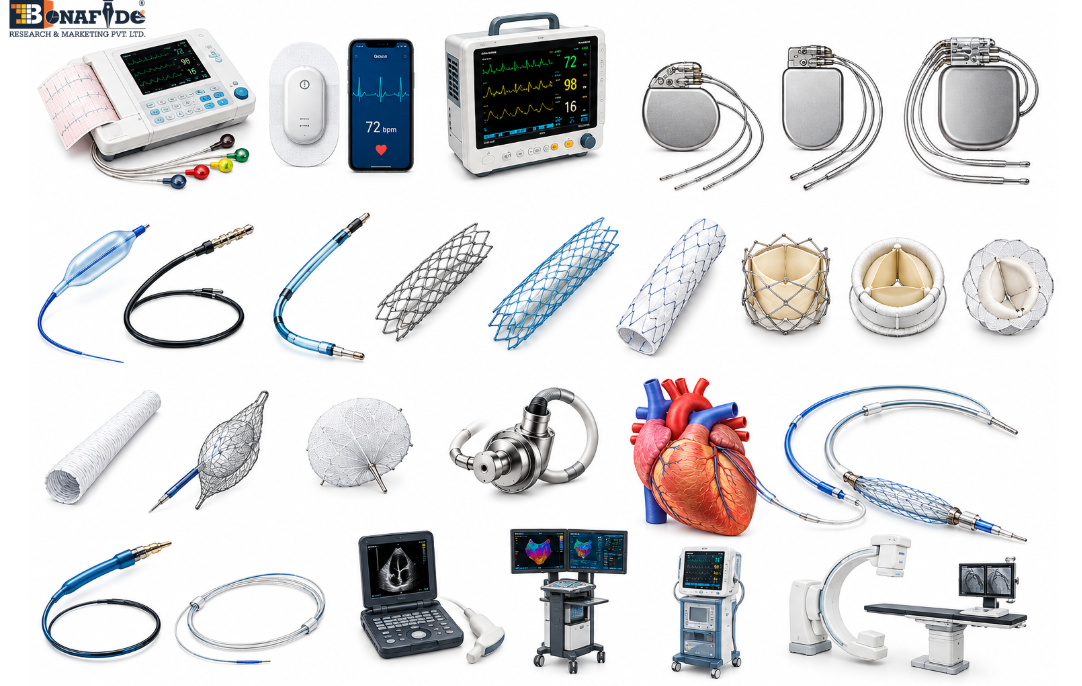
The global cardiovascular devices market comprises medical technologies used to prevent, diagnose, monitor, manage, and treat disorders affecting the heart and blood vessels, including coronary artery disease, heart failure, arrhythmias, valvular disorders, and peripheral vascular disease. These technologies include electrocardiography systems, blood-pressure monitors, cardiac imaging equipment, diagnostic
catheters, coronary stents, angioplasty systems, pacemakers, implantable defibrillators, prosthetic heart
valves, vascular grafts, ventricular-assist devices, and surgical instruments. The importance of the industry is closely linked to the global cardiovascular disease burden: WHO reports that cardiovascular diseases were responsible for an estimated 19.8 million deaths in 2022, representing about 32% of global deaths, with heart attack and stroke accounting for approximately 85% of those deaths. Major growth drivers include population ageing, urbanization, hypertension, diabetes, obesity, physical inactivity, tobacco exposure, unhealthy diets, and increasing emphasis on early cardiovascular detection and treatment. Technological progress is another important driver, particularly the development of minimally invasive interventions, advanced cardiac imaging, implantable rhythm-management devices, structural-heart technologies, remote monitoring, and digitally connected diagnostic systems. The U.S. FDA describes cardiovascular devices as technologies used to diagnose and treat heart disease and related health problems, covering diverse products such as defibrillators and circulatory-support technologies. The industry is also strongly associated with organizations such as the World Health Organization, the U.S. FDA, and professional bodies including the American College of Cardiology, which contribute to clinical guidance, technology evaluation, standards, education, and cardiovascular-health initiatives. The ACC and Consumer Technology Association have also developed guidance for consumer cardiovascular-health technologies. WHO has developed a priority medical-device list covering more than 500 devices needed across healthcare levels for cardiovascular disease and diabetes management, supporting national procurement, reimbursement, and healthcare planning.
According to the research report, “Global Cardiovascular Devices Market Overview, 2031” published by Bonafide Research, the Global Cardiovascular Devices Market is expected to cross 110.33 Billion market size by 2031, with 8.07% CAGR by 2026-31.. The global cardiovascular devices market includes technologies used to diagnose, monitor, and treat heart and vascular disorders, with major participants such as Medtronic, Abbott, Boston Scientific, Johnson & Johnson
MedTech, and Edwards Lifesciences spanning areas such as electrophysiology, coronary intervention, structural heart, vascular care, cardiac rhythm management, and circulatory support. Recent industry reporting identifies these companies among the leading cardiovascular-device manufacturers, reflecting the concentration of technological expertise and product development within established medtech groups. Opportunities are emerging from the continued need to treat cardiovascular disease, alongside advances in minimally invasive procedures, pulsed-field ablation, leadless pacing, transcatheter valves, intravascular lithotripsy, remote monitoring, and advanced imaging. Company innovation illustrates this direction: Medtronic has been expanding its pulsed-field ablation platform, with its Affera technology contributing to strong cardiac-ablation performance, while its portfolio also includes leadless pacemakers and transcatheter heart-valve technologies. Abbott, Boston Scientific, Edwards Lifesciences, and Johnson & Johnson MedTech are similarly active across rhythm management, electrophysiology, coronary intervention, structural heart, and vascular technologies. The supply chain begins with specialized materials and components such as medical-grade metals, polymers,
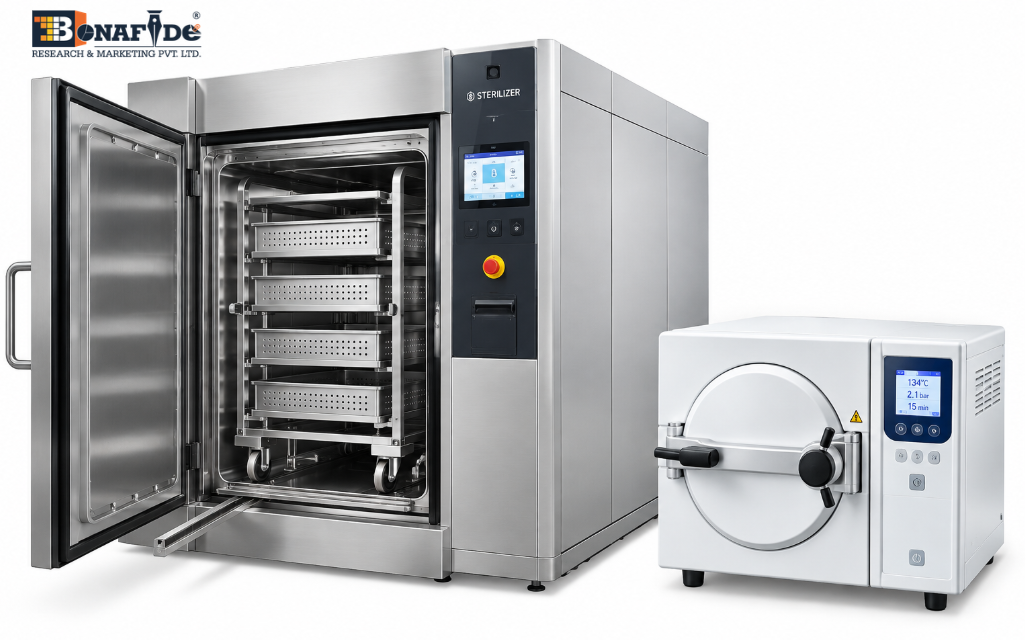
electronic components, sensors, batteries, catheters, valves, and implantable materials, followed by precision manufacturing, assembly, sterilization,
packaging, regulatory quality control, distribution, hospital procurement, and clinical use. Sterilization is a particularly important supply-chain stage because cardiovascular devices may require ethylene oxide, radiation, steam, vaporized hydrogen peroxide, or other validated methods depending on the product. Supply-chain resilience is therefore a significant industry consideration: the FDA identifies manufacturing and quality problems, limited suppliers, dependence on foreign sources, transportation disruptions, natural disasters, geopolitical conditions, and sterilization constraints as potential causes of medical-device disruption.
Diagnostic and monitoring technologies are gaining importance because cardiovascular care increasingly depends on identifying disease before severe complications occur and tracking patients after diagnosis or treatment. The World Health Organization states that cardiovascular diseases are the leading cause of death globally, with an estimated 19.8 million deaths in 2022, and specifically emphasizes that early detection is important so appropriate management can begin. This creates a broad clinical role for electrocardiographs, Holter monitors, ambulatory blood-pressure systems, echocardiography, cardiac imaging, physiological sensors, and other monitoring technologies. Their use is not restricted to specialist cardiology departments: WHO notes that cardiovascular risk factors such as raised blood pressure, blood glucose, blood lipids, overweight, and obesity can be measured in primary-care facilities to identify people at increased cardiovascular risk. Continuous and repeated measurements are particularly valuable because many cardiovascular conditions can remain asymptomatic until an acute event occurs. WHO also notes that underlying vascular disease may have no symptoms, with a heart attack or stroke sometimes becoming the first indication of disease. This strengthens the practical importance of screening and monitoring devices for identifying abnormalities earlier. Another factor is the increasing need for long-term management of chronic conditions such as hypertension, heart failure, arrhythmias, and coronary disease. Monitoring technologies allow clinicians to assess physiological changes over time rather than depending solely on occasional consultations. Remote and connected monitoring can further extend cardiovascular observation beyond traditional hospital environments, supporting follow-up and potentially helping healthcare teams identify changes that require clinical attention. WHO's cardiovascular program explicitly includes diagnostic and health technologies within efforts to expand screening, early diagnosis, and appropriate treatment.
Structural heart disease has become an increasingly important area of cardiovascular-device use because disorders involving cardiac valves and other anatomical structures can cause progressive symptoms, impaired cardiac function, and serious complications when treatment is delayed. A major example is aortic valve disease, particularly aortic stenosis, which is strongly associated with increasing age. The development of transcatheter aortic valve implantation or replacement has substantially expanded the treatment pathway for appropriately selected patients by providing an alternative to conventional open-heart surgery. This technological transition requires an ecosystem of devices, including transcatheter valves, delivery systems, guidewires, vascular-access equipment, echocardiography, computed tomography, fluoroscopy, and hemodynamic monitoring. The growing sophistication of cardiovascular imaging has also improved assessment of valve anatomy and procedural planning, allowing clinicians to evaluate disease severity, anatomical suitability, vascular access, and potential procedural risks before intervention. Structural-heart care is therefore not dependent on a single device but on a connected group of diagnostic, interventional, and monitoring technologies. Another important factor is the development of multidisciplinary heart teams in which interventional cardiologists, cardiac surgeons, imaging specialists, anesthesiologists, and other professionals evaluate patients together and determine an appropriate treatment strategy. This collaborative model has helped integrate catheter-based therapies into established cardiac-care pathways. Structural-heart intervention is also extending beyond aortic valve disease, with technologies and clinical research addressing mitral and tricuspid valve disorders and other structural abnormalities. The expansion of these procedures is supported by advances in catheter design, implant durability, imaging guidance, delivery systems, and procedural techniques. At the same time, population ageing is increasing the number of people living with chronic cardiovascular conditions that require evaluation and long-term management. WHO identifies population ageing as one of the broader forces contributing to cardiovascular disease burden globally.
Ambulatory surgical centres are becoming more relevant to cardiovascular-device utilization as selected interventional procedures increasingly move toward shorter observation and same-day discharge pathways. Percutaneous coronary intervention provides one of the clearest examples of this development. The Society for Cardiovascular Angiography and Interventions reported that reimbursement for PCI performed in ambulatory surgical centres began under U.S. Medicare in January 2020, following evidence from observational studies and randomized trials supporting same-day discharge for appropriately selected patients. The organization stated that clinical outcomes for selected outpatient PCI patients discharged the same day were comparable with routine overnight observation when appropriate safety standards were maintained. A comprehensive review covering 44
clinical trials and four large meta-analyses found no negative effect on early or later major adverse events following same-day discharge after coronary procedures in carefully selected patients, particularly with contemporary radial-access approaches. A more recent meta-analysis of randomized trials likewise reported evidence supporting the safety of same-day discharge compared with overnight observation following PCI, although further evidence is needed for higher-risk acute coronary syndrome populations. These findings are important for cardiovascular-device utilization because procedures performed in ambulatory settings still depend on sophisticated technologies such as angiography systems, guidewires, balloons, coronary stents, vascular-access devices, physiological monitoring, and emergency equipment. The growth of ambulatory cardiovascular care therefore reflects improvements in the entire procedural pathway rather than simply moving an existing hospital procedure to another location. Radial vascular access, improved catheter technology, better procedural imaging, standardized recovery protocols, patient-selection criteria, and post-procedure monitoring have contributed to the feasibility of shorter-stay care.





 We are friendly and approachable, give us a call.