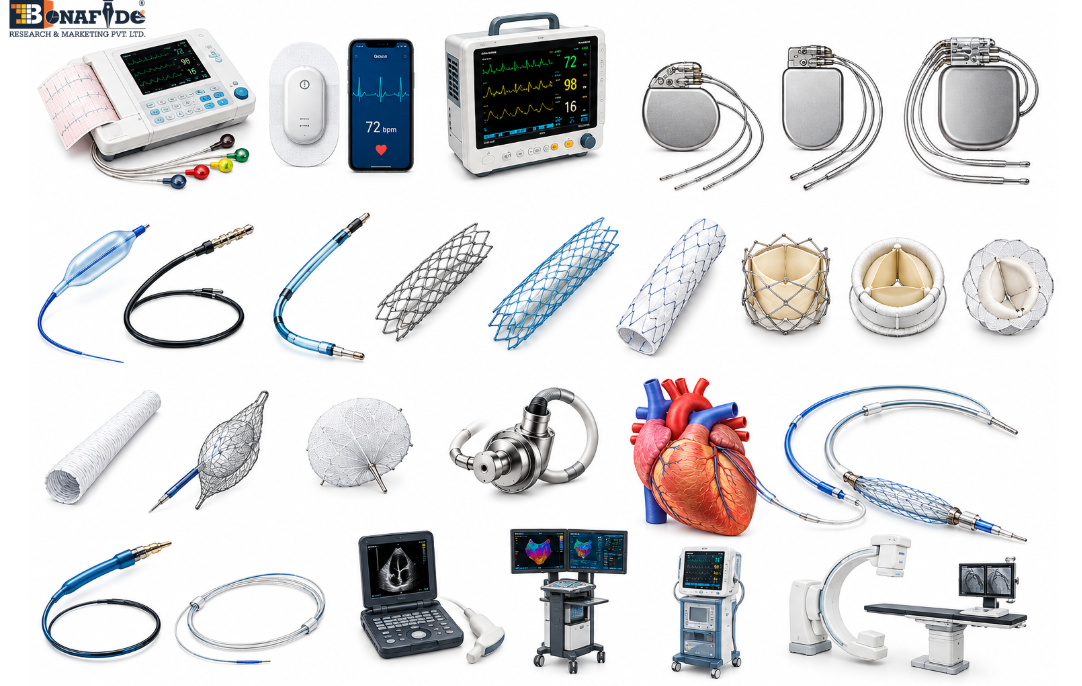
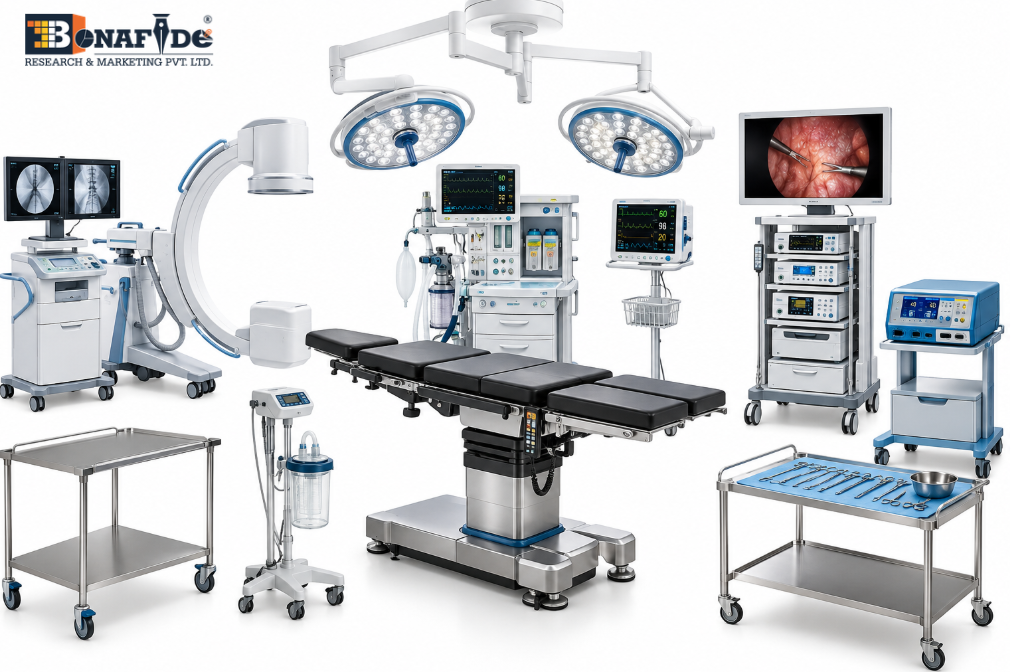
The global Operating Room Equipment market comprises the medical technologies and infrastructure used to prepare, perform, monitor, and support patients throughout surgical procedures, including anesthesia machines, patient monitoring systems, operating tables, surgical lights, electrosurgical units, imaging equipment, suction systems, infusion devices, and other perioperative technologies. Its relevance is directly linked to the essential role of surgery and anesthesia in healthcare, as the World Health Organization identifies operative care as a core component of integrated emergency, critical, and surgical services and notes that surgeons and anesthetists manage conditions including cancer, injuries, infections, and pregnancy complications. A major growth driver is the continuing need to expand access to safe surgery, particularly because billions of people globally still lack timely and affordable surgical and anesthesia services. Increasing emphasis on patient safety is another important factor, with the WHO Surgical Safety Checklist promoting systematic verification, communication, teamwork, and safe anesthesia practices during operations. Technological development is also reshaping operating rooms through connected monitoring, minimally invasive surgical systems, advanced imaging,
digital documentation, automation, and data-enabled clinical workflows. Medical devices are increasingly important across healthcare because they support diagnosis, monitoring, treatment, and intervention, with WHO describing them as indispensable to universal health coverage and emergency preparedness. Associations and international organizations play an important role in establishing standards, training professionals, improving equipment availability, and strengthening surgical systems. WHO works with national health authorities and multidisciplinary stakeholders through initiatives such as the Global Initiative for Emergency and Essential Surgical Care and the Acute Care Action Network, which promotes stronger emergency, critical, and operative-care systems. Industry activities include research and development, manufacturing, regulatory approvals, equipment installation, maintenance, software integration, clinical training, and technology upgrades.
According to the research report, “Global Operating Room Equipment Market Overview, 2031” published by Bonafide Research, the Global Operating Room Equipment Market is expected to cross 64.26 Billion market size by 2031, with 7.22% CAGR by 2026-31.Major companies active in this space include Stryker, Medtronic, Getinge, GE HealthCare, Siemens Healthineers, Philips, Olympus, KARL STORZ, STERIS, Dr?ger, Zimmer Biomet, and Johnson & Johnson
MedTech, with competition increasingly extending beyond individual devices toward connected operating-room ecosystems. Stryker, for example, has developed its iSuite and Connected OR platforms to connect compatible
surgical devices, displays, imaging, electronic health records, and workflow functions through a centralized environment, while its platform incorporates data analytics and machine-learning capabilities. Getinge similarly offers a broad portfolio spanning operating-room equipment, anesthesia, advanced patient monitoring, OR management, OR integration, hybrid operating rooms, planning, installation, commissioning, and maintenance, illustrating how suppliers are increasingly participating across the complete equipment lifecycle. These developments create opportunities in connected ORs, AI-assisted workflows, advanced visualization, minimally invasive procedures, hybrid operating rooms, ambulatory surgery centres, and equipment modernization. From a supply-chain perspective, the market involves multiple stages: component manufacturers supply electronics, sensors, displays, mechanical assemblies, software components, imaging modules, and specialized materials; medical-device manufacturers then design, assemble, validate, and regulate finished systems before products move through distributors, direct sales organizations, hospital procurement departments, and service networks. Installation, calibration, preventive maintenance, software updates, replacement parts, and technical training are also important downstream activities. Getinge's model illustrates this lifecycle approach, covering facility planning through commissioning and maintenance. Opportunities therefore extend beyond equipment sales into service contracts, interoperability,
cybersecurity, data management, workflow optimization, and replacement of ageing infrastructure.
Patient monitoring has become increasingly important in operating rooms because surgery and anesthesia can cause rapid changes in oxygenation, blood pressure, heart rhythm, ventilation, temperature, and other physiological functions that cannot be reliably assessed through visual observation alone. Monitoring systems allow anesthesia and surgical teams to follow these parameters continuously and respond when readings move outside clinically acceptable ranges. The World Health Organization identifies pulse oximetry as an essential safety technology for surgery and anesthesia because it provides immediate information about blood oxygenation and can alert healthcare workers to potentially dangerous deterioration. WHO's safe-surgery guidance also emphasizes that safe anesthesia requires appropriate monitoring and trained personnel rather than relying solely on the anesthesia delivery system. Patient monitoring therefore has relevance across almost every operating-room specialty, including
general surgery, orthopedics, cardiovascular surgery, neurosurgery, obstetrics,
oncology, trauma, and minimally invasive procedures. Unlike equipment designed for a specific surgical technique, monitoring devices can be used repeatedly across different procedures and patient groups. Modern systems can integrate measurements such as ECG, non-invasive or invasive blood pressure,
oxygen saturation, respiratory rate, temperature, and carbon dioxide levels into a single clinical interface. Capnography is particularly valuable during anesthesia because exhaled carbon dioxide provides information about ventilation and airway status. The American Society of Anesthesiologists' standards call for continuous evaluation of oxygenation, ventilation, circulation, and temperature during anesthesia, reinforcing the central role of monitoring in perioperative practice. Growing attention to surgical safety also supports adoption because healthcare providers increasingly follow structured perioperative protocols and checklists.
Orthopedic surgery has a strong
foundation for expansion because musculoskeletal disorders affect people across nearly every age group and can produce pain, disability, impaired mobility, and loss of independence. The World Health Organization estimates that approximately 1.71 billion people globally live with musculoskeletal conditions, making them a major contributor to disability worldwide. These conditions include osteoarthritis, rheumatoid arthritis, fractures, osteoporosis, low back pain, and other disorders affecting bones, joints, muscles, and connective tissues. The scale and diversity of these conditions translate into demand for different forms of orthopedic surgery, including fracture fixation,
joint replacement, spinal procedures, ligament reconstruction, trauma surgery, and corrective interventions. Osteoarthritis is especially important because it is strongly associated with ageing and can progress to severe joint damage. WHO reported that approximately 528 million people were living with osteoarthritis in 2019 and stated that about 73% of those affected were older than 55. The knee is the most commonly affected joint, while severe hip and knee disease may ultimately require joint replacement surgery. Population ageing therefore supports orthopedic activity because older individuals experience greater exposure to degenerative joint disease, falls, fractures, and other conditions requiring surgical treatment. Orthopedic demand is not limited to older populations, however. Sports injuries, road accidents, workplace injuries, congenital abnormalities, and trauma also create surgical requirements among younger patients. WHO notes that musculoskeletal conditions occur throughout the life course and can substantially restrict mobility and participation in work and daily activities. Orthopedic surgery also has a strong connection with operating-room equipment because many procedures require specialized positioning, imaging, navigation, powered instruments,
electrosurgical devices, anesthesia systems, patient monitors, surgical tables, and specialized
lighting. Joint replacement and complex reconstructive operations require precise positioning and controlled surgical environments, while image-guided and minimally invasive techniques introduce additional technology requirements.
AI and data-driven OR systems are gaining momentum because operating rooms generate extensive information that can be converted into actionable clinical and operational insights. Patient monitors, anesthesia machines, imaging equipment, electronic health records, surgical devices, scheduling platforms, and documentation systems can each generate data during the perioperative journey. Connecting these information streams can help healthcare organizations understand patient status, procedure progression, theatre utilization, scheduling patterns, equipment availability, and postoperative outcomes more comprehensively. The World Health Organization recognizes
artificial intelligence as a potentially transformative technology for healthcare and identifies applications across clinical care, diagnosis, health-system management, drug development, and public-health functions, while emphasizing safety, ethics, governance, transparency, and accountability. Within operating rooms, AI can support applications such as procedure scheduling, prediction of case duration, workflow analysis, image interpretation, documentation, clinical decision support, and identification of operational bottlenecks. Data-driven systems can also help hospitals understand why operating rooms experience delays, cancellations, prolonged turnover, or inefficient utilization. This matters because surgical theatre performance depends on the coordination of many activities, including patient preparation, anesthesia induction, surgery, instrument availability, cleaning, turnover, recovery, staffing, and equipment readiness. A delay at one stage can affect several subsequent procedures. Digital platforms that provide real-time information can therefore influence the performance of the complete perioperative workflow rather than only one piece of equipment. Another reason for rapid development is that AI-enabled capabilities can often be added to existing infrastructure instead of requiring an entire operating room to be rebuilt. Hospitals can introduce analytics software, interoperability platforms, connected monitoring, digital displays, or decision-support applications alongside established anesthesia and surgical equipment.
Ambulatory surgical centres are becoming increasingly important because healthcare systems are seeking ways to deliver appropriate surgical procedures through shorter and more efficient care pathways. In an ambulatory setting, patients are admitted, undergo the procedure, recover under clinical supervision, and return home without requiring a conventional overnight hospital stay when medically appropriate. The OECD reports that same-day surgery has increased substantially across many OECD countries over recent decades and links this development to advances in medical technologies, especially less invasive procedures, together with improvements in anesthesia. The organization also notes that ambulatory surgery can reduce the duration of care and conserve healthcare resources when appropriate patient selection and quality safeguards are in place. This shift directly affects operating-room equipment requirements because ambulatory centres need compact, reliable, and workflow-oriented systems that support the complete surgical pathway. Anesthesia machines, patient monitors, operating tables, surgical lights, electrosurgical equipment, suction systems, infusion devices, imaging technologies, and recovery equipment all contribute to safe same-day care. Minimally invasive surgery is a particularly important enabler because smaller incisions and reduced tissue disruption can shorten recovery for appropriately selected patients. Laparoscopic, endoscopic, arthroscopic, ophthalmic, ENT, gynecological, urological, and selected general-surgery procedures are among the types of interventions that can be delivered through ambulatory pathways depending on patient characteristics and local clinical protocols. Orthopedic procedures are also relevant, particularly as advances in anesthesia, pain management, implants, and minimally invasive techniques support faster postoperative recovery for selected cases. The ambulatory model does not replace hospitals because patients with significant comorbidities, high expected blood loss, prolonged postoperative requirements, or a need for intensive monitoring may still require inpatient facilities. Instead, it creates a complementary setting for procedures where overnight hospitalization provides limited additional clinical value.





 We are friendly and approachable, give us a call.