The global pediatric medical devices market refers to the industry focused on developing, manufacturing, and supplying medical technologies specifically designed for infants, children, and adolescents to support diagnosis, monitoring, treatment, and rehabilitation. Unlike adult
medical equipment, pediatric devices are developed according to the unique anatomical, physiological, and clinical requirements of younger patients, ensuring greater safety, accuracy, and comfort during healthcare procedures. These devices include neonatal intensive care equipment, pediatric diagnostic systems,
patient monitoring devices, respiratory support equipment, surgical instruments, infusion systems, and other specialized technologies used in hospitals, pediatric clinics, and healthcare centers. The market plays an important role in improving child healthcare outcomes by enabling early detection of diseases, supporting critical care for newborns, and helping physicians manage acute and chronic pediatric conditions more effectively. Key growth drivers include increasing focus on newborn and child healthcare, rising demand for early disease diagnosis, advancements in medical technology, expansion of specialized pediatric hospitals, and greater adoption of minimally invasive and
digital healthcare solutions. The growing emphasis on preventive healthcare, newborn screening programs, and improved access to pediatric services across developing regions further supports the importance of these devices. Various healthcare organizations, pediatric associations, medical research institutions, and regulatory bodies contribute to the development and adoption of pediatric medical technologies by promoting safety standards, clinical research, and better treatment practices. Activities within this sector include product innovation, clinical evaluation, technology integration, healthcare professional training, and collaboration between device manufacturers and healthcare providers. Companies and research organizations are continuously working on improving device design, portability, accuracy, and ease of use to address the specific needs of children.
According to the research report "Global Pediatric Medical Devices Market Outlook, 2031," published by Bonafide Research, the Global Pediatric Medical Devices Market was valued at more than USD 38.96 Billion in 2025, and expected to reach a market size of more than USD 58.33 Billion by 2031 with the CAGR of 7.14% from 2026-2031. The market includes medical devices specifically designed for infants, children, and adolescents, addressing unique clinical requirements such as smaller body structures, age-specific treatment needs, and long-term disease management. Major companies operating in this field include Medtronic, GE HealthCare, Philips, Siemens Healthineers, Dr?gerwerk, and Becton Dickinson, which develop products ranging from neonatal intensive care equipment and patient monitoring systems to diagnostic and
respiratory care devices. Companies are focusing on improving device accuracy, portability, connectivity, and ease of use to meet the growing needs of hospitals and
pediatric healthcare providers. For example, manufacturers such as GE HealthCare and Philips have advanced neonatal monitoring and imaging technologies that support critical care environments, while Dr?ger has developed specialized neonatal solutions including incubators and respiratory support systems. Supply chain activities in this market involve
medical device manufacturers, component suppliers, regulatory bodies, distributors, hospitals, and specialized healthcare facilities working together to ensure availability and compliance of pediatric equipment. The supply chain requires strict quality control because pediatric devices must meet safety requirements and clinical performance standards. Emerging opportunities include the development of digital health-enabled pediatric devices, remote monitoring technologies, portable diagnostic systems, and cost-effective solutions for developing healthcare markets. Partnerships between medical technology companies and healthcare institutions are also increasing to support product development, clinical validation, and training programs. As healthcare systems continue prioritizing child health, early diagnosis, and advanced treatment approaches, the pediatric medical devices market continues to create opportunities for technological advancement and improved pediatric care delivery worldwide.
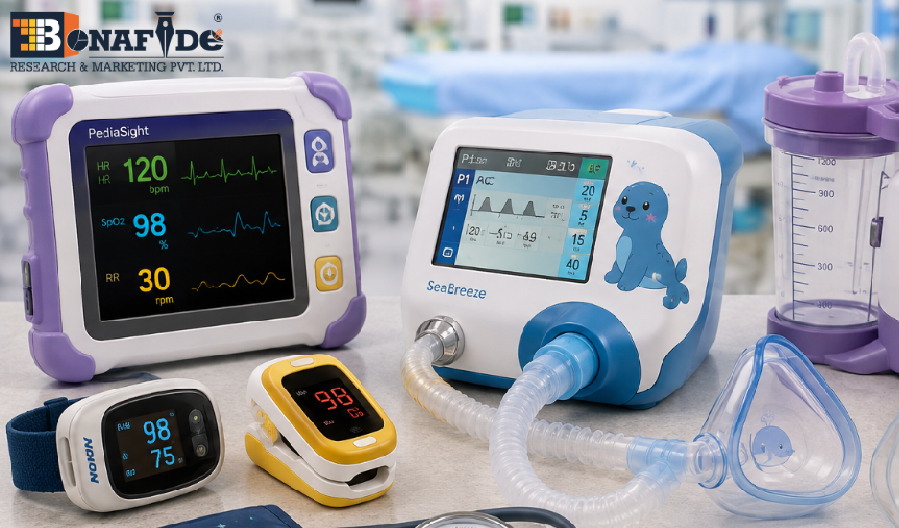
Neonatal ICU devices are gaining significant importance in pediatric healthcare because newborns with critical medical conditions require immediate and highly specialized support during the first days of life. Premature births, low birth weight, respiratory complications, infections, and congenital disorders often require continuous monitoring and advanced medical intervention, making NICU equipment essential in modern healthcare facilities. Devices such as infant incubators, neonatal
ventilators,
phototherapy systems,
infusion pumps, and multiparameter monitoring systems help healthcare professionals maintain stable conditions and provide accurate treatment for vulnerable newborns. Healthcare systems across the world have increased attention toward improving neonatal care services, leading to the development of specialized intensive care units equipped with advanced technologies. The ability of NICU devices to monitor vital parameters such as
oxygen saturation, body temperature, heart rate, and respiratory function allows clinicians to make timely decisions and reduce risks associated with newborn complications. Improvements in neonatal medicine have also increased the survival of infants requiring intensive support, creating a greater need for continued monitoring and specialized care solutions. Medical device manufacturers are focusing on improving device safety, connectivity, portability, and ease of operation to better support healthcare professionals and fragile patients. In addition, newborn screening initiatives and improvements in maternal healthcare have increased the identification of infants who may require specialized neonatal support. Hospitals and pediatric centers are investing in advanced neonatal infrastructure to strengthen critical care capabilities.
Pediatric clinics are becoming a rapidly expanding end-user segment in the global pediatric medical devices market because they offer accessible, child-focused healthcare services for routine care, early diagnosis, and long-term disease management. These clinics are designed specifically to address the healthcare needs of infants, children, and adolescents, requiring medical devices that are suitable for smaller body sizes and age-specific clinical conditions. Pediatric clinics commonly use diagnostic equipment, monitoring systems, respiratory devices, examination tools, and other technologies that help healthcare professionals evaluate and manage childhood health issues effectively. The growing emphasis on preventive healthcare has encouraged more families to seek regular pediatric consultations, developmental assessments, and early screening services, increasing the role of clinics in child healthcare delivery. Pediatric clinics also play an important role in managing chronic conditions such as asthma, diabetes, allergies, and neurological disorders, where continuous monitoring and follow-up care are required. Healthcare systems in many regions are shifting toward outpatient and community-based care models to improve accessibility and reduce dependence on hospitals for non-critical pediatric services. This transition has increased the importance of pediatric clinics as convenient locations for diagnosis and ongoing treatment. Advances in compact, portable, and user-friendly medical technologies have enabled these facilities to provide better healthcare services with improved efficiency. Additionally, the growing availability of specialized pediatric healthcare professionals supports the effective use of advanced medical devices in clinic settings.





 We are friendly and approachable, give us a call.