The global
automotive fuel injection systems market comprises the design, manufacture, and supply of components and technologies that deliver fuel into internal combustion engines in a precise and controlled manner. These systems include fuel injectors,
fuel pumps, fuel rails, throttle body injection systems, gasoline direct injection (GDI) systems, diesel common-rail injection systems, electronic control units, and related sensors. Fuel injection systems play a critical role in optimizing fuel combustion, improving engine performance, enhancing fuel economy, and reducing vehicle emissions, making them an essential part of modern automotive powertrains. The market remains highly relevant despite the growing adoption of electric vehicles because internal combustion engine vehicles and hybrid vehicles continue to account for the majority of vehicles produced and operated worldwide. Growth in global vehicle production, increasing demand for fuel-efficient automobiles, and the implementation of stringent emission regulations across major automotive markets are key factors driving demand for advanced fuel injection technologies. Regulatory frameworks established by organizations and authorities such as the European Automobile Manufacturers' Association, U.S. Environmental Protection Agency, and transportation authorities across Asia-Pacific are encouraging automakers to adopt high-precision fuel delivery systems that help meet fuel economy and emission targets. Technological advancements, including high-pressure gasoline direct injection, common-rail diesel injection, electronic fuel injection, and integrated engine management systems, are further supporting market development. The industry is characterized by continuous research and development activities focused on improving combustion efficiency, reducing particulate emissions, enhancing injector durability, and supporting hybrid powertrain architectures. Leading automotive suppliers collaborate closely with vehicle manufacturers to develop next-generation fuel injection solutions tailored to evolving engine designs and regulatory requirements. In addition, a large global vehicle parc creates sustained aftermarket demand for replacement injectors and associated components.
According to the research report "Global Automotive Fuel Injection System Market Outlook, 2031," published by Bonafide Research, the Global Automotive Fuel Injection System Market was valued at more than USD 73.52 Billion in 2025, and expected to reach a market size of more than USD 104.33 Billion by 2031 with the CAGR of 6.16% from 2026-2031. Key players such as Robert Bosch GmbH, Denso Corporation, Continental AG, Delphi Technologies (now part of BorgWarner), and Magneti Marelli dominate the market through strong OEM partnerships and continuous R&D investment. The market is driven by stringent global emission regulations, rising demand for fuel-efficient vehicles, and the widespread adoption of gasoline direct injection (GDI) and high-pressure common-rail diesel systems. A key development trend is the shift toward ultra-high-pressure injectors exceeding 350 bar in gasoline systems and over 2,500 bar in diesel systems, enabling finer fuel atomization and reduced particulate emissions. Companies like Bosch and Denso are heavily investing in next-generation injectors compatible with hybrid powertrains, where internal combustion engines still play a critical role. Supply chains in this market are highly integrated and globalized, involving raw material suppliers (specialty steel, precision alloys, and electronics), tier-2 component manufacturers producing nozzles,
valves, and sensors, and tier-1 suppliers assembling complete injection systems for automakers. Manufacturing hubs are concentrated in Europe, North America, China, and Japan, with strong export linkages to global OEM assembly plants. Opportunities are expanding in hybrid electric vehicles, aftermarket replacement demand due to a global vehicle parc exceeding one billion ICE vehicles, and emerging markets in Asia-Pacific where vehicle ownership is rising rapidly. Additionally, software-controlled injection systems integrated with engine control units are enabling smarter combustion strategies, further strengthening the role of electronics suppliers in the value chain. Strategic collaborations between automakers and suppliers are accelerating innovation, while cost optimization and regulatory compliance remain central to competitive positioning in this evolving market landscape.
Gasoline fuel injection systems dominate the global automotive fuel injection landscape primarily because gasoline-powered passenger cars still represent the largest portion of the global internal combustion engine vehicle fleet. The widespread use of gasoline engines in personal mobility, especially in urban and suburban transportation, ensures sustained demand for precise fuel delivery technologies. Over time, regulatory pressure from emission standards has pushed automakers to move away from carburetors toward electronically controlled gasoline injection systems, particularly gasoline direct injection, which enables better fuel atomization and more complete combustion. This transition has improved fuel efficiency and reduced emissions of carbon monoxide and hydrocarbons, making gasoline injection systems central to compliance strategies in major automotive markets. Additionally, hybrid electric vehicles continue to rely heavily on gasoline engines as range extenders, meaning fuel injection systems remain essential even as electrification expands. Technological advancements such as higher injection pressures, multi-point injection strategies, and integration with engine control units have further strengthened gasoline fuel injection adoption. The segment also benefits from strong aftermarket demand due to the large global installed base of gasoline vehicles, where injectors and pumps require periodic replacement. Emerging economies contribute significantly because gasoline vehicles are more affordable and easier to maintain compared to alternative powertrains.
The petroleum-based fuel segment continues to dominate automotive fuel injection systems because the global transportation ecosystem is still fundamentally built around crude
oil refining and distribution networks. Gasoline and diesel fuels are deeply integrated into existing refueling infrastructure, engine designs, and regulatory frameworks, making them the most practical energy source for internal combustion engines. Fuel injection systems are specifically engineered to optimize the combustion of these petroleum-derived fuels, ensuring efficient atomization, precise timing, and controlled air-fuel mixtures. Even as alternative fuels such as
bioethanol,
biodiesel, and synthetic fuels are introduced, their penetration remains limited compared to conventional petroleum fuels due to supply constraints, cost considerations, and engine compatibility requirements. Automotive manufacturers continue to calibrate injection systems primarily for gasoline and diesel because these fuels provide consistent chemical properties that support stable engine performance across varying operating conditions. Additionally, commercial transportation, including heavy-duty trucks and long-haul
logistics, remains highly dependent on diesel fuel due to its energy density and efficiency advantages. This reinforces the need for high-pressure common-rail diesel injection systems. The aftermarket ecosystem also revolves around petroleum-fuel-based engines, further sustaining demand for compatible injection components. While renewable fuels are growing in strategic importance, petroleum-based fuels remain the structural backbone of the global fuel injection ecosystem due to their entrenched role in vehicle production, infrastructure maturity, and long-established engine design standards.
Gasoline Direct Injection has become the leading technology in automotive fuel injection systems because it directly injects fuel into the combustion chamber at high pressure, enabling more precise control over the combustion process. This precision allows engines to achieve better thermal efficiency, improved power output, and reduced fuel consumption compared to older port fuel injection systems. Automakers have widely adopted GDI as they attempt to meet increasingly strict emission regulations imposed across major automotive markets, including limits on carbon dioxide and particulate emissions. The technology supports advanced combustion strategies such as stratified charge operation and lean burn modes, which further enhance efficiency under different driving conditions. GDI also integrates effectively with turbocharging systems, allowing smaller engines to produce higher power outputs without increasing fuel consumption significantly. This downsizing trend has been a key driver in modern engine design. Additionally, GDI systems are highly compatible with hybrid powertrains, where engines operate intermittently and require rapid response and precise fuel control. Continuous innovation by automotive suppliers has improved injector durability, spray pattern optimization, and pressure handling capabilities, making GDI systems more reliable than earlier generations. Although concerns about particulate emissions exist, manufacturers have addressed them through gasoline particulate filters and improved injection timing strategies.
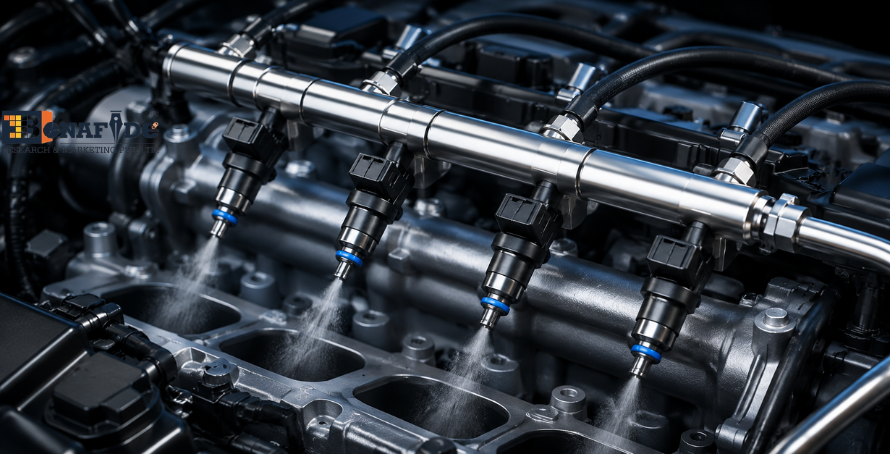
Fuel injectors represent the most critical and widely used component within automotive fuel injection systems because they directly control the delivery of fuel into the engine combustion chamber or intake port. Every internal combustion engine requires multiple injectors, typically one per cylinder, which immediately multiplies demand across global vehicle production. Their role in atomizing fuel into fine droplets ensures efficient mixing with air, which is essential for complete combustion, improved fuel economy, and reduced emissions. Modern injectors are highly sophisticated electromechanical devices capable of operating under extremely high pressures and rapid injection cycles, often performing multiple injections per combustion stroke. This precision is necessary to meet stringent emission standards and performance requirements. Fuel injectors also experience wear due to constant exposure to high temperatures, pressure fluctuations, and fuel impurities, leading to consistent replacement demand in the aftermarket segment. Technological advancements such as piezoelectric injectors and solenoid-based systems have improved response time and accuracy, further increasing their importance in advanced engine designs. Additionally, injectors are central to both gasoline direct injection and diesel common-rail systems, making them universally essential across fuel types. The growing complexity of engine management systems has also increased reliance on electronically controlled injectors integrated with sensors and engine control units.
Passenger cars are the largest vehicle type segment in the automotive fuel injection systems market due to their overwhelming presence in global vehicle production and ownership. The majority of households worldwide rely on passenger cars for personal mobility, which drives continuous production and technological upgrades in this segment. These vehicles predominantly use gasoline engines, which require advanced fuel injection systems such as port fuel injection and gasoline direct injection to meet performance, efficiency, and emissions requirements. Passenger cars also represent the primary platform for hybrid vehicle adoption, where internal combustion engines remain essential for range extension and power support, thereby sustaining demand for fuel injection technologies. The segment is highly sensitive to regulatory changes, particularly emission norms that require automakers to integrate more precise fuel delivery systems to reduce pollutants and improve fuel economy. Additionally, passenger cars undergo frequent model updates and technological enhancements, which accelerates the integration of next-generation injection systems. The large installed base of passenger vehicles also generates significant aftermarket demand for replacement injectors, pumps, and related components. In emerging economies, rising disposable incomes and urbanization further increase
passenger car ownership, reinforcing their dominance.
The OEM segment leads the distribution channel for automotive fuel injection systems because these components are critical engine management technologies that must be precisely calibrated and integrated during vehicle assembly. Fuel injection systems are not standalone aftermarket accessories but essential engine subsystems that require alignment with electronic control units, emission systems, and engine architecture. As a result, automakers rely heavily on established tier-1 suppliers such as Robert Bosch GmbH, Denso Corporation, and Continental AG to design and deliver injection systems that meet strict performance and regulatory specifications. OEM integration ensures quality control, durability, and compliance with emission standards from the moment the vehicle is manufactured. The complexity of modern fuel injection technologies, including high-pressure gasoline direct injection and common-rail diesel systems, further reinforces the need for factory-level installation rather than aftermarket substitution. OEMs also benefit from economies of scale, as large production volumes allow standardized integration of fuel injection systems across multiple vehicle platforms. Additionally, long-term contracts between automakers and suppliers ensure continuous technological development and supply chain stability. While the aftermarket segment plays a role in replacement demand, especially in older vehicles, the initial installation and majority of system deployment occur through OEM channels.

























 We are friendly and approachable, give us a call.