The
automotive engine oil market is witnessing steady transformation driven by the rapid evolution of vehicle technologies, tightening emission regulations, and increasing demand for fuel-efficient
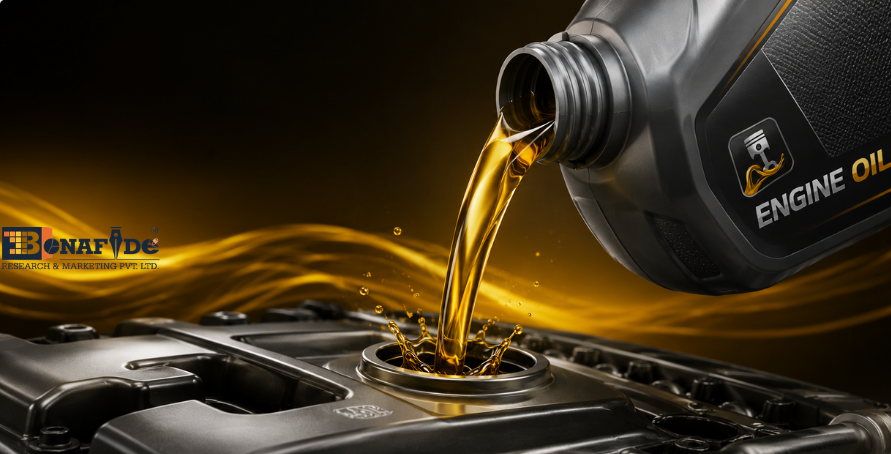
lubricants. In 2025, the market is strongly influenced by the rising penetration of turbocharged gasoline direct injection (TGDI) engines, hybrid electric vehicles, and advanced powertrain systems that require high-performance lubrication solutions. Fully synthetic engine oils are gaining significant traction due to their superior thermal stability, oxidation resistance, and ability to support extended drain intervals, making them essential for modern engines operating under higher stress and efficiency requirements. Additionally, global regulatory frameworks focused on reducing carbon emissions and improving fuel economy are accelerating the shift toward low-viscosity engine oils such as 0W-20 and 0W-16. Passenger vehicles continue to dominate
lubricant consumption due to their large installed base, while commercial fleets contribute significantly through high mileage usage and frequent maintenance cycles. The expansion of organized automotive service networks, quick-lube centers, and OEM-authorized workshops is further strengthening lubricant penetration and standardization across regions. Growing consumer awareness regarding engine protection, maintenance optimization, and long-term cost savings is also driving adoption of premium lubricant products across both developed and emerging economies.
The market is also shaped by structural shifts in distribution channels and evolving mobility trends. The independent aftermarket remains the dominant distribution channel due to its extensive reach, affordability, and strong presence in semi-urban and rural regions, particularly where OEM service networks are limited. At the same time, fleet and commercial direct procurement is expanding rapidly as
logistics companies and large fleet operators adopt
digital maintenance systems, bulk purchasing strategies, and long-term supply agreements to optimize operational efficiency. Hybrid vehicles are emerging as the fastest-growing engine type segment, supported by OEM electrification strategies and consumer preference for transitional low-emission mobility solutions. However, vehicle electrification is gradually reshaping long-term demand dynamics by reducing lubricant consumption per vehicle, even as the overall fleet size continues to grow. Regional variations in vehicle age, climatic conditions, and regulatory standards further contribute to product diversification, increasing demand for multiple viscosity grades and specialty formulations. These combined technological, regulatory, and structural factors are driving continuous evolution in the
automotive engine oil market landscape.
Fully synthetic engine oils hold the largest share in the oil type segment due to their superior performance capabilities, strong OEM recommendations, and alignment with modern engine technologies. In 2025, the global automotive industry is increasingly dominated by turbocharged gasoline direct injection (TGDI), hybrid powertrains, and downsized high-efficiency engines that require advanced lubrication solutions. Fully synthetic oils provide excellent thermal stability, oxidation resistance, and viscosity retention under extreme operating conditions, making them essential for modern engine durability and performance. These oils also enable extended drain intervals, which reduce maintenance frequency, improve vehicle uptime, and lower total cost of ownership for both consumers and fleet operators. OEMs across major markets increasingly factory-fill vehicles with synthetic lubricants and specify them for service intervals, reinforcing their dominance in both new and aftermarket segments. Additionally, stricter emission standards such as Euro 7 and fuel economy regulations in multiple regions are pushing manufacturers toward low-viscosity synthetic formulations that reduce internal engine friction and improve efficiency. Consumer awareness regarding engine protection, fuel savings, and long-term reliability is also rising, further accelerating adoption. The expansion of organized service networks, quick-lube centers, and OEM-authorized workshops has improved product accessibility and strengthened trust in premium lubricants. These combined technological, regulatory, and consumer-driven factors firmly position fully synthetic engine oils as the dominant product type in the market.
The Others viscosity grade segment, including SAE 0W-16, 0W-8, 0W-12, 0W-30, 20W-50, 10W-60, monogrades, and specialty formulations, is the fastest-growing category due to increasing diversification in engine design and operating requirements. In 2025, automotive OEMs are moving away from standardized lubrication approaches and instead developing engine-specific oil requirements to achieve higher fuel efficiency, emission compliance, and performance optimization. Ultra-low viscosity oils such as 0W-8 and 0W-12 are gaining rapid adoption in hybrid and next-generation fuel-efficient engines, where reducing frictional losses is critical. At the same time, high-viscosity grades like 10W-60 remain essential for performance vehicles, heavy-duty applications, and engines operating under extreme thermal and load conditions. Aging vehicle fleets in emerging economies continue to rely heavily on higher viscosity and monograde oils due to engine wear and legacy designs, further expanding demand diversity. Climatic variation across regions also contributes significantly, as vehicles operate in extreme cold, tropical heat, and high-altitude conditions that require tailored lubrication solutions. Additionally, OEM-specific approvals are increasing fragmentation in viscosity demand, reducing standardization and boosting specialty oil consumption. The rapid growth of hybrid vehicles adds another layer of complexity, as they require lubricants capable of handling frequent engine start-stop cycles and variable load conditions. This combination of technological evolution, fleet diversity, and environmental variability is driving the fastest growth in the “Others” viscosity segment.
Passenger cars represent the largest vehicle type segment due to their dominant share in global vehicle ownership and consistent
engine oil consumption patterns. In 2025, rising urbanization, increasing disposable incomes, and expanding middle-class populations continue to drive
passenger car sales and usage across both developed and emerging markets. Passenger vehicles form the backbone of personal mobility, resulting in a large installed vehicle parc that requires regular maintenance and frequent oil changes. This ensures stable and recurring demand for engine lubricants across OEM and aftermarket channels. Additionally, the growing prevalence of
ride-hailing services and
shared mobility platforms has significantly increased vehicle utilization rates, further accelerating engine oil consumption cycles. Many regions also have aging passenger car fleets, particularly in emerging economies, where older engines require more frequent servicing and higher lubricant volumes due to wear and tear. Modern passenger cars increasingly use turbocharged gasoline engines and hybrid systems, which require advanced synthetic lubricants for optimal efficiency and engine protection. OEM recommendations for synthetic and semi-synthetic oils have further strengthened product penetration in this segment. Combined with high ownership volumes, frequent maintenance intervals, and continuous fleet expansion, passenger cars remain the largest contributor to engine oil demand globally.
Hybrid vehicles (HEV and PHEV) are the fastest-growing engine type due to accelerating electrification trends and increasing demand for transitional mobility solutions. In 2025, governments across major automotive markets are tightening emission regulations and fuel economy standards, prompting OEMs to expand hybrid vehicle portfolios as a practical bridge between internal combustion engines and full electrification. Hybrids combine ICE and electric
propulsion systems, requiring specialized engine oils that can perform efficiently under frequent start-stop operation, variable load conditions, and lower average operating temperatures. These characteristics increase demand for advanced low-viscosity synthetic oils with high oxidation stability and wear protection. Consumers are increasingly adopting hybrids due to their ability to deliver improved fuel efficiency, lower emissions, and reduced range anxiety compared to full electric vehicles. Limited charging infrastructure in several regions further supports hybrid adoption. OEMs are aggressively investing in hybrid platforms across passenger and fleet segments, accelerating market penetration. Although hybrids typically consume less oil per vehicle, their rapid sales growth and expanding fleet size are driving strong incremental demand. Fleet operators in ride-hailing and logistics are also adopting hybrids to optimize fuel costs and reduce emissions compliance risks. These combined regulatory, technological, and infrastructure factors are making hybrid vehicles the fastest-growing engine type segment.
The independent aftermarket is the largest distribution channel due to its wide network reach, cost advantages, and strong presence across both developed and emerging markets. In 2025, a significant portion of vehicle maintenance is still conducted outside OEM-authorized dealerships, particularly for vehicles beyond warranty periods. Independent workshops, local garages, and quick-service centers offer affordable and flexible maintenance solutions, making them highly preferred by price-sensitive consumers. The large aging vehicle fleet across multiple regions further strengthens this channel, as older vehicles require more frequent servicing and less standardized maintenance approaches. Additionally, independent workshops provide faster service turnaround and localized accessibility, especially in semi-urban and rural areas where OEM service penetration remains limited. The increasing availability of branded lubricants through distributors, wholesalers, and retail networks has also enhanced product penetration within this channel. Consumer trust in experienced local mechanics and lower service costs continue to drive strong dependence on independent servicing ecosystems. Even as OEM service networks expand, the independent aftermarket remains dominant due to its deep-rooted infrastructure and flexibility. These structural advantages ensure its continued leadership in engine oil distribution globally.

















 We are friendly and approachable, give us a call.