The global
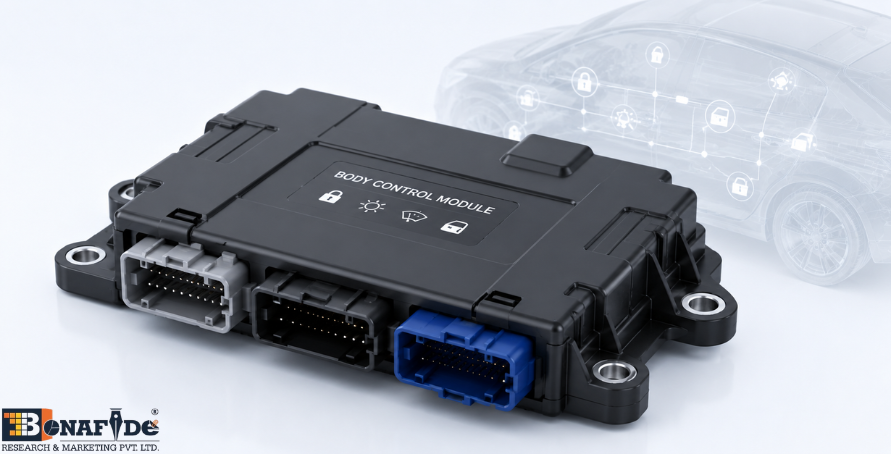
automotive body control module (BCM) market has crossed the USD 34.13 billion threshold in 2025, according to newly published industry analysis, as the automotive industry accelerates its transformation from traditional relay-based control systems toward sophisticated software-defined architectures. With the market projected to approach USD 43.27 billion by 2031 at a compound annual growth rate of 4.14 percent, the BCM ecosystem is witnessing its most fundamental architectural shift in decades. The body control module the electronic brain that orchestrates everything from door locks and window operation to
lighting, climate control, and security systems within a modern vehicle—has evolved from a simple controller into a centralized computing platform. In a well-equipped mid-range vehicle today, the BCM interacts with nearly 60 separate electronic control units, managing functions that were once distributed across dozens of individual modules. This consolidation is being driven by the industry-wide transition toward zonal controller architectures, where
body control modules serve as secure gateways for lighting, comfort, and diagnostics. The Asia-Pacific region has cemented its position as the dominant force in the global BCM landscape. China, the world's largest vehicle manufacturer with annual production exceeding 26 million units, leads the region's BCM adoption.The United States BCM market is reflecting the country's position as a global leader in vehicle production and innovation. Major manufacturing hubs across Michigan, Ohio, and California continue to create substantial demand for sophisticated body control modules across all vehicle categories.
The European market, meanwhile, is being reshaped by the continent's aggressive electrification targets and the presence of premium automotive brands that prioritize advanced electronic architectures. The regulatory landscape has emerged as a defining force in the BCM market. UNECE Regulation No. 155 (
cybersecurity) and Regulation No. 156 (software management) became mandatory for all new vehicle type-approvals from July 2022 and for all new vehicles from July 2024, compelling manufacturers to embed sophisticated anti-tampering measures, over-the-air update capabilities, and real-time diagnostic systems directly into body control module architectures. These cybersecurity mandates have fundamentally altered the value proposition of BCMs, elevating software from a supporting component to the primary differentiator in
automotive electronics. Hardware continues to supply the backbone of control logic, yet the software segment is emerging as the fastest-growing component category as automakers pivot toward software-upgradeable platforms that enable continuous functionality enhancement without hardware replacement. The convergence of over-the-air update capabilities, IoT-enabled vehicle communication systems, and AI-based predictive diagnostics is positioning the BCM market for sustained expansion through 2035 and beyond.
The hardware component maintains its leadership position through the foundational requirement for physical control logic, sensors,
connectors, and power management integrated circuits that form the essential backbone of every body control module across the global vehicle parc. Hardware continues to supply the backbone of control logic. This substantial majority reflects the fundamental requirement for physical components in every BCM installation across the global vehicle parc. The production of 977 million body domain controllers globally in 2025 at an average selling price of USD 180 per unit demonstrates the substantial scale of hardware manufacturing. Each body control module requires microcontrollers, sensors, connectors, power management ICs, and printed circuit boards that represent the physical
foundation of every installation. The transition toward zonal controller architectures, while reducing total ECU count, increases per-module hardware value as zone controllers require more powerful single MCUs with strong computing power. This trend sustains hardware value growth despite architectural consolidation. Smart power devices including SmartFETs are increasingly replacing traditional MOSFETs in BCM designs, integrating overcurrent and overheat protection with current monitoring capabilities. This hardware evolution increases per-module component value while improving reliability and functionality. Regional manufacturing investments in hardware production capacity across Asia-Pacific, Europe, and the Americas ensure sustained hardware supply for the global vehicle production ecosystem. The Asia-Pacific region, accounting for over 35% of global module volume in 2024, maintains substantial hardware manufacturing infrastructure. The remanufactured body control modules market presents a parallel hardware demand stream, with the aftermarket channel expanding at a significant CAGR through 2031. This secondary market sustains hardware demand beyond initial vehicle production.
Driver assistance support functions achieve the fastest growth trajectory through the global proliferation of
ADAS features, with over 90% of new U.S. vehicles equipped with at least one ADAS feature in 2023, driving unprecedented demand for sophisticated BCM-based assistance system integration.Advanced driver assistance systems including lane departure warning, adaptive
cruise control, and automatic emergency braking require seamless integration with body control modules to coordinate vehicle responses. The driver assistance application is on track for the fastest 5.48% CAGR through 2030, reflecting this integration imperative. The National Highway Traffic Safety Administration's data showing over 90% of new vehicles sold in the U.S. equipped with at least one ADAS feature in 2023 demonstrates the mainstream adoption of driver assistance technologies. This widespread adoption creates consistent and substantial demand for BCM-based assistance system integration. Body control modules play a crucial role in managing ADAS features by processing
sensor data, coordinating actuator responses, and ensuring seamless operation of safety systems. This coordination function elevates BCMs from convenience components to critical safety infrastructure. The integration of driver assistance systems with broader body control functions enables coordinated responses including automatic emergency braking triggering hazard lights, adaptive cruise control adjusting lighting patterns, and lane departure warnings activating steering interventions. Consumer preference for enhanced safety in vehicles has led to the integration of ADAS features becoming standard rather than optional. This consumer-driven demand ensures sustained growth for driver assistance applications across all vehicle segments. Regulatory mandates including Euro NCAP safety ratings and U.S. NHTSA requirements increasingly incentivize or mandate ADAS features, creating regulatory-driven demand for driver assistance BCM functionality. The gradual transition toward autonomous driving technologies further amplifies driver assistance application growth, as increasing levels of vehicle autonomy require more sophisticated BCM-based assistance system integration.
The heavy
commercial vehicle segment's accelerated growth reflects the convergence of stringent safety regulations, fleet electrification initiatives, and the increasing sophistication of body electronics required for modern
logistics operations across global transportation networks. Heavy
commercial vehicles present divergent durability, regulatory, and lifecycle servicing expectations that influence supplier qualification and warranty provisioning. These specialized requirements create unique opportunities for BCM manufacturers capable of delivering ruggedized solutions. Fleet operators globally increasingly demand sophisticated telematics and diagnostic capabilities integrated with body control modules, enabling
predictive maintenance and operational efficiency optimization. This demand drives the adoption of advanced BCMs capable of real-time communication with
fleet management systems. The electrification of commercial vehicle fleets, particularly in urban delivery and last-mile logistics applications across major global markets, creates substantial demand for enhanced body control modules capable of managing both traditional body functions and
electric powertrain auxiliary systems. Regulatory pressures including emissions standards and safety mandates compel commercial vehicle manufacturers to integrate more sophisticated electronic control systems. Body control modules play an increasingly critical role in ensuring compliance with these regulations. The global commercial vehicle manufacturing ecosystem provides a robust production base for HCV-specific body control modules, supporting rapid innovation and deployment of advanced BCM technologies for heavy-duty applications. The remanufactured body control modules market demonstrates particular strength in the commercial vehicle segment where lifecycle servicing and cost optimization are paramount. This aftermarket dynamic further stimulates HCV BCM adoption. Software-defined vehicle architectures are increasingly relevant for commercial fleets, allowing features that improve driver experience while optimizing uptime, operational efficiency, and fuel economy. This technological evolution further accelerates HCV BCM adoption.
The 32-bit
microcontroller's accelerated growth reflects the global automotive industry's increasing processing requirements for sophisticated ADAS integration, software-defined architectures, and the fundamental transition toward zonal controller designs that demand high-performance computing capabilities. The 32-bit segment dominates the automotive microcontroller market with a 56.3% share valued at USD 12.7 billion in 2024, driven by the increasing complexity of in-vehicle systems that require high computing power. This dominance is projected to continue through the forecast period. The 32-bit product type leads the automotive MCU market reflecting its balance of performance, cost, and power efficiency for mainstream automotive body, powertrain, and infotainment applications. High-performance 32-bit microcontrollers provide the processing power necessary for complex body control applications including advanced ADAS integration, zonal controller architectures, and sophisticated security features. These advanced MCUs enable real-time processing of multiple sensor inputs and actuator controls simultaneously. The 32-bit architecture supports the memory requirements of modern automotive software, accommodating sophisticated algorithms required for features such as predictive diagnostics, adaptive lighting, and integrated security systems. This memory capacity is increasingly critical as vehicles incorporate more advanced electronic features. The
32-bit MCU's ability to support multiple communication protocols including CAN, LIN, FlexRay, and Ethernet makes it ideal for the interconnected nature of modern vehicle electronics. This versatility enables seamless integration with other electronic control units and external systems. Advanced security features integrated into 32-bit MCUs address growing cybersecurity concerns including UNECE-R155 and R156 compliance requirements. These security capabilities are increasingly mandated across global automotive markets. Leading semiconductor manufacturers including Infineon Technologies, NXP Semiconductors, and Texas Instruments have developed dedicated 32-bit MCU platforms specifically optimized for automotive body control applications, validating the architecture's superiority for modern automotive applications.
The Controller Area Network protocol maintains leadership through its established reliability, cost-effectiveness, and widespread industry adoption as the de facto standard for in-vehicle communication in body control applications. CAN's dominance stems from its proven reliability in automotive environments, cost-effectiveness compared to newer protocols, and the extensive industry ecosystem of CAN-compatible components and development tools. The protocol's simplicity and robustness make it ideal for body control applications where deterministic communication is essential. The CAN bus segment dominated the global body control module market in 2025. This continued dominance demonstrates CAN's enduring relevance despite the emergence of higher-bandwidth alternatives. The widespread adoption of CAN-based body control modules across all vehicle segments creates substantial economies of scale that maintain cost advantages over alternative protocols. This cost advantage is particularly significant in price-sensitive markets and vehicle segments. CAN's integration with LIN bus for lower-speed applications creates a complementary protocol ecosystem that optimizes cost and performance across different body control functions. This layered approach enables manufacturers to deploy the right protocol for each application. The extensive installed base of CAN-based body control modules creates significant inertia against protocol migration, as replacement requires substantial redesign and requalification investments. This installed base advantage sustains CAN's market leadership. While FlexRay registered the quickest, CAN's absolute market share remains dominant. The protocol's established position ensures continued leadership despite the growth of higher-bandwidth alternatives.
High-end body control modules achieve leadership through the increasing integration of advanced features including adaptive cruise control, automatic climate control, and sophisticated infotainment systems, driven by global consumer preference for enhanced comfort and safety. High-end platforms are reflecting the premium segment's exceptional growth trajectory. This growth is fueled by the global trend toward vehicle premiumization and feature-rich vehicle platforms. Low-end body control modules secured a majority share of the automotive body control module market in 2024, but high-end platforms are gaining share as feature content increases across all vehicle segments. This share shift reflects the democratization of premium features. The integration of high-end BCMs with advanced driver assistance systems and autonomous driving technologies requires sophisticated processing capabilities, enhanced memory capacity, and comprehensive security features that only premium platforms provide. This integration necessity drives high-end BCM adoption. Electric and hybrid vehicles, particularly in premium segments, demand high-end BCMs capable of managing energy distribution,
battery management, and regenerative braking systems alongside traditional body functions. This dual requirement elevates BCM functionality requirements. Consumer expectations for personalized in-car experiences, including customizable lighting, climate, and seating configurations, drive demand for high-end BCMs capable of storing and executing complex user preferences. Over-the-air update capabilities, increasingly standard in premium vehicles, require high-end BCMs with dual-bank flash architecture and robust security features to support firmware updates without compromising vehicle safety. The global trend toward connected vehicle ecosystems, with IoT integration enabling remote monitoring and predictive maintenance, necessitates high-end BCMs with enhanced processing and communication capabilities.
The internal combustion engine propulsion type maintains leadership through the massive installed base of ICE vehicles globally, with electric vehicles representing a growing but still minority share of the total vehicle parc. Despite the rapid growth of electric vehicles, internal combustion engine vehicles continue to represent the overwhelming majority of the global vehicle parc. The automotive industry's shift from ICE to electric and hybrid vehicles is driving sustainability, but the transition remains gradual. ICE vehicles require body control modules for comprehensive body functions including lighting, window and door control, climate management, and security systems that are substantially similar to
electric vehicle requirements. This functional overlap sustains ICE BCM demand. The global vehicle parc of approximately 1.4 billion vehicles remains predominantly ICE-powered, creating sustained demand for ICE-compatible body control modules for both OEM production and aftermarket replacement. ICE vehicle production continues to represent the majority of global vehicle manufacturing, with electric vehicles still representing a minority share despite rapid growth. This production volume sustains ICE BCM demand. The regulatory environment, while increasingly favoring electric vehicles, continues to permit ICE vehicle production and sales across most global markets. This regulatory permissiveness sustains ICE BCM production. The aftermarket for ICE vehicle body control modules remains substantial, with the remanufactured BCM market serving the extensive ICE vehicle parc. This aftermarket demand sustains ICE BCM production beyond OEM volumes. While the EV propulsion segment is the fastest-growing, the absolute scale of ICE vehicle production ensures ICE remains the leading propulsion type for BCM applications through the forecast period.


















 We are friendly and approachable, give us a call.