The Global Photographic Services Market is evolving as businesses, individuals, media organizations, and institutions increasingly depend on professional visual content for communication, marketing, documentation, and creative expression. Photographic services encompass portrait and consumer photography, commercial and
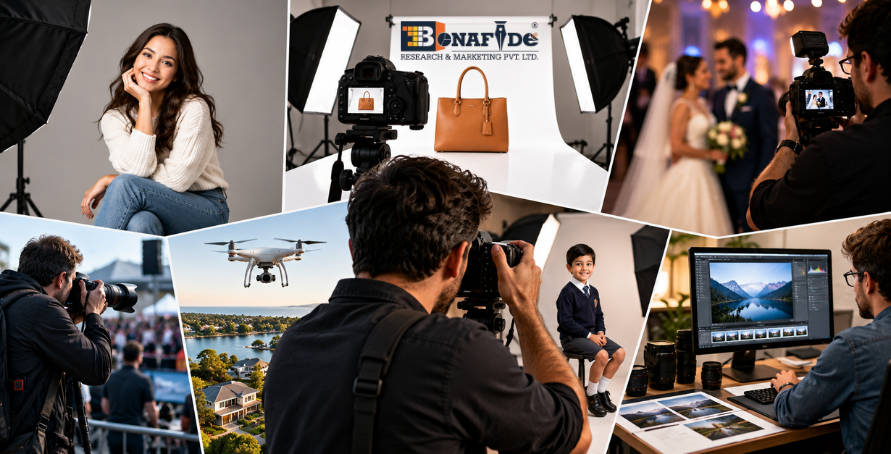
advertising photography, event and live coverage photography, media, news and editorial photography, education and ancillary photography, and other specialized applications. These services support a wide range of requirements, from documenting personal milestones and corporate events to producing advertising campaigns, product catalogues, editorial images, and educational materials. Photography has become an important component of the broader visual communication industry, helping customers communicate information, strengthen brand identity, preserve memories, and present products and experiences through compelling imagery. The market includes independent photographers, photography studios, commercial agencies,
digital marketplaces, and in-house corporate photography teams that offer different service models according to customer needs, project complexity, and budget.
According to the research report, "Global Photographic Services Market Outlook, 2031," published by Bonafide Research, the Global Photographic Services Market is expected to develop through 2031, supported by increasing demand for commercial imagery, digital marketing content, consumer photography, event documentation, and specialized visual production.** North America represents the largest regional market, supported by its established photography infrastructure, developed advertising and media industries, extensive corporate customer base, and widespread use of professional imagery across commercial and personal applications. Europe contributes through fashion, publishing, advertising, tourism, and creative industries, while Asia Pacific offers opportunities through expanding digital commerce, manufacturing, retail, and entertainment activities. South America and the Middle East & Africa generate demand through hospitality, tourism promotion, cultural events, corporate communication, and consumer celebrations. Differences in commercial activity, consumer spending, creative infrastructure, and digital adoption influence regional market development and create varied opportunities for service providers.
Commercial and advertising photography is an important component of the Global Photographic Services Market because businesses increasingly use professionally produced imagery to support product launches, promotional campaigns, brand communication, and customer engagement. Manufacturers, retailers, hospitality operators, and consumer brands commission product photographs, advertising visuals, corporate portraits, catalogue images, and promotional content for websites, digital marketplaces, social media, and traditional marketing channels. Commercial assignments may require detailed creative briefs, specialized
lighting, product styling, image retouching, and defined usage rights. These requirements create opportunities for studios and agencies capable of coordinating production teams and delivering consistent visual material. As businesses compete for attention across increasingly visual communication channels, professional photography continues to support product presentation, brand differentiation, and marketing effectiveness.
The expansion of digital commerce is further influencing demand for professional photographic services. Online retailers and manufacturers require high-quality product images that communicate product features,
packaging, design, and usage clearly. Businesses may commission multiple photographs for each product, with consistent backgrounds, angles, lighting, and image specifications across digital catalogues. Regular product launches, catalogue updates, seasonal promotions, and changes in product offerings can generate repeat assignments for photographers and commercial studios. Hospitality and property businesses also require professional images to present accommodation, facilities, commercial spaces, and customer experiences. These applications encourage providers to offer specialized product photography, styling, editing, and standardized image production tailored to the needs of different industries.
Portrait and consumer photography remains an important part of the market because individuals and families commission professional services for weddings, engagements, birthdays, graduations, maternity sessions, family portraits, and other personal milestones. Customers increasingly seek customized packages that combine planned photography, professional editing, digital galleries, and optional printed products. Demand varies according to cultural traditions, household budgets, event frequency, and local preferences. Independent photographers and studios serve these requirements through indoor sessions, outdoor shoots, event coverage, and personalized creative direction. Although smartphones provide convenient everyday photography, professional services remain relevant for occasions where customers expect carefully planned coverage, consistent image quality, and professionally finished photographs. Personal celebrations therefore continue to provide recurring assignments for photographers across established and emerging markets.
Event and live coverage photography also contributes to market activity through corporate conferences, exhibitions, entertainment performances, sporting events, cultural celebrations, and institutional functions. Event organizers, businesses, media organizations, and private customers require visual documentation for promotional communication, public relations, archives, and personal records. These assignments often involve time-sensitive production, coordination with organizers, coverage of multiple activities, and rapid delivery of selected images. Corporate events may additionally require executive portraits, sponsor visibility,
speaker photographs, and branded visual material. The ability to deliver accurate, timely, and consistent coverage can influence provider selection, while experience in managing lighting conditions, crowded venues, and changing schedules remains important for successful event assignments.
Technology is transforming how photographic services are planned, produced, and delivered. Digital portfolios, online booking systems, cloud-based galleries, electronic payments, and remote client communication allow photographers to reach customers and manage assignments more efficiently. Commercial studios can use digital workflows to organize large image collections, coordinate client approvals, and deliver photographs in formats suited to websites, catalogues, advertising, and corporate communication. Editing software and AI-assisted tools are also supporting tasks such as image selection, retouching, colour correction, and file organization. These developments can reduce repetitive work and improve production efficiency, although providers must continue to maintain creative quality, accuracy, and consistency with customer requirements. Digital capabilities are becoming increasingly important for service providers seeking to improve convenience and manage assignments across multiple customer groups.
The competitive landscape is also being influenced by smartphones, stock-image libraries, in-house creative teams, and AI-generated visuals. These alternatives can satisfy some basic or standardized visual content requirements, particularly where customers prioritize speed and cost. However, commissioned photography remains important when assignments require authentic event documentation, original creative direction, specific products or people, controlled production conditions, or customized brand representation. Professional providers can differentiate their offerings through technical expertise, specialized equipment, production coordination, editing capabilities, and an understanding of client objectives. Agencies and studios may also provide integrated services that combine photography with styling, art direction, retouching, asset organization, and commercial licensing, allowing customers to coordinate complex projects through a single service relationship. The market serves a diverse range of end users, including individual consumers, businesses and corporates, media and entertainment organizations, government and public-sector bodies, educational institutions, and other customers. Businesses use photography for advertising, product presentation, corporate communication, and commercial documentation, while media organizations require images for news coverage, reporting, and editorial publications. Educational institutions may commission photographs for academic events, student portraits, institutional communications, and documentation. Government and public-sector organizations can require imagery for public information, official events, cultural programs, and records. This diversity of applications helps service providers serve different customer segments and develop specialized capabilities according to project requirements.
Provider structures range from freelancers and sole proprietors to photography agencies, studios, online marketplaces, and in-house corporate teams. Independent photographers often provide flexible services for portraits, weddings, local businesses, and specialized assignments, while agencies and studios can coordinate larger productions requiring multiple personnel, equipment, and post-production resources. Online marketplaces help customers discover providers, compare portfolios, and submit booking enquiries, while direct booking and referrals remain relevant for relationship-driven assignments. In-house corporate teams can support organizations with frequent content requirements and consistent brand guidelines. The coexistence of these provider models creates competition across service quality, pricing, specialization, customer convenience, and production capacity.
















 We are friendly and approachable, give us a call.