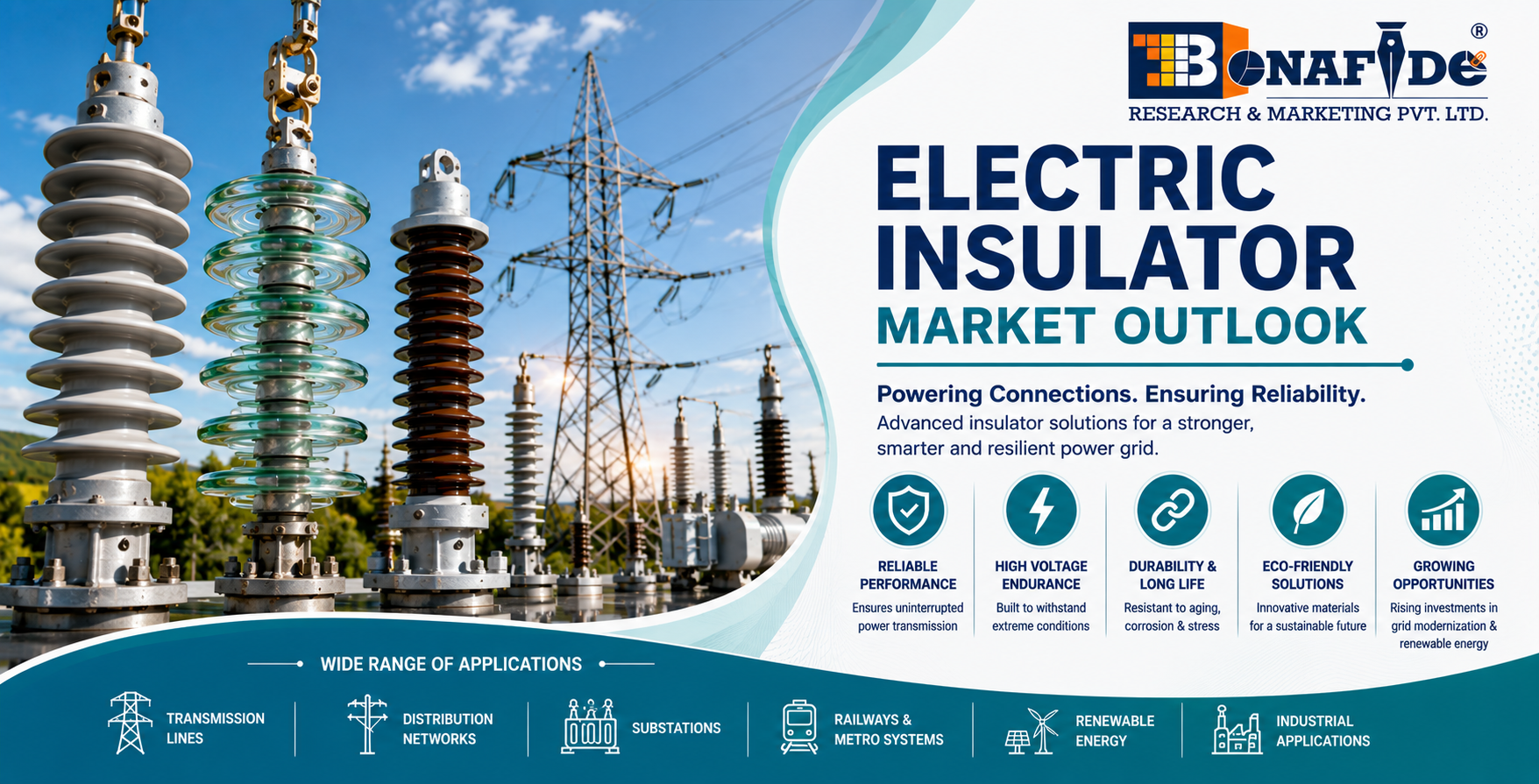
The global electric insulators market stands at a pivotal intersection of massive infrastructure investment and accelerating energy transition mandates. International Energy Agency (IEA) data confirms global power transmission investment surged 10% to reach $140 billion in 2023, directly fueling insulator demand across every voltage class. This capital deployment aligns with the U.S. Department of Energy's (DOE) multibillion-dollar grid resilience and transmission funding initiatives under federal infrastructure programs, which are actively replacing traditional porcelain insulators with advanced polymer alternatives across aging transmission corridors. The market faces intensifying pressure from
renewable energy integration the IEA projects that by early 2025, the accelerated adoption of distributed energy resources will fundamentally reshape grid architecture, requiring insulators capable of withstanding bidirectional power flows and intermittent loading conditions. Composite polymer materials are gaining regulatory favor, with standards bodies including the International Electrotechnical Commission (IEC) and IEEE incorporating enhanced pollution withstand requirements and thermal cycling protocols to ensure insulator integrity under increasingly severe environmental conditions. Government initiatives like India's October 2024 commitment to expand renewable transmission infrastructure and grid capacity by 2032, with projected investments around $109 billion, underscore the scale of opportunity. Yet the market confronts significant headwinds: supply chain disruptions from U.S. tariff measures implemented in 2025 have compelled stakeholders to reassess cost structures and market accessibility. Major industry expos including CIGRE's biennial sessions and IEEE's Electrical
Insulation Conference serve as critical platforms where utilities, manufacturers, and regulators converge to shape technical standards and deployment strategies.
According to the research report "Global Electric Insulator Market Outlook, 2031," published by Bonafide Research, the Global Electric Insulator market was valued at more than USD 14.82 Billion in 2025, and expected to reach a market size of more than USD 21.58 Billion by 2031 with the CAGR of 6.63% from 2026-2031. The competitive landscape features established manufacturers including MacLean Power Systems, Jiangsu SHEMAR Power, and PPC Insulators navigating a complex value chain characterized by high entry barriers stemming from rigorous
certification requirements and capital-intensive production facilities. Pricing dynamics are heavily influenced by raw material costs ceramic and porcelain insulators continue commanding approximately 48% of total market revenue, though composite polymer alternatives are gaining share due to superior lifecycle cost advantages and enhanced performance characteristics. Utilities and enterprise adopters demonstrate shifting procurement patterns, increasingly prioritizing total cost of ownership over initial capital expenditure, a trend accelerating as grid operators face mounting pressure to reduce maintenance expenditures across aging infrastructure. The U.S. Department of Energy's categorical exclusion determinations reveal active replacement programs, including the Western Area Power Administration's proposal to replace insulators along the HUR-TRY transmission line using
helicopter-assisted installation techniques. Investment and funding landscapes remain robust, driven by federal resilience programs and state-level renewable portfolio standards that mandate grid hardening and modernization. Regional tax policies and procurement regulations vary significantly, with the Asia-Pacific region alone accounting for approximately 57.8% of market activity in 2025, driven by China and India together representing more than two-thirds of regional demand.
Pin insulators dominate global market share due to their unparalleled versatility across distribution networks and cost-effective performance in medium-voltage applications. Pin insulators represent the workhorse of electrical distribution infrastructure, serving as the primary insulation solution for the millions of kilometers of distribution lines spanning urban, suburban, and rural landscapes worldwide. Distribution networks require pin insulators on virtually every
utility pole, with global distribution line length exceeding 70 million kilometers, creating immense replacement and maintenance demand. Pin insulator manufacturing benefits from mature, scalable production processes using porcelain and glass materials, enabling competitive pricing that makes them the default choice for utilities operating under budget constraints. The standardized design of pin insulators facilitates rapid deployment and replacement, critical for utilities managing storm damage restoration and routine maintenance programs across expansive service territories. Regulatory frameworks including NEMA standards specify pin insulator performance requirements, creating procurement consistency that simplifies utility purchasing decisions. Technological advancements in pin insulator glazing and
weather-shed design have extended service life beyond 40 years, improving lifecycle economics versus alternative products. Emerging economies expanding rural electrification programs rely heavily on pin insulators due to their proven reliability and minimal training requirements for line crews. The installed base of pin insulators creates significant aftermarket demand, as utilities systematically replace aging units through grid modernization programs funded by government infrastructure initiatives.
Renewable energy infrastructure demands specialized insulators capable of withstanding unique environmental stresses while connecting remote generation to population centers. The renewable energy sector represents the most dynamic application segment for electric insulators, driven by unprecedented global investment in solar, wind, and
hydropower generation. Solar farms spanning hundreds of hectares require extensive medium-voltage collection systems, with each
inverter and combiner box requiring insulators rated for DC voltage stresses that differ fundamentally from AC systems. Wind farm development in offshore and coastal environments demands insulators with exceptional pollution performance, as
salt spray and marine atmospheres rapidly degrade traditional porcelain and glass materials. Hydropower facilities in mountainous regions require insulators capable of withstanding extreme temperature variations and high-altitude conditions where reduced air density affects dielectric strength. Renewable generation's distributed nature requires thousands of interconnection points per project, each necessitating multiple insulators for transformer connections,
switchgear, and transmission tie-ins. IEA data confirms global power transmission investment surged 10% to $140 billion in 2023, with renewable integration projects accounting for a substantial portion of this capital deployment. India's commitment to invest approximately $109 billion in renewable transmission infrastructure by 2032 exemplifies the scale of renewable-driven insulator demand. The variability of renewable generation creates unique insulator stress profiles, requiring products certified to IEC and IEEE standards for cyclic loading and partial discharge resistance.
High voltage insulators dominate the market because they serve as the critical backbone of bulk power transmission, connecting generation sources to population centers across vast distances. The high voltage segment represents the largest voltage category in the electric insulators market, driven by the fundamental economics of power transmission and the scale of global infrastructure investment. High voltage transmission lines deliver electricity across hundreds of kilometers with minimal losses, making them the most cost-effective means of moving bulk power from generation to load centers. The global transmission network length exceeds 5 million kilometers, with each kilometer requiring hundreds of high-voltage insulators for suspension, tension, and post applications. High voltage insulators command premium pricing compared to lower voltage alternatives, reflecting the sophisticated engineering required for dielectric performance at elevated voltages. Aging transmission infrastructure in developed economies creates substantial replacement demand, with utilities systematically upgrading lines to handle increased power flows. Emerging economy transmission expansion, exemplified by India's grid capacity initiatives, drives new-build demand for high voltage insulators. High voltage composite insulators represent the fastest-growing sub-segment, with lightweight polymer designs enabling helicopter installation and reduced structural requirements. CIGRE technical working groups continuously refine high voltage insulator standards, ensuring products meet evolving performance requirements for pollution, mechanical loading, and thermal cycling.
Composite polymer insulators are the fastest-growing material segment due to superior pollution performance, lighter weight, and lifecycle cost advantages over traditional
ceramics. The rapid adoption of composite polymer materials represents one of the most significant material shifts in the electric insulator industry, driven by compelling technical and economic advantages. Polymer insulators exhibit superior hydrophobic properties, meaning water beads on the
surface rather than forming conductive films, dramatically improving performance in polluted environments. The lightweight nature of composite insulators typically 70-80% lighter than equivalent porcelain units enables helicopter installation, reducing labor costs and outage durations. Polymer housings resist vandalism and gunshot damage better than brittle ceramic materials, a critical advantage in urban and peri-urban installations. The manufacturing process for composite insulators requires less energy than porcelain firing, resulting in lower carbon footprint and production costs. Composite insulators demonstrate superior performance in seismic zones due to their flexibility and energy absorption characteristics. Standards bodies including IEC and IEEE have incorporated enhanced pollution withstand requirements and thermal cycling protocols that favor polymer designs.
Power utilities represent the largest end-user segment because they own and operate the entire transmission and distribution infrastructure that forms the
foundation of modern civilization. Utilities dominate insulator consumption through their ownership of generation, transmission, and distribution assets that require continuous maintenance, replacement, and expansion. Investor-owned utilities, municipal utilities, and rural electric cooperatives collectively manage over 70 million kilometers of distribution lines globally, each requiring pin, suspension, and post insulators. Utility capital expenditure programs allocate substantial budgets to insulator replacement, with grid modernization initiatives accelerating replacement cycles. The U.S. DOE's grid resilience funding initiatives have created multi-year utility procurement programs for insulators across multiple voltage classes. Utilities maintain extensive inventory and procurement departments dedicated to insulator sourcing, creating stable, predictable demand patterns. Regulatory oversight ensures utilities maintain minimum reliability standards, mandating regular insulator inspection and replacement programs. The Asia-Pacific region accounts major chunk of utility insulator demand, driven by China and India's massive grid expansion programs. Utility consolidation and mergers create larger procurement entities with enhanced purchasing power, driving volume-based pricing and supplier consolidation.












 We are friendly and approachable, give us a call.