Subsea development has become an increasingly important part of the global oil and gas production system, particularly as operators pursue reserves in deeper waters and extend existing offshore assets. Recent activity in the Gulf of Mexico, Brazilian pre-
salt, Norwegian Continental Shelf, West Africa and Australia demonstrates continued deployment of wellhead and Christmas tree equipment in technically demanding environments. The U.S. Energy Information Administration reported that Federal Gulf of Mexico crude production was expected to remain around 1.8 million barrels per day in 2024 and 1.9 million barrels per day in 2025, with new fields offsetting declines from mature assets. Equipment requirements are becoming more sophisticated as deepwater wells encounter higher pressure, temperature, corrosion and intervention constraints. BSEE defines high-pressure conditions as above 15,000 psi and high-temperature conditions as above 350°F, while its technology programs specifically evaluate qualification methods for HPHT subsea equipment. Standardization is also reshaping procurement, with API Specification 17D covering subsea wellhead and tree equipment and IOGP S-561 establishing supplementary procurement requirements.
Digital controls, remotely operated intervention, standardized tree configurations and longer tiebacks are increasingly connected to project economics because they can reduce installation exposure and improve lifecycle management. Regulatory scrutiny is simultaneously increasing, particularly around well integrity, environmental protection and subsea decommissioning. BSEE's ongoing subsea infrastructure study illustrates the growing attention to residual contaminants and environmental risks associated with offshore infrastructure retirement.
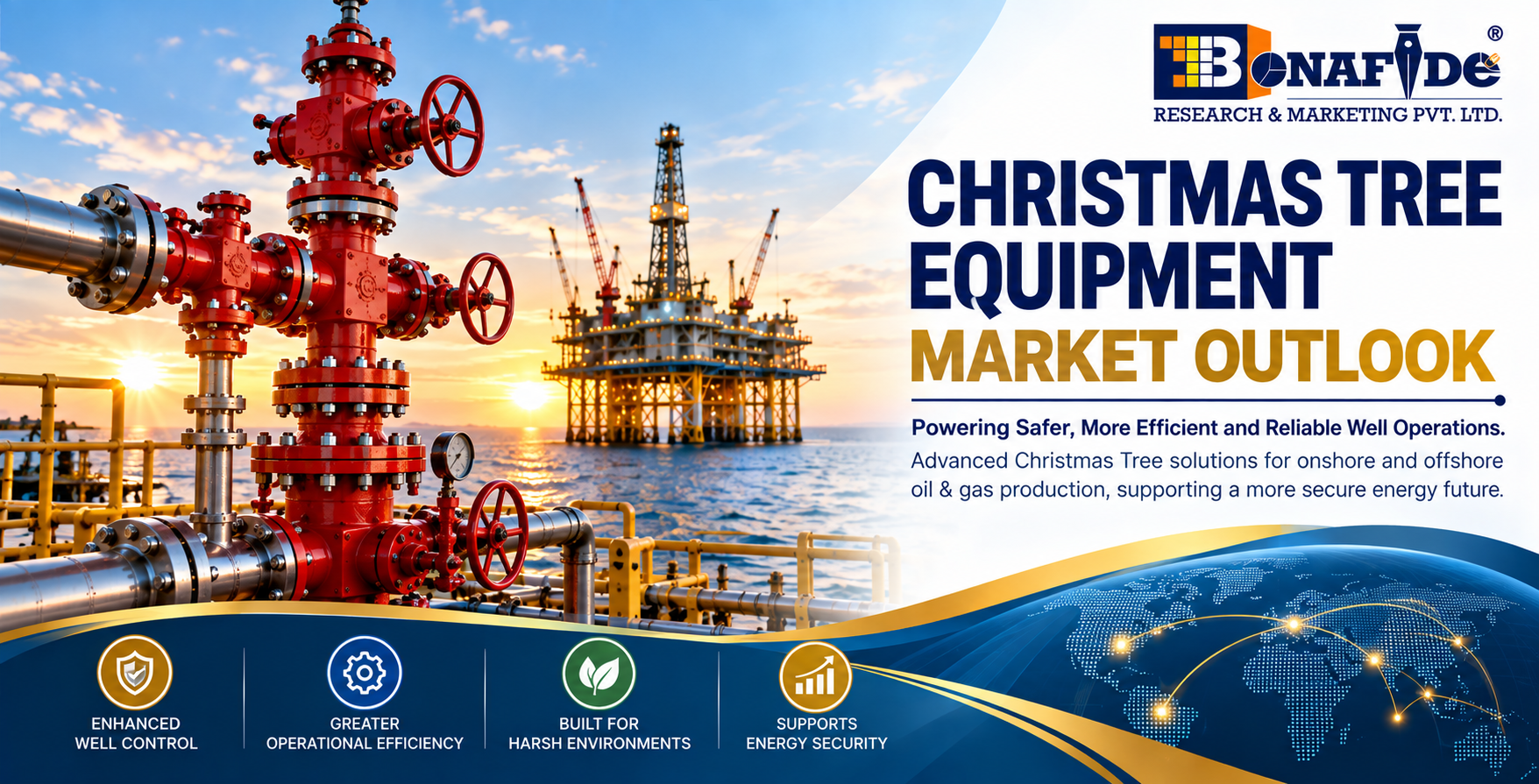
According to the research report "Global Christmas Tree Equipment Market Outlook, 2031," published by Bonafide Research, the Global Christmas Tree Equipment market was valued at more than USD 6.37 Billion in 2025, and expected to reach a market size of more than USD 8.86 Billion by 2031 with the CAGR of 5.80% from 2026-2031. Recent project activity illustrates a market increasingly shaped by standardized equipment, integrated subsea architectures and difficult reservoir conditions rather than by conventional wellhead hardware alone. Petrobras selected SLB OneSubsea for standardized pre-salt subsea production systems for the Atapu and Sepia developments in Brazil, including vertical trees, subsea distribution units, controls and pipeline systems. In the UK North Sea, the Murlach development represents the first deployment of OneSubsea's standard configurable vertical monobore tree system in the UK North Sea, with the installation approach intended to reduce rig days. Baker Hughes and McDermott also completed subsea infrastructure at Australia's Ichthys field, incorporating a 7-inch vertical Christmas tree system and new subsea wells tied into existing gathering infrastructure. These projects demonstrate the commercial importance of compatibility with existing subsea networks, installation efficiency and standardized configurations. Competitive barriers remain substantial because suppliers must satisfy demanding qualification, manufacturing, testing, quality assurance and field-service requirements. API's current standards framework includes Specification 17D for subsea wellhead and tree equipment, while IOGP S-561 establishes common procurement requirements based on API 17D. The supplier ecosystem increasingly spans complete subsea production systems, trees, controls, installation and lifecycle services. OneSubsea describes subsea trees as equipment controlling flow between the well and seabed facilities and offers designs for temperatures from ?18°C to 176°C and pressures of 15,000 psi or more.
Deepwater field development and the need for reliable remote flow control make subsea
Christmas trees central to offshore well completion and long-term production operations. Subsea Christmas trees hold a leading position because offshore wells increasingly operate in environments where direct
surface access is impractical and production systems must be controlled from the seabed. The Bureau of Ocean Energy Management reports that the Gulf of America accounts for more than 99% of U.S. Outer Continental Shelf oil and gas production, demonstrating the scale of offshore infrastructure requiring specialized well-control equipment. Brazil provides another strong example through Petrobras' Atapu and Sepia developments, which incorporate standardized vertical subsea trees within their pre-salt production systems. The equipment provides critical functions including flow regulation, pressure isolation, well intervention and emergency shutdown while connecting completed wells with subsea flowlines and gathering networks. Australia's Ichthys development also deployed vertical Christmas tree systems with new subsea wells connected to existing gathering infrastructure, illustrating their role in both new developments and integrated field architectures. Technical requirements are becoming more demanding as operators develop deeper and higher-pressure reservoirs. BSEE identifies high-pressure conditions above 15,000 psi and high-temperature conditions above 350°F, creating additional requirements for pressure containment, materials, seals and qualification. Standardization is helping operators manage these requirements, with API Specification 17D providing industry requirements for subsea wellhead and tree equipment and IOGP S-561 establishing supplementary procurement specifications. Lifecycle considerations further strengthen demand because subsea trees remain associated with wells for extended operating periods and require intervention, inspection, maintenance and eventual decommissioning. Suppliers are consequently developing configurable tree architectures, standardized interfaces and refurbishment capabilities that can reduce engineering complexity and improve lifecycle economics. These technical and operational requirements make subsea Christmas trees integral to modern offshore production infrastructure.
Growing enhanced recovery, produced-water management and reservoir pressure requirements are expanding the need for controlled injection infrastructure across mature and offshore petroleum operations. Injection wells are becoming increasingly important because petroleum operations depend on controlled subsurface fluid movement for reservoir management, enhanced recovery and produced-water disposal. The U.S. Environmental Protection Agency estimates that approximately 180,000 Class II injection wells operate across the United States, providing evidence of the extensive infrastructure already dedicated to oil and gas injection activities. Enhanced recovery represents a particularly important application because operators inject water, steam, carbon dioxide, polymers and other fluids to improve displacement of hydrocarbons toward producing wells. This approach can extend the productive life of mature reservoirs and sustain field output without relying exclusively on new discoveries. Produced-water management provides another structural requirement. Oil and gas production generates large quantities of formation water, and underground injection provides an established disposal pathway subject to regulatory controls. Reservoir pressure maintenance also creates continuing equipment requirements because injection can support pressure conditions needed to move hydrocarbons through increasingly mature formations. Brazil's National Agency of Petroleum, Natural Gas and
Biofuels maintains production datasets that separately identify water injection, disposal water, steam, gas, carbon dioxide and
nitrogen activities, illustrating the variety of injection practices used in petroleum operations. Injection equipment must maintain pressure integrity, accommodate fluid characteristics and provide reliable isolation during operation and intervention. Regulatory requirements reinforce these technical needs. EPA's Class II Underground Injection Control framework establishes requirements covering construction, operation, monitoring, testing, reporting and closure. Carbon dioxide storage introduces another potential pathway through Class VI wells, which are specifically regulated for geologic sequestration. These applications broaden the role of injection infrastructure beyond conventional enhanced recovery and create additional opportunities for specialized wellhead and Christmas tree equipment.
Production remains the principal application because Christmas trees provide essential control, isolation and flow-management functions between completed hydrocarbon wells and gathering systems. Production applications dominate because every producing oil or gas well requires reliable equipment to regulate hydrocarbon flow, isolate the well and maintain operational control throughout its productive life. Christmas trees perform these functions through
valves, chokes and pressure-containing components positioned above the wellhead or directly on subsea wells. The scale of offshore production provides a substantial
foundation for this application. The Bureau of Ocean Energy Management reports that the Gulf of America generates more than 99% of U.S. Outer Continental Shelf oil and gas production, representing a large installed base of producing wells requiring dependable flow-control systems. Continued field development adds further requirements because new production wells require completion equipment before hydrocarbons can enter gathering and processing networks. Brazil's pre-salt developments illustrate this relationship clearly. Petrobras' Atapu and Sepia projects use standardized vertical subsea trees as part of their broader subsea production architecture, linking completed wells with offshore gathering infrastructure. The UK North Sea is also adopting configurable vertical monobore tree systems in developments such as Murlach, demonstrating the importance of efficient installation and standardized production equipment. Production environments can expose Christmas trees to high pressure, temperature variation, corrosive fluids and demanding intervention conditions, making reliability a fundamental procurement consideration. Equipment must also remain functional during well shutdowns, maintenance and intervention activities, extending its importance beyond routine production. API's subsea standards program addresses equipment integrity and associated production technologies, reflecting the industry's emphasis on reliable flow management and leak prevention. Long operating periods further create requirements for spare components, maintenance, refurbishment and eventual decommissioning. Consequently, production applications generate demand across both initial installation and the broader lifecycle of Christmas Tree Equipment.
Development of deeper reservoirs and technically challenging offshore wells is increasing requirements for Christmas trees capable of containing extreme pressures throughout their operating lifecycle. Ultra-high-pressure applications are gaining importance as petroleum operators move toward reservoirs presenting increasingly severe pressure and temperature conditions. The Bureau of Safety and Environmental Enforcement identifies high-pressure conditions as exceeding 15,000 psi and high-temperature conditions as exceeding 350°F within its offshore regulatory framework. Such environments require substantially greater attention to pressure containment, material performance, sealing systems, fatigue resistance and qualification than conventional wells. The Gulf of America contains several geological areas associated with high-pressure and high-temperature resources, including Lower Tertiary and Jurassic Norphlet formations. Development of these resources creates demand for specialized equipment capable of maintaining integrity under extreme operating conditions. BSEE has specifically evaluated API 17TR8 methodologies for pressure-rating approaches applicable to subsea equipment operating above 15,000 psi or 350°F, demonstrating the additional engineering scrutiny associated with HPHT applications. Deeper drilling also increases the technical burden because pressure and temperature conditions can rise significantly with formation depth. Equipment manufacturers therefore need extensive design verification and testing before systems can be deployed commercially. Material selection becomes especially important because seals,
connectors, valves and pressure-containing components must maintain performance under repeated pressure cycles and demanding thermal conditions. API's technical standards framework includes guidance addressing high-pressure and high-temperature subsea design, helping operators and suppliers establish consistent engineering expectations. Commercial equipment development is progressing accordingly, with subsea suppliers offering tree systems designed for pressures of 15,000 psi and above. Regulatory oversight adds another layer through requirements for evaluation of novel offshore technologies and, in certain cases, independent technical review. These factors make ultra-high-pressure equipment an increasingly specialized area of Christmas Tree Equipment development, particularly across deepwater and technically complex offshore projects.
Deepwater reserves, expanding subsea developments and remote well-control requirements are increasing the deployment of Christmas Tree Equipment across offshore production environments. Offshore applications are gaining importance because petroleum operators increasingly depend on subsea wells to access reservoirs located beneath deep waters and geographically remote seabeds. Unlike conventional surface wells, subsea developments require equipment capable of controlling production directly at the seabed while connecting wells to flowlines, manifolds and processing facilities. The Gulf of America represents one of the world's most established offshore production environments. BOEM reports that more than 99% of U.S. Outer Continental Shelf oil and gas production originates from the Gulf, creating a substantial installed base of offshore wells and associated production systems. Brazil provides another major development environment through its pre-salt fields in the Santos Basin, where Petrobras is deploying standardized vertical subsea trees across major projects including Atapu and Sepia. The Norwegian Continental Shelf also maintains a substantial offshore production base. Norwegian government data show petroleum production of approximately 239 million standard cubic metres of oil equivalent during 2025, demonstrating the continuing significance of offshore petroleum infrastructure. Australia contributes through projects such as Ichthys, where new subsea wells and vertical Christmas tree equipment were integrated with existing gathering infrastructure. West Africa is developing additional subsea requirements through projects such as Kaminho offshore Angola, which includes a 13-well subsea production system. Offshore equipment must withstand pressure, temperature, corrosion and seabed conditions while remaining accessible through specialized intervention technologies. Reliability therefore carries significant economic importance because equipment failure can require costly vessels, remotely operated vehicles and offshore personnel. Standardized tree designs are increasingly being adopted to simplify engineering and installation across repeated wells. Continued deepwater development, brownfield integration, subsea tiebacks and complex reservoir conditions therefore provide multiple pathways for offshore Christmas Tree Equipment demand.
















 We are friendly and approachable, give us a call.