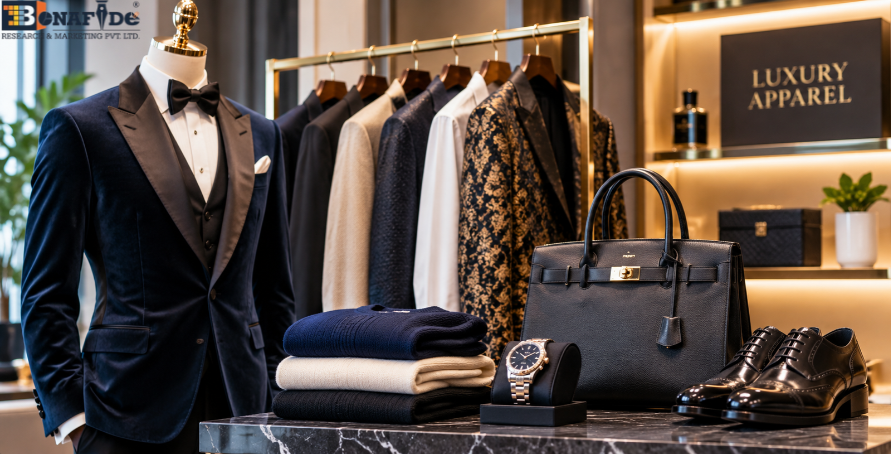
The Global Luxury Apparel Industry is evolving as consumers increasingly seek premium clothing that reflects personal style, exclusivity, craftsmanship, and brand identity. From designer dresses and tailored suits to premium outerwear and luxury casualwear, the market is experiencing changing fashion preferences and expanding opportunities across established and emerging economies.
According to the research report, "Global Luxury Apparel Market Outlook, 2031," published by Bonafide Research, the Global Luxury Apparel Market Outlook was valued at more than USD 88.40 Billion in 2025, and expected to reach a market size of more than USD 123.75 Billion by 2031 with the CAGR of 5.92% from 2026-2031..
Evolving Consumer Preferences Supporting
Luxury Fashion Demand
Luxury apparel purchasing is increasingly influenced by consumers' preference for distinctive designs, premium materials, superior garment construction, and established fashion identities. Buyers are placing greater importance on product quality, brand heritage, exclusivity, and personalized shopping experiences. The growing visibility of international fashion labels and designer collections is also strengthening consumer engagement across different age groups and income categories.
The market encompasses several clothing categories, including bottom-wear, top-wear, dresses and gowns, outerwear,
knitwear, suits and formalwear, and other specialized apparel. Among these, outerwear represents the leading product category, supported by its premium positioning, seasonal relevance, material variety, and presence across established designer collections.
Asia-Pacific Strengthens Its Position in the Global Luxury Apparel Industry
Asia-Pacific represents the largest regional market for luxury apparel, supported by expanding affluent consumer groups, premium retail infrastructure, international brand presence, and growing interest in designer fashion. China remains an important country market, while Japan and South Korea contribute through established fashion industries, premium department stores, and strong consumer engagement with luxury brands.
India is emerging as an important opportunity through increasing disposable incomes, premium occasionwear demand, designer fashion, and its established
textile and garment manufacturing ecosystem. Australia and Southeast Asian markets also contribute through premium retail destinations, international tourism, and growing demand for high-end fashion products.
North America and Europe remain significant luxury fashion markets, supported by established designer houses, affluent consumers, premium shopping destinations, and international brand networks. South America offers opportunities through domestic fashion industries and premium retail development, while the Middle East and Africa benefit from luxury tourism, high-end shopping infrastructure, and expanding fashion initiatives.
Changing Retail Channels and Material Preferences
The distribution landscape is evolving through the integration of physical luxury boutiques, specialist retailers, department stores, and
online shopping platforms. Specialist retailers remain the leading distribution channel because they offer curated collections, personalized customer service, premium product presentation, and direct access to established luxury fashion labels.
Digital platforms are also changing how consumers discover and purchase luxury clothing. Brand-owned
e-commerce websites, virtual product experiences, personalized recommendations, and social media engagement are helping fashion companies strengthen customer relationships and extend their market reach.
Cotton represents the leading material category due to its versatility, comfort, and widespread use across premium clothing collections. Silk, leather,
denim, and other specialized materials further support product differentiation through distinctive textures, finishes, and garment characteristics. Luxury apparel companies are also paying greater attention to material traceability, responsible sourcing, and product durability.
Competitive Landscape and Industry Opportunities
The global luxury apparel market includes established fashion groups and designer brands competing through product innovation, creative direction, craftsmanship, brand heritage, and international distribution networks. Prominent industry participants include:
• LVMH
• Kering
• Chanel
• Herm?s
• Prada Group
• Burberry Group
• Moncler S.p.A.
• Brunello Cucinelli S.p.A.
• Loro Piana
• Ermenegildo Zegna Group
These companies are strengthening their market presence through seasonal collections, exclusive product launches, premium retail experiences, digital engagement, and international expansion. Maintaining brand exclusivity while responding to changing consumer preferences remains an important strategic consideration.
Future Outlook
The Global Luxury Apparel Market is expected to benefit from continuing demand for premium clothing, expansion of affluent consumer groups, increasing international fashion exposure, and the development of digital retail experiences. Opportunities will also emerge from personalized luxury shopping, innovative garment designs, premium material applications, and the growing visibility of regional designer brands.
As luxury fashion companies continue to balance heritage, creativity, craftsmanship, and changing consumer expectations, the industry is expected to maintain its importance within the global premium consumer goods landscape.











 We are friendly and approachable, give us a call.