The global
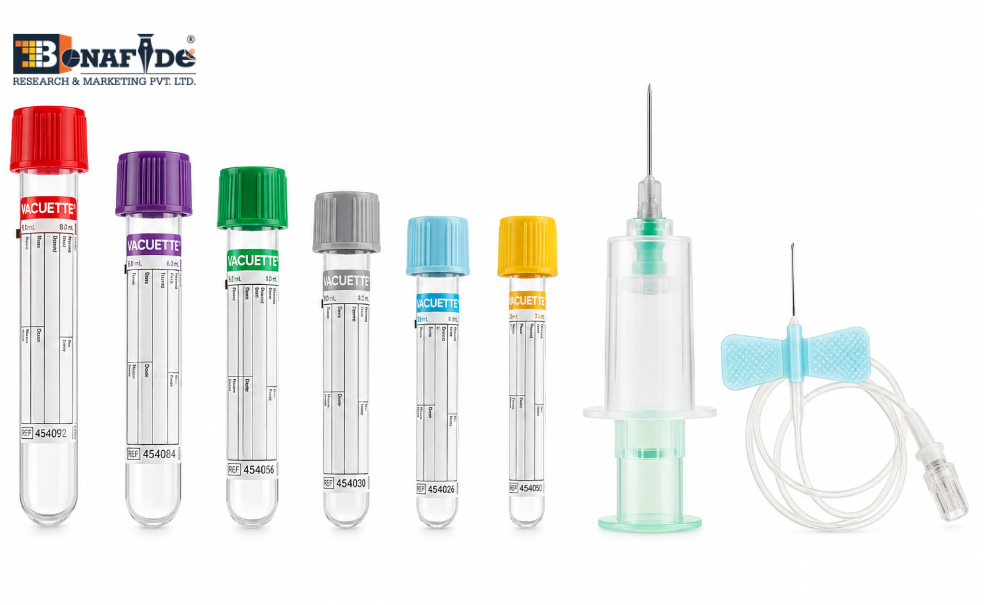
Blood Collection Devices market comprises medical products used to obtain, contain, protect, and transport blood specimens for diagnostic testing, disease monitoring, transfusion-related activities, and other clinical purposes. These devices include blood collection tubes, needles, syringes, lancets, winged blood collection sets, holders, safety-engineered devices, and associated accessories. Blood collection represents a critical pre-analytical stage because specimen quality can directly affect laboratory results and subsequent clinical decisions. The World Health Organization identifies phlebotomy as one of the most common invasive procedures in healthcare and emphasizes proper equipment, training, specimen identification, collection technique, and transportation as essential elements of safe practice. Demand is supported by the widespread use of laboratory testing for health assessment, diagnosis, treatment decisions, chronic disease monitoring, screening, and follow-up care. Blood specimens are used for hematology, clinical chemistry, coagulation, immunology, infectious-disease investigations, hormone testing, metabolic assessment, and numerous other analyses, creating recurring requirements for different collection devices and tube configurations. Hospitals, outpatient clinics, diagnostic laboratories, physician practices, blood banks, and specialized healthcare facilities all participate in blood collection activities. The market is also influenced by growing attention to healthcare-worker safety, particularly the prevention of needlestick injuries and exposure to bloodborne pathogens. WHO guidance recommends sterile, single-use collection equipment and recognizes safety-engineered systems as an important means of reducing occupational exposure. Industry associations, laboratory organizations, healthcare institutions, regulators, and standards bodies contribute to the development and adoption of practices related to specimen quality, device safety, infection prevention, and laboratory workflows.
According to the research report, “Global Blood Collection Devices Market Overview, 2031” published by Bonafide Research, the Global Blood Collection Devices Market is expected to cross USD 13.08 Billion market size by 2031, with 7.14% CAGR by 2026-31.The global Blood Collection Devices market encompasses a broad range of products used to obtain, contain, protect, and prepare blood specimens for laboratory analysis and clinical procedures, with companies such as Becton, Dickinson and Company (BD), Terumo Corporation, Greiner Bio-One, Haemonetics, Fresenius Kabi, Nipro, SARSTEDT, and Cardinal Health participating across different parts of the value chain. BD maintains an extensive Vacutainer portfolio covering blood collection tubes, needles, blood collection sets, and transfer devices, while Greiner Bio-One operates a dedicated Preanalytics business focused on collection systems for blood and urine samples and
digital solutions supporting pre-analytical workflows. Terumo also operates across blood collection and processing, including whole-blood collection, blood component collection, automated collection systems, and automated processing technologies. Growth opportunities are emerging from demand for safer phlebotomy, improved specimen quality, decentralized testing, automation, and products that reduce patient discomfort and healthcare-worker exposure to sharps. BD, for example, reports that its Push Button Blood Collection Set uses a retractable safety needle and that its safety-engineered portfolio is designed to reduce needlestick injuries. In January 2026, Terumo launched the Venosafe II Replot vacuum
blood collection tube in Japan, designed to accelerate clot formation and potentially reduce laboratory turnaround time. From a supply-chain perspective, the industry begins with manufacturers sourcing polymers, glass,
rubber or
elastomer components, metals, additives,
packaging materials, and specialized components before molding, forming, assembly, sterilization, inspection, and packaging. Finished devices then move through distributors, healthcare procurement systems, laboratories, hospitals, clinics, blood centers, and other end users.
Lancets are becoming increasingly important because they provide a simple way to obtain small blood samples, particularly from a fingertip, without requiring conventional venipuncture. Their use is closely associated with
blood glucose monitoring, where patients may need to perform repeated capillary blood sampling as part of diabetes management. Unlike venous collection, capillary sampling can be performed outside hospitals and laboratories, making lancets particularly suitable for home-based monitoring and decentralized testing. The growing emphasis on diabetes management is therefore an important factor supporting their use. The International Diabetes Federation recognizes blood glucose monitoring as an important component of diabetes care, while glucose-monitoring practices can involve repeated testing according to the individual's treatment plan and clinical requirements. Lancets are also used with point-of-care systems for obtaining samples for selected diagnostic measurements, creating applications beyond conventional laboratory phlebotomy. Product development has increasingly focused on reducing pain, improving penetration consistency, controlling depth, and simplifying operation. Safety lancets with integrated mechanisms can also reduce accidental sharps exposure because the needle is automatically shielded or retracted after use. Single-use designs are particularly relevant because they reduce concerns associated with repeated handling and reuse of sharps. Another factor is the convenience of compact
lancet devices, which can be incorporated into portable blood-testing routines and used by patients with limited clinical assistance. Their relatively straightforward operation makes them practical for community screening programs, pharmacies, outpatient settings, and home care. The continued movement toward patient-centered healthcare also favors devices that allow individuals to participate directly in routine monitoring. In addition, an aging population and the increasing need to monitor chronic conditions create recurring requirements for easy-to-use sampling tools.
The others category can encompass a diverse group of users such as physician offices, specialty clinics,
home healthcare providers, pharmacies, community testing facilities, research organizations, and other healthcare locations that perform blood sampling without fitting into the principal hospital, ambulatory surgical center, or diagnostic laboratory categories. Its growth is linked to the broader movement of healthcare services away from centralized facilities and toward more accessible points of care. Blood testing is no longer limited to large clinical laboratories because portable and point-of-care technologies allow selected tests to be conducted closer to patients. This creates opportunities for blood collection devices in primary care, chronic disease management, community screening, occupational health, and home-based care. Physician practices may collect blood during routine consultations for follow-up investigations, while specialty clinics can require specimens for treatment monitoring and disease-specific assessments. Home healthcare is another relevant setting because patients with chronic conditions may require regular sample collection without visiting a hospital for every measurement. Pharmacies and community healthcare locations have also become increasingly involved in screening and testing activities in some healthcare systems, creating additional points where capillary blood collection devices may be used. Research organizations represent another important user group because clinical studies and biomedical research frequently require carefully collected blood specimens for laboratory analysis, biomarker investigations, pharmacological studies, and sample repositories.
Therapeutic blood collection differs from purely diagnostic testing because specimens are often obtained after a condition has already been identified and are then used to guide or evaluate ongoing treatment. This creates a recurring need for blood samples throughout the patient's care pathway. Many therapies require clinicians to evaluate whether treatment is producing the desired physiological response, whether a medication is reaching an appropriate therapeutic range, or whether treatment is causing adverse effects that require intervention. Therapeutic drug monitoring is a clear example, as measurements of selected medicines in blood can help clinicians adjust dosing according to patient-specific pharmacokinetic characteristics. Blood collection is also important in
oncology, where patients receiving chemotherapy or other systemic treatments may undergo repeated laboratory assessments to evaluate blood cell counts, kidney and liver function, and other parameters relevant to treatment decisions. In anticoagulation management, laboratory testing may be used to assess the effect of selected anticoagulant therapies, while patients receiving certain medications may require periodic monitoring of organ function or hematological parameters. Immunosuppressive therapies used after transplantation provide another example because monitoring drug concentrations and patient laboratory values can assist clinicians in balancing treatment effectiveness with toxicity risks. The increasing complexity of therapies has strengthened the importance of laboratory information throughout treatment rather than only at the initial diagnosis. Blood collection devices support this process by enabling specimens to be obtained consistently and transferred for analysis under controlled conditions.
Automated blood collection refers to technologies that use mechanical, electronic, or computer-controlled systems to assist or perform aspects of the blood-drawing process. Its increasing adoption is associated with broader automation across healthcare and laboratory workflows. Traditional venipuncture depends heavily on the skill of an individual healthcare professional to identify a suitable vein, insert the needle correctly, maintain the collection process, and manage multiple tubes. Automated systems are being developed to address some of these challenges by combining imaging, sensing, robotic positioning, controlled needle movement, and software-based guidance. One of the most important potential advantages is consistency. A technology capable of identifying vascular structures and controlling needle placement can potentially standardize portions of the procedure that are highly dependent on operator technique. This is particularly relevant for patients with difficult-to-access veins, where repeated attempts can increase discomfort, consume staff time, and create additional sharps exposure opportunities. Automation is also aligned with healthcare systems seeking to improve operational efficiency as laboratory and clinical workloads increase. Automated or semi-automated systems can potentially integrate collection with digital patient identification, specimen labeling, and downstream laboratory workflows, helping reduce manual steps and opportunities for human error. The development of robotic blood-drawing technologies demonstrates that automation is moving beyond theoretical concepts into practical healthcare applications. Companies and research groups have investigated robotic systems capable of using
ultrasound or other imaging techniques to locate veins and guide needle insertion. Although such technologies still face challenges involving cost, patient variability, regulatory requirements, equipment size, clinical acceptance, and integration into existing workflows, continued technological development is expanding their potential use.





 We are friendly and approachable, give us a call.