The global
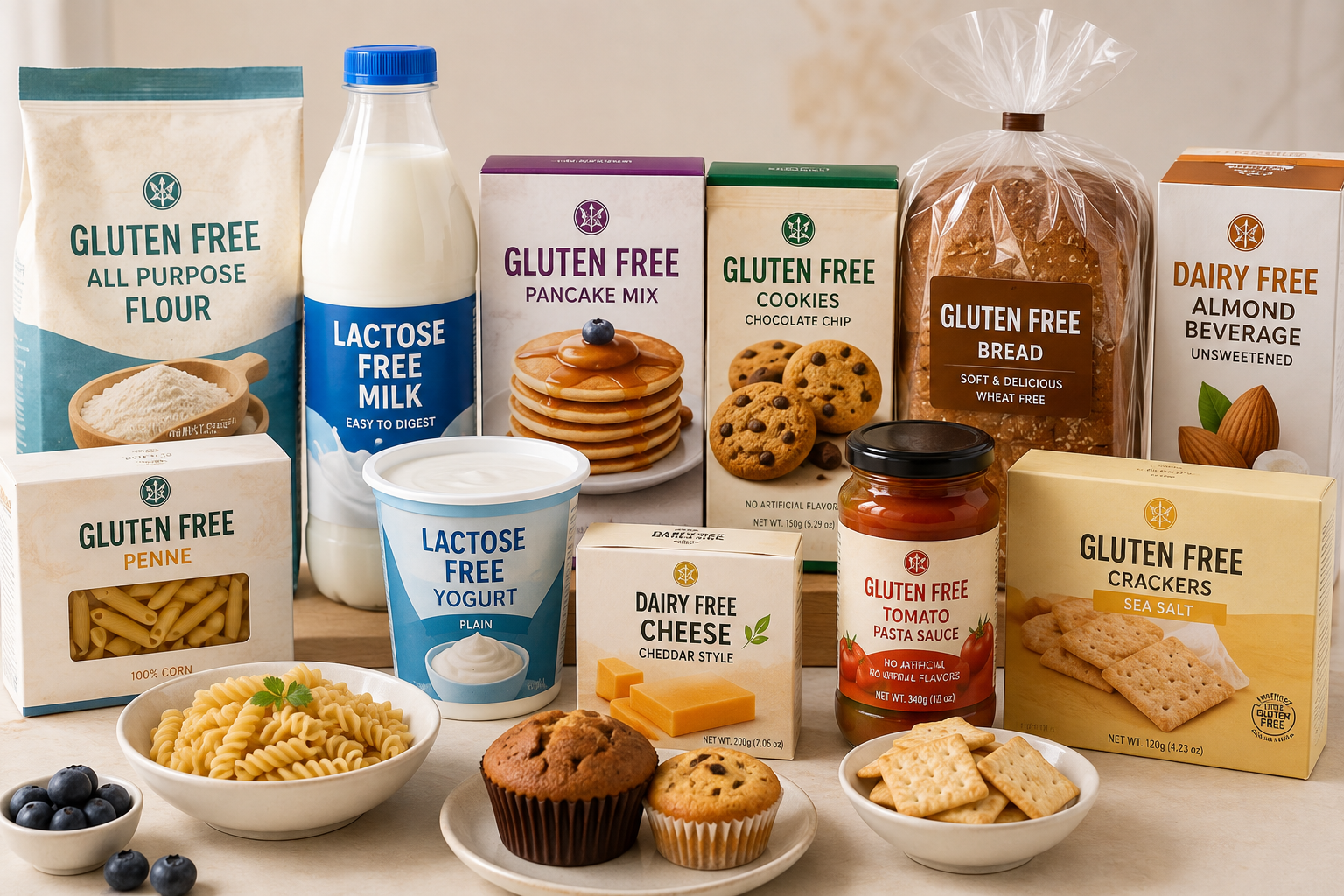
food intolerance products market is witnessing steady expansion as changing consumer dietary preferences, greater awareness of food intolerance, and increasing demand for specialized food choices reshape the packaged-food industry. Consumers are becoming more attentive to lactose, gluten, and other ingredients that may cause intolerance, encouraging manufacturers to develop suitable alternatives without compromising taste, texture, nutrition, convenience, or product quality. Food intolerance products are increasingly available across dairy and
dairy alternatives,
bakery products, confectionery,
meat and
seafood products, sauces, condiments and dressings, snacks, beverages, and other packaged-food categories. The growing presence of these products in mainstream grocery channels is also changing their market positioning, with intolerance-friendly foods increasingly being purchased as part of regular household consumption rather than being limited to specialist dietary consumers.
According to the research report "Global Food Intolerance Products Market Outlook, 2031," published by Bonafide Research, the Global Food Intolerance Products Market was valued at more than USD 14.47 Billion in 2025 and is anticipated to reach more than USD 19.71 Billion by 2031, expanding at a CAGR of 5.42% during 2026–2031. The market is being supported by the expansion of packaged and convenience foods, urbanization, increasing consumer awareness, product reformulation, modern retail development, and the rapid growth of online food distribution. Manufacturers are increasingly adapting established food products to meet specific dietary requirements while retaining familiar sensory characteristics. Lactose-free
milk,
yogurt,
cheese, dairy beverages, desserts, and plant-based alternatives are expanding the range of dairy-related choices, while gluten-free bakery products, snacks, confectionery, sauces, and other processed foods are gaining wider availability. Product development is increasingly focused on improving taste and texture, nutritional value, convenience, shelf stability, and affordability, allowing specialized products to appeal to a wider consumer base. At the same time, clearer ingredient information and greater attention to food labeling are helping consumers identify products according to their dietary requirements. The combination of consumer awareness, food innovation, wider distribution, and increasing mainstream acceptance is creating opportunities for manufacturers across both developed and emerging markets.
By product type, Dairy and Dairy Alternatives represent the largest category within the global food intolerance products market, supported by the widespread consumption of
dairy products and the increasing availability of lactose-free alternatives. The category includes lactose-free milk, yogurt, cheese, cream, dairy beverages, desserts, and plant-based alternatives. Manufacturers are increasingly introducing lactose-free versions of familiar products while improving taste, texture, nutritional characteristics, and convenience. Plant-based alternatives based on
oats, soy,
almonds, coconut, and other ingredients are further expanding consumer choice and providing alternatives to conventional dairy. The broad application of dairy products in everyday diets gives the category a substantial consumer base, while increasing availability through supermarkets, hypermarkets, convenience stores, specialty retailers, and online platforms is supporting wider adoption.
By labeling type, Lactose-Free Food represents the fastest-growing category, supported by increasing awareness of lactose intolerance and expanding consumer demand for dairy products that are easier to digest. Manufacturers are extending lactose-free offerings beyond basic milk into yogurt, cheese, desserts, cream, beverages, and other dairy-based applications. Improvements in processing and formulation technologies are helping companies reduce or remove lactose while maintaining the taste, texture, nutritional value, and functionality expected from conventional products. The category is also benefiting from increasing availability in mainstream retail, where
lactose-free products are increasingly positioned alongside conventional dairy rather than exclusively within specialist sections. Growing interest in digestive-friendly foods, wider product variety, and improved consumer awareness are expected to support continued expansion of lactose-free products across global markets.
By distribution channel, Online Stores represent the fastest-growing channel as consumers increasingly use
digital platforms to find products that meet specific dietary requirements. Online retail provides access to a wider assortment of gluten-free, lactose-free, dairy-free, and other specialized products, including niche and imported brands that may have limited availability in physical stores. Consumers can compare ingredients, nutritional information, dietary claims, pack sizes, prices, and product reviews before purchasing. Online channels are also providing smaller and specialized manufacturers with opportunities to reach targeted consumer groups without depending entirely on traditional retail distribution. Supermarkets and hypermarkets remain important due to their extensive product availability and established grocery-shopping habits, while the convenience, product discovery, and assortment offered by online platforms are supporting faster channel development.
By category, Conventional products represent the largest and fastest-growing category, supported by their established manufacturing infrastructure, broader availability, extensive distribution networks, and ability to reach mainstream consumers. Manufacturers are increasingly incorporating lactose-free and gluten-free formulations into conventional food portfolios rather than treating intolerance-friendly products solely as specialty offerings. This approach enables products to reach consumers through established supermarkets, hypermarkets, convenience stores, and online platforms while benefiting from larger production volumes and established supply chains. The growing integration of specialized formulations into familiar food products is also helping reduce the perception that food intolerance products are limited to niche consumers. Continued reformulation, product launches, improved affordability, and broader retail availability are expected to strengthen the position of conventional products.
Regional market dynamics continue to influence the global competitive landscape. North America represents a major regional market, supported by its developed food-processing industry, established packaged-food sector, advanced retail infrastructure, and broad availability of gluten-free and lactose-free products. The United States accounts for a significant share of regional demand, with specialized products widely available across dairy, bakery, snacks, confectionery, beverages, sauces, and other food categories. Europe maintains a mature market, supported by established free-from product ranges, developed food manufacturing, strong retail networks, and increasing consumer attention to ingredients and food labeling. Asia Pacific is the fastest-growing regional market, supported by its large consumer population, rapid urbanization, expanding packaged-food consumption, improving organized retail, and increasing
e-commerce adoption. India, China, Japan, South Korea, and Australia provide important opportunities, although consumer awareness and market maturity vary considerably between countries.
South America offers additional growth opportunities as consumer awareness increases and manufacturers expand gluten-free and lactose-free product ranges. Brazil represents the largest country market in the region, supported by its large consumer base, established food-processing industry, extensive retail network, and increasing availability of specialized products. The Middle East & Africa market is developing through urbanization, increasing packaged-food consumption, modern retail expansion, and greater consumer awareness of dietary requirements. Saudi Arabia represents the largest country market in the region, supported by its developed modern grocery infrastructure, strong packaged-food consumption, and expanding availability of gluten-free and lactose-free products.
The supply landscape is supported by
dairy ingredients, plant-based raw materials, alternative grains, starches, fibers, and specialized food ingredients used to formulate and reformulate intolerance-friendly products. Manufacturers are increasingly exploring
rice, maize, oats, millet, sorghum, soy, almonds, coconut, and other alternative ingredients to replace or modify conventional ingredients. Ingredient consistency, functionality, availability, food-grade quality, traceability, and cost remain important considerations for large-scale production. Processing technologies are also becoming increasingly important as manufacturers seek to reduce or remove specific components while maintaining product quality. Reliable ingredient sourcing and appropriate production controls are particularly important for products carrying specific dietary claims, where consumers depend on accurate product information and consistent formulation.
The competitive landscape is characterized by continued product reformulation, lactose-free dairy innovation, gluten-free bakery development, plant-based alternatives, specialized snacks and beverages, and the expansion of free-from products into mainstream food categories. Manufacturers are focusing on improving taste, texture, nutritional value, convenience, shelf stability, and affordability while expanding distribution through both physical and digital retail channels. Product development is increasingly combining food-intolerance positioning with other consumer priorities such as reduced sugar, higher protein, increased fiber, plant-based ingredients, clean-label attributes, and digestive-health benefits. Companies are also increasing the number of formats and price points available to reach consumers with different dietary needs and purchasing capabilities.


















 We are friendly and approachable, give us a call.