The global
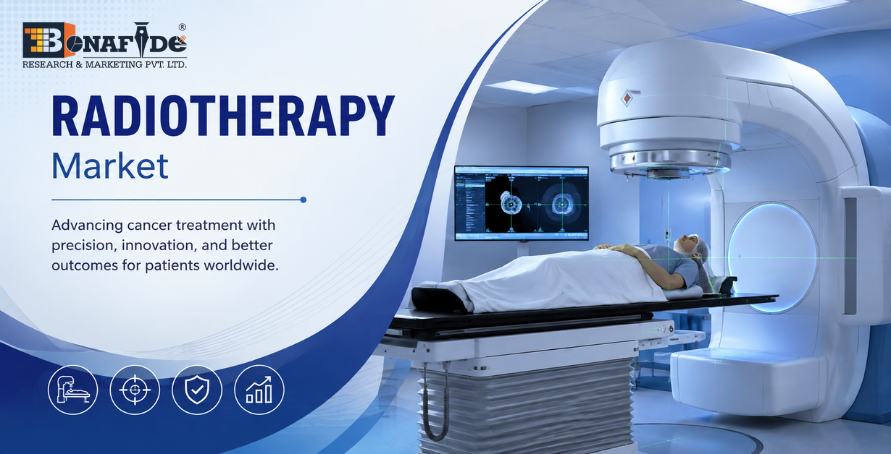
radiotherapy market is experiencing robust growth as healthcare systems worldwide increasingly adopt advanced radiation technologies for cancer treatment. Radiotherapy remains a cornerstone of modern
oncology, with approximately 50% of all cancer patients requiring radiation therapy at some point during their treatment journey. Unlike other cancer treatment modalities, radiotherapy offers a non-invasive, highly targeted approach that preserves healthy tissue while effectively eliminating malignant cells. Continuous technological advancements, including intensity-modulated radiotherapy (IMRT), image-guided radiotherapy (IGRT), stereotactic body radiotherapy (SBRT), and proton beam therapy, have significantly improved treatment precision, reduced side effects, and enhanced patient outcomes across diverse cancer types.
According to the research report "Global Radiotherapy Market Outlook, 2031," published by Bonafide Research, the Global Radiotherapy market was valued at more than USD 8.98 Billion in 2025, and expected to reach a market size of more than USD 14.07 Billion by 2031 with the CAGR of 7.97% from 2026-2031. Market expansion is being driven by the rising global cancer burden, rapid technological advancements in radiation delivery systems, increasing adoption of precision radiotherapy, and significant healthcare infrastructure investments across developed and emerging economies. The International Agency for Research on Cancer (IARC) estimates approximately 20 million new cancer cases were diagnosed in 2025, a figure projected to rise to 34.4 million by 2050, creating sustained and increasing demand for radiotherapy equipment, software, and comprehensive services worldwide.
The increasing global cancer burden has become one of the strongest factors supporting long-term market growth. Cancer remains the second leading cause of mortality worldwide, with approximately 10 million deaths annually. The expanding geriatric population, changing lifestyle patterns, and improved cancer detection methods are contributing to the rising incidence of malignancies requiring radiation therapy. The World Health Organization (WHO) recommends that 50-60% of cancer patients should receive radiotherapy, yet global access remains highly inequitable, with nearly one-third of countries lacking adequate radiotherapy services. This access gap represents both a significant clinical challenge and a substantial market opportunity for manufacturers and service providers.
Rising Cancer Incidence and Expanding Clinical Applications Drive Global Radiotherapy Demand
The steady increase in cancer diagnoses worldwide remains the primary driver of the global radiotherapy market. Breast cancer, prostate cancer, lung cancer, head and neck cancer, and colorectal cancer represent the most common malignancies requiring radiation therapy. The expanding evidence base for radiotherapy in new indications, including oligometastatic disease, re-irradiation, and combination therapy with immunotherapy, is further driving demand. The WHO estimates that radiotherapy contributes approximately 22% to cancer cure rates, second only to surgery (27%), underscoring its critical role in multidisciplinary cancer care.
Healthcare providers are also witnessing growing utilization of advanced radiotherapy technologies in paediatric oncology, where the precision of modern radiation delivery systems is particularly valuable in minimizing long-term side effects. Proton beam therapy, which offers superior dose distribution compared with conventional photon therapy, is increasingly adopted for paediatric cancers, brain tumours, and head and neck cancers. The expanding clinical evidence supporting advanced radiotherapy modalities is encouraging healthcare systems to invest in modern equipment and treatment planning capabilities.
Technological Innovation Continues Transforming the Global Radiotherapy Industry
Continuous technological advancement remains one of the strongest
catalysts supporting long-term expansion of the global radiotherapy market. Manufacturers are investing extensively in advanced radiation delivery systems,
artificial intelligence-powered treatment planning software, and precision imaging integration designed to improve treatment accuracy, patient outcomes, and workflow efficiency. Innovations across imaging technology, software platforms, and treatment delivery systems are enabling production of increasingly sophisticated radiotherapy solutions capable of addressing complex clinical challenges.
Key technological developments shaping the industry include:
• Artificial intelligence-powered treatment planning enabling automated contouring and dose optimization
• MR-guided radiotherapy systems providing real-time adaptive treatment capabilities
• Proton and heavy-ion therapy expanding precision treatment options for complex cases
• Image-guided radiotherapy systems improving targeting accuracy through real-time imaging
• Stereotactic body radiotherapy enabling high-dose, ablative treatment in fewer sessions
• Adaptive radiotherapy platforms adjusting treatment plans based on daily anatomical changes
• Integration of radiomics and
biomarkers for personalised radiation therapy
•
Digital health platforms enabling remote treatment planning and quality assurance
The convergence of artificial intelligence, digital healthcare, advanced imaging, and
precision medicine is fundamentally reshaping the future of radiation oncology. Increasing collaboration between research institutions,
medical device manufacturers, healthcare providers, and technology companies is accelerating commercialization of next-generation radiotherapy solutions capable of delivering improved clinical outcomes across the cancer care continuum. As healthcare systems worldwide continue emphasizing personalised treatment, patient safety, and improved quality of life, technological innovation will remain one of the primary competitive differentiators within the global radiotherapy market.
North America Maintains Market Leadership Through Advanced Infrastructure and High Healthcare Expenditure
North America continues to dominate the global radiotherapy market owing to its highly developed healthcare infrastructure, substantial healthcare expenditure, extensive hospital network, and strong adoption of innovative radiation technologies. The United States remains the region's largest contributor, supported by over 6,100 hospitals, extensive diagnostic imaging networks, and a large installed base of linear accelerators and
proton therapy centres. National health spending in the United States is projected to rise from USD 4.8 trillion in 2023 to USD 7.7 trillion by 2032, highlighting the scale of healthcare investment supporting radiotherapy adoption.
Europe Strengthens Market Position Through Infrastructure Modernisation and Research Excellence
Europe remains one of the most mature and technologically advanced markets for radiotherapy, supported by strong healthcare systems, comprehensive cancer registries, and substantial research funding through programmes such as Horizon Europe. Countries including Germany, France, the United Kingdom, Italy, and Spain continue investing in advanced radiation oncology capabilities, digital health integration, and precision treatment technologies. The UK's NHS Supply Chain has procured 28 new LINAC systems in 2025/26, while Italy's National Recovery and Resilience Plan (PNRR) has funded 62 linear accelerators valued at approximately €130 million.
Asia-Pacific Emerges as the Fastest-Growing Regional Market Driven by Healthcare Modernisation and Infrastructure Expansion
Asia-Pacific is projected to register the highest growth throughout the forecast period as governments continue investing heavily in healthcare infrastructure, medical technology, and domestic medical device manufacturing. China dominates the regional market, with the National Health Commission approving 42 hospitals to configure heavy-ion proton radiotherapy systems as of December 2025. India faces a significant infrastructure deficit, with an estimated requirement of 1,585 to 2,545 machines versus 794 currently available, creating substantial procurement demand. Japan projects a 24% increase in radiotherapy demand through 2040, while South Korea has expanded
health insurance coverage for MRI-guided radiotherapy.
Middle East & Africa and South America Present Long-Term Growth Opportunities Through Healthcare Modernisation.
The Middle East and Africa region represents a diverse market with significant disparities in infrastructure and access. Saudi Arabia has launched the first proton therapy centre in the Middle East, while the UAE is developing the region's first heavy-ion therapy facility. However, over 20 African countries lack a single radiotherapy machine, creating substantial opportunities for equipment procurement and international support through initiatives such as the IAEA's Rays of Hope programme. South America, led by Brazil and Argentina, demonstrates significant growth potential through substantial government investment in radiotherapy infrastructure modernisation.
Future Outlook
The global radiotherapy market is expected to witness strong growth through 2031, driven by the rising cancer burden (projected to reach 34.4 million cases by 2050), expanding clinical indications for radiation therapy, continuous technological advancements, and significant healthcare infrastructure investments across developed and emerging economies. Healthcare systems worldwide are increasingly adopting advanced radiotherapy technologies because of their superior treatment precision, reduced side effects, and proven clinical effectiveness, supporting sustained market expansion.
Future growth will be fueled by continuous advancements in artificial intelligence, MR-guided radiotherapy, proton and heavy-ion therapy, adaptive treatment planning, and integrated digital health solutions. Innovations such as AI-powered treatment planning, FLASH radiotherapy, and real-time adaptive delivery are expected to enhance treatment outcomes and broaden clinical applications. Increasing investments in research and development, healthcare infrastructure, and advanced medical technologies will further strengthen the long-term outlook of the global radiotherapy market.
About the Report
Bonafide Research's "Global Radiotherapy Market Outlook, 2031" provides comprehensive analysis of market size, growth forecasts, competitive landscape, technological innovations, regulatory developments, and regional opportunities shaping the future of the global radiotherapy industry. The report covers detailed segmentation by Therapy Type, Offering, Technology, Application, and End User, along with in-depth analysis across North America, Europe, Asia-Pacific, South America, and the Middle East & Africa. It offers strategic insights for manufacturers, healthcare providers, investors, distributors, and industry stakeholders seeking to capitalise on the rapidly evolving global market for radiation oncology solutions.





 We are friendly and approachable, give us a call.