The global
autoinjectors market encompasses
medical device and drug delivery systems designed for patients to precisely self-administer pre-measured liquid medications. Its relevance and critical importance lie in transforming chronic care management such as for diabetes, rheumatoid arthritis, and multiple sclerosis as well as delivering emergency treatments for severe allergic reactions (anaphylaxis) safely outside clinical settings. By minimizing needle phobia, reducing pain, and lowering healthcare overhead, these devices significantly improve patient compliance and enable home-based care. Key growth drivers include the rising global prevalence of chronic lifestyle diseases, a massive surge in demand for biologic therapies and
GLP-1 receptor agonists (such as for weight management and diabetes), and a strong consumer preference for independent, at-
home healthcare. Industry advancement is further propelled by technological integration, including connected "smart" injectors featuring
digital tracking and Bluetooth capability. While the sector lacks a singular governing body dedicated exclusively to autoinjectors, broad medical device and
pharmaceutical manufacturing activities are heavily shaped and monitored by international organizations like the International Organization for Standardization (ISO) which regulates quality and safety standards for medical injectors (such as ISO 11608) and regional authorities like the U.S. Food and Drug Administration (FDA) and the European Medicines Agency (EMA). Industry associations such as the Advanced Medical Technology Association (AdvaMed) actively engage in regulatory advocacy, supply chain resilience, and digital health initiatives. Major market activities involve strategic corporate partnerships between pharmaceutical giants and device developers to optimize
drug-device combination products, massive manufacturing investments in automation, and continuous design innovations geared toward patient-centric ergonomics and sustainability.
According to the research report, “Global Autoinjectors Market Overview, 2031” published by Bonafide Research, the Global Autoinjectors Market is expected to cross USD 181.23 Billion market size by 2031, with 15.62% CAGR by 2026-31.Major industry leaders such as Eli Lilly and Company, Amgen Inc., Becton, Dickinson and Company (BD), Ypsomed AG, and SHL Medical dominate the landscape by providing ergonomic, patient-centric delivery platforms. Recent notable developments include AstraZeneca and Amgen launching the Tezspire subcutaneous autoinjector for severe asthma, and Eli Lilly deploying advanced pre-filled pens for medications like Mounjaro. Lucrative market opportunities lie in the integration of "smart" digital health features, such as Bluetooth-enabled dose tracking, and expanding manufacturing footprints in high-growth developing regions. A comprehensive supply chain analysis reveals a highly specialized, globalized network divided into raw material sourcing, component manufacturing, drug-device final assembly, and distribution. Upstream operations rely on precision suppliers providing medical-grade plastics, specialized miniature springs, glass barrels, and
stainless steel needles. Midstream activities involve complex contract manufacturing and technological assembly, where firms like Stevanato Group partner with device designers such as Owen Mumford for molding and sub-assembly. However, the supply chain remains vulnerable to macroeconomic pressures, including international cross-border tariffs on raw materials and
electronic components, which inflate manufacturing expenses. Downstream distribution channels heavily utilize retail and
online pharmacies to fulfill regular patient refills for home care. To mitigate bottlenecks, key players are heavily investing in localized manufacturing hubs exemplified by SHL Medical's large-scale facility expansion in the United States ensuring resilient, uninterrupted access to essential emergency and chronic therapies worldwide.
Traditional single-use disposable pens require discarding entire motorized or spring-driven plastic housings with every single dose, generating immense volumes of medical refuse that challenge institutional sustainability targets and regulatory environmental scrutiny. Reusable delivery platforms solve this engineering dilemma by separating the durable mechanical shell—which houses complex triggers, lock-out mechanisms, and viewing windows—from the disposable drug container or cassette. Patients retain the outer durable housing across dozens of treatment cycles, replacing only a compact pre-filled fluid cartridge when subsequent doses are due. This modular architecture translates to a profound reduction in raw plastic consumption, lower cold-chain shipping weights, and minimized dimensional footprints inside pharmaceutical supply warehouses and patient refrigerators. Furthermore, healthcare systems facing stringent environmental mandates increasingly favor hardware capable of multi-dose longevity. By lowering the physical volume of waste per administration without altering baseline clinical efficacy, reusable designs effectively harmonize ecological responsibility with the ergonomic convenience demanded by individuals managing chronic conditions at home.
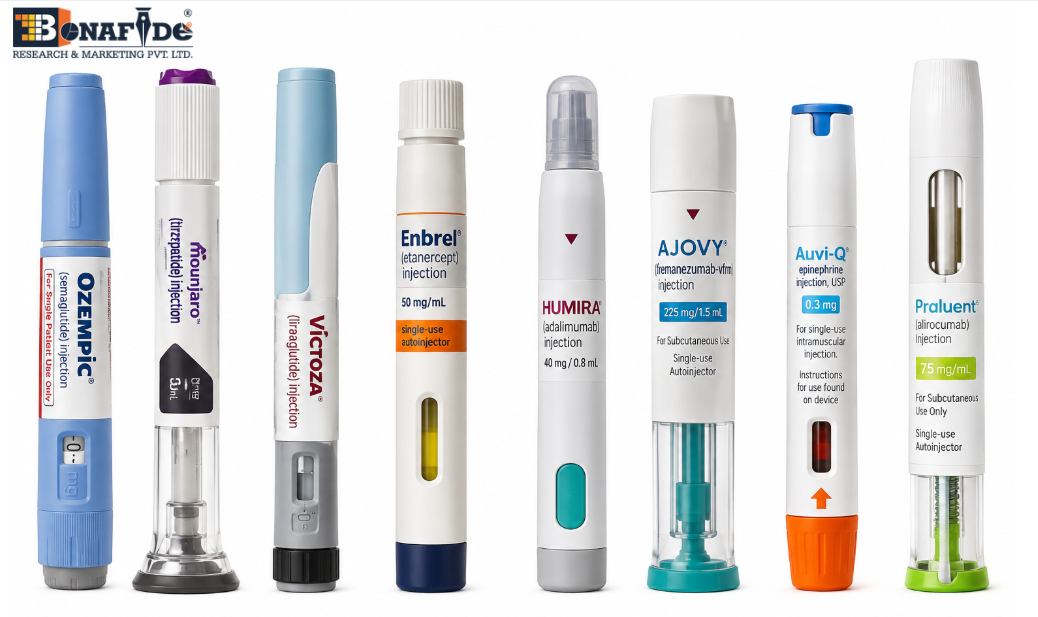
Anaphylaxis represents a hyper-acute medical crisis where exposure to specific foods, insect venom, or latex can trigger catastrophic respiratory distress and cardiovascular collapse within minutes, leaving zero margin for travel time to a clinical facility. Because victims or bystanders must act instantaneously during an episode, spring-loaded epinephrine delivery pens provide an intuitive mechanical interface that removes the hesitation and procedural complexity associated with traditional manual syringes and vials. The physiological mechanism of anaphylaxis involves massive vasodilation and bronchial constriction, which can only be countered rapidly by systemic vasoconstriction and bronchodilation delivered via prompt intramuscular epinephrine injection. The rising global incidence of food and environmental allergies among pediatric and adult populations has expanded the at-risk demographic pool, compelling schools, public venues, and households to keep specialized emergency injectors readily accessible. Consequently, manufacturing innovations focus heavily on needle safety shields, instant audio-visual activation confirmations, and compact pocket-friendly forms that guarantee reliable emergency readiness when seconds matter most.
Peptides consist of delicate chains of
amino acids that often possess high molecular weights and distinct structural vulnerabilities, making them prone to aggregation, shear-stress degradation, and contamination when handled improperly via conventional manual administration. To protect the molecular integrity and therapeutic potency of these fragile biologic compounds throughout their shelf life, developers engineer autoinjector assemblies featuring precision velocity controls, custom glass barrels, and specialized siliconization parameters. As modern medicine shifts from small-molecule pills toward targeted macromolecular treatments for metabolic disorders, obesity, and endocrine dysfunctions, pharmaceutical companies increasingly rely on pre-measured mechanical pens to ensure accurate dosing parameters are maintained. The physical viscosity of concentrated peptide solutions also demands optimized spring forces and wider internal needle gauges to guarantee smooth, low-pain subcutaneous delivery. By automating the precise delivery mechanics required for these sensitive biological structures, automated pens protect the drug compound from human error, ensuring patients consistently receive the correct therapeutic dose without altering the molecular composition.
Ambulatory and outpatient facilities handle an overwhelming share of routine chronic disease management, preventive therapies, and minor interventions where minimizing patient chair-time and lowering overhead costs are paramount operational objectives. Autoinjectors fit seamlessly into this decentralized ecosystem because they empower individuals or outpatient clinic staff to execute rapid, standardized drug administration without tying up complex infusion suites or specialized nursing resources. In these dynamic environments, eliminating the preparation steps required for traditional multi-dose vials significantly cuts down procedure turnaround times and reduces the incidence of needle-stick injuries among healthcare personnel. Furthermore, outpatient facilities prioritize technologies that support patient education and self-management training, allowing individuals diagnosed with chronic immunologic or metabolic conditions to transition smoothly from supervised clinic injections to independent home administration. This operational shift optimizes clinical workflow efficiencies, reduces institutional congestion, and ensures that therapeutic schedules remain uninterrupted by hospital bed availability constraints.
Intramuscular administration involves piercing through subcutaneous layers directly into rich vascular muscle beds, where dense capillary networks rapidly absorb active pharmacological compounds directly into the systemic circulation. This rapid uptake mechanism is vital for life-saving molecules like epinephrine for anaphylaxis, diazepam for acute seizures, or antidotes for chemical exposures, where delayed therapeutic plasma concentrations can result in fatal outcomes. Traditional manual intramuscular injections require clinical precision regarding needle angle and insertion depth, variables that untrained bystanders or panicked patients cannot reliably calculate during an emergency. Mechanical autoinjectors engineered specifically for intramuscular depth penetrate clothing and subcutaneous barriers with a calibrated high-velocity trigger mechanism, ensuring the drug reaches the proper muscular depth regardless of user technique. This absolute reliability under high-stress conditions explains why emergency responders, defense agencies, and everyday consumers increasingly rely on dedicated intramuscular delivery pens to guarantee swift, life-saving therapeutic interventions.





 We are friendly and approachable, give us a call.