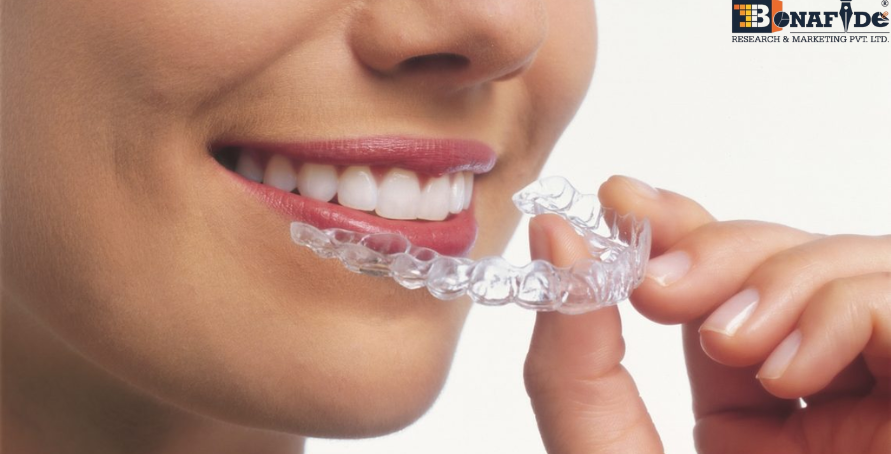
Clear aligners have become an integral part of modern
orthodontics, offering effective correction of
dental malalignments while enhancing comfort and aesthetics. Leading manufacturers such as Align Technology, Angle Aligner, Dentsply Sirona, Envista, and Straumann offer a diverse range of solutions from conventional aligner systems to advanced options featuring AI-driven treatment planning and 3D-printed customization. These products leverage cutting-edge technologies, including
digital intraoral scanning and precision thermoforming, to ensure superior fit, treatment accuracy, and predictable clinical outcomes. The growing preference for aesthetic and discreet orthodontic solutions is a major driver of the clear aligner market. Unlike traditional metal braces, clear aligners offer a nearly invisible appearance, making them highly appealing to adults and image-conscious teens who seek effective treatment without compromising their looks. This trend is reinforced by social media influence and increasing awareness of
cosmetic dentistry, where patients prioritize convenience and confidence during treatment. As lifestyles become more digitally connected and appearance-focused, the demand for aligners that combine functionality with aesthetics continues to surge, positioning them as the preferred dental care products. Regulatory oversight plays a pivotal role like in the North America, clear aligner systems are classified as Class?II medical devices under regulation 21?CFR?872.5470 and require FDA?510(k) clearance before marketing. Leading manufacturers such as Align Technology, Inc. have obtained such clearances most recently with their Invisalign?Palatal?Expander System in December?2023, which underscores increased regulatory scrutiny and innovation in the field.
According to the research report "Global Clear Aligners Market Outlook, 2030," published by Bonafide Research, the Global Clear Aligners market was valued at more than USD 17.55 Billion in 2024, and expected to reach a market size of more than USD 26.57 Billion by 2030 with the CAGR of 7.31% from 2025-2030. Key players are forming alliances such as the partnership between Angelalign Technology, Inc. and Medit Corporation to integrate treatment planning software with aligner manufacturing platforms, and the collaboration between Angelalign and 3Shape to streamline scanner to aligner workflows globally. Owing to the benefits offered by clear aligners, patients are adopting these aligners for the treatment of malocclusion. In order to enhance its adoption, several orthodontists and industrial players are focusing on educating patients about clear aligners and their benefits over traditional braces. Moreover, several industrial players are emphasizing on technological innovations to make robust presence in the growing industry. For instance, in July 2024, Stratasys announced launch of DentaJet™, a groundbreaking dental
3D printing technology that is aimed to design clear aligners, large print trays, crowns, bridges and
dental implants with higher precision while reducing the cost. It is important to highlight here that with growing demand, several industrial players are consolidating their research by leveraging advanced technologies for the development of clear aligners. For instance, in May 2024, Ormco recently announced the launch of its new program “Spark On-Demand Program” that enabled dentists to order multiple number of Spark clear aligners and Prezurv Plus retainers.
Orthodontic authors and industry analyses consistently report that the adolescents segment in the clear aligners market is accelerating more rapidly than the adult cohort. One key driver is that many teenagers are now more conscious about their appearance and social interactions than past generations. Clear aligners offer a discreet alternative to traditional metal braces virtually invisible, removable, and less likely to interfere with the smile, extracurricular activities, school photographs and peer interactions. The underlying prevalence of orthodontic issues remains high among adolescents one study cited that up to 39 93?% of teenagers globally have some degree of malocclusion. Since teens are still undergoing dental development, the orthodontic “window” to intervene is attractive manufacturers and orthodontic practices are increasingly positioning clear aligners for younger patients. Teens lead active lives they play sports, engage in social events, participate in school, and want to eat, brush, floss more naturally than traditional braces allow. Clear aligners cater to this by being removable making oral hygiene easier, reducing soft tissue irritation, enabling more normal eating and fewer unsightly metal components or emergency breakages. This is especially appealing to the adolescent lifestyle. As awareness grows about aesthetic dentistry, and as more orthodontic clinics adopt digital scanning, 3D technology, and streamlined workflows for aligner therapy, the teenage segment becomes more reachable and credible. Innovation in digital scanning, tele monitoring, apps for compliance, gamification of wear time also strengthen adoption. Pediatric practices and manufacturers recognize that capturing the teenage patient builds brand loyalty and longer treatment pathways. From a market?perspective, this means companies are investing more in teen?specific aligner products and marketing, which supports faster growth of that segment.
Within the global market for clear aligners, the material type category of
polyurethane plastic has emerged as both the largest by share and the fastest?growing segment. From a performance perspective, polyurethane plastics offer high elasticity and flexibility, meaning that when made into clear aligners they can apply gentle, consistent forces to teeth while accommodating complex tooth anatomy and movements. The literature notes that PU aligners conform effectively to the distinct anatomical features of teeth and gums and maintain corrective forces over time. Polyurethane brings superior durability and wears resistance, which is critical because a clear aligner must maintain its shape and force delivery profile over weeks of wear while being inserted and removed repeatedly. Market data show that durability and structural integrity under load is a key reason manufacturers favour PU for aligner trays. Polyurethane offers excellent optical clarity and aesthetic appeal, which is central to the clear aligner value proposition. Because patients increasingly demand orthodontic treatments that are discreet, aligners must be nearly invisible. PU materials provide the necessary transparency as well as good formability so that trays fit closely and cover minimal visible
surface. This supports the aesthetic marketing of clear aligners and thus drives demand. From a materials innovation and market ecosystem standpoint, polyurethane has become a preferred engineering
thermoplastic for aligner manufacturers and is well supported by CAM, thermoforming and rapid prototyping workflows. The literature notes that the development of CAM technology has permitted thermoplastic PU materials to be widely adopted in clear aligner production.
In the global market for clear aligners, the end user category of group practices and dental service organizations is emerging as the fastest growing segment. The reason is multi faceted, rooted in structural changes in dentistry, the economics of scale, and the evolving patient demand for aesthetic orthodontic options. DSOs are organizations that centralize administrative, marketing, IT and non clinical operations for multiple dental practices, enabling these practices to scale more efficiently than traditional solo practitioners. DSOs purchase more materials, digital scanning & 3D printing equipment, and aligner services in bulk across their locations, which lower unit costs and enable them to offer aligner treatments more competitively. The market intelligence indicates that many aligner manufacturers view DSOs as special market segments with volume based pricing discounts. DSOs often invest heavily in digital dentistry intraoral scanners, AI driven treatment planning software, remote
monitoring tools, and streamlined aligner production
logistics. This standardized digital infrastructure accelerates case starts, shortens treatment cycles, improves consistency across sites and enhances patient experience. Because aligners benefit from digital workflows, having many practices under one umbrella means DSOs can deploy new aligner technologies faster and more uniformly than independent practices. DSOs typically manage large multi site networks and thus have access to a broader patient pool, including adult and teen aesthetic dentistry customers who are key targets for aligner therapy. The deployment of marketing, financing packages and cross selling within DSO networks further augments adoption.
The rise of the online or digital distribution channel in the global clear aligners market reflects a structural shift in how consumers look for, purchase and engage with orthodontic treatments. Historically most clear aligner systems were sold via dental clinics or orthodontic practices offline channels that involved scans, impressions, in person visits, and substantial oversight. Younger adults and the increasingly digital savvy population prefer
online shopping, home based services and minimal disruption to their routines. For clear aligners, this translates into online intake via at home impression kits or digital scans, virtual consultations, aligners shipped directly to consumers, and remote monitoring. Market analysts note that online stores and e commerce platforms are gaining traction because they allow consumers to order aligners from their computers or smartphones and receive treatment with fewer clinic visits. By bypassing some of the traditional clinic based infrastructure and enabling scaled digital workflows, online models can offer lower price points or more compelling financing. For example, one report noted that DTC clear aligner brands globally can offer treatment at significantly lower cost compared to conventional in office aligner systems. Innovations such as intraoral scanners, 3D printing, tele orthodontics, remote monitoring apps, and digital treatment planning and virtual check¬ins mean that many aspects of aligner therapy can be delivered without frequent in person visits. Reports highlight that the proliferation of home scan kits, virtual consultation platforms, and remote tracking tools is accelerating the shift. In many markets, patients may lack easy access to specialist orthodontists or may face long wait times in clinics. The online channel allows penetration into underserved geographies, younger demographics, or patients who simply prefer minimal interference with their day to day lives.





 We are friendly and approachable, give us a call.