The application of
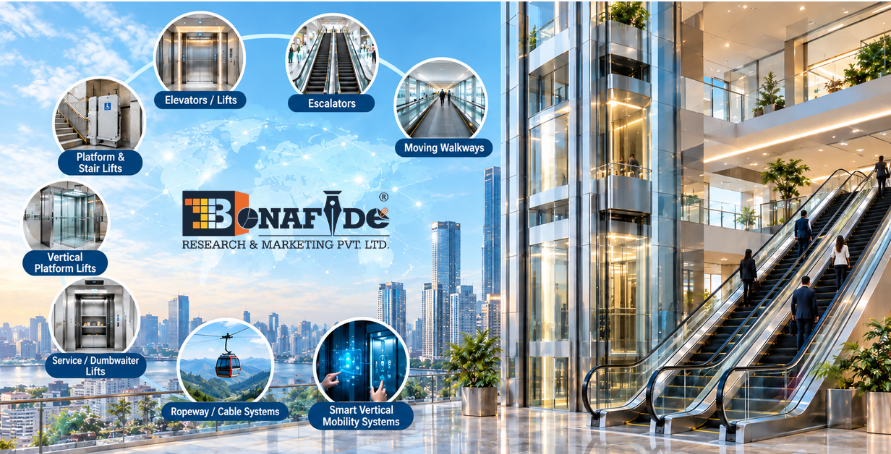
elevators and escalators is gaining traction in the Middle East & African countries, with the increasing number of tourists has been playing a major role in the construction of new infrastructure. The upcoming projects and the ongoing projects of infrastructure construction in the form of commercial centres like malls, hotels, etc., and non-commercial residences are the major driving factor for the market. These countries have a high dependency on the imported components to meet the demand. The region which is popular for its oil exports is now actively diversifying its economies by focusing on domains such as tourism and manufacturing. The new installation segment is predicted to undergo significant growth over the coming years as well. Major hotel chains are expanding their presence across the region and large-scale government infrastructure development projects, such as airport expansions, metro expansions, and development of other social infrastructure, are propelling the higher growth for maintenance & repair segment. Fuelled by greater investment in commercial, residential, and hotel development, new installations, along with related maintenance, are expected to grow, increasing the region's appetite for imported lift components.
According to the research report, "Middle East & Africa Elevators and Escalators Market Outlook, 2029," published by Bonafide Research, the Middle East & Africa Elevators and Escalators market is projected to reach a market size of more than USD 16.59 Billion by 2029. Parachute systems are vital in the high-speed
elevator in terms of passenger comfort and safety, but are not appreciated in the region as much as they should be. Finding cheap safety gear on the market is an indicator of this. However, the less-dangerous parts of the elevators are the parts visible to the end-users, while the invisible parts like safety
gears are the parts that come with more risks. What is not a surprise to be the elevator &
escalator industry of Middle East & Africa is the increase in rider behaviour that has become a leading cause of accidents. Under its "Vision 2030" program, the region has witnessed a number of promising mergers and acquisitions, one of the prominent being, Hitachi Elevator Saudi Arabia Launched Hitachi Ltd. has launched Hitachi Elevator Saudi Arabia Ltd., a joint venture with Saudi Arabia investment firm Mayar Holding Co.
Saudi Arabia is currently the dominant player in the escalator and elevator market in the Middle East and Africa (MEA) region, driven by rapid urbanization, large-scale infrastructure projects, and heavy investments in
smart cities. The country’s ambitious Vision 2030 initiative has accelerated construction activities across various sectors, including commercial real estate, residential developments, and public transportation, significantly increasing the demand for elevators, escalators, and moving walkways. The rise of high-rise buildings and mega projects, such as NEOM, the Red Sea Project, and King Abdullah Financial District, has created a strong market for advanced vertical mobility solutions. Developers and building owners are prioritizing energy-efficient, AI-integrated, and IoT-enabled elevator systems to enhance passenger experience and sustainability. The demand for high-speed and double-deck elevators is also rising in luxury skyscrapers and premium office spaces. Saudi Arabia’s investments in metro systems, airports, and commercial hubs have driven the widespread adoption of heavy-duty escalators and moving walkways. Additionally, the country’s focus on pilgrim infrastructure development in Mecca and Medina has led to an increasing need for high-capacity, durable escalators and elevators to support millions of visitors annually. With a strong pipeline of projects and technological advancements, Saudi Arabia continues to lead the MEA market in vertical transportation solutions.
The Middle East and Africa (MEA) region is witnessing significant growth in the elevator, escalator, and moving walkways market, primarily driven by urbanization, infrastructure expansion, and commercial development. The rising construction of high-rise buildings, metro systems, and airports has fueled the demand for advanced vertical transportation solutions. Many cities in the MEA region, particularly in the Gulf Cooperation Council (GCC) countries, are undergoing rapid transformation with large-scale residential, commercial, and transit-oriented developments. The demand for escalators and moving walkways is particularly strong in public transportation hubs, shopping malls, and large commercial complexes. Governments in the region are heavily investing in smart city initiatives and transit projects, leading to increased installation of heavy-duty escalators and moving walkways at metro stations, airports, and railway terminals. Additionally, energy-efficient and smart elevators integrated with IoT and AI are gaining traction in premium residential and office spaces. The need for high-speed, high-capacity, and safety-compliant systems is further driving technological advancements in the industry. With ongoing infrastructure expansion and modernization initiatives, the MEA region continues to be a dynamic market for elevators, escalators, and moving walkways, with Saudi Arabia, UAE, and South Africa leading the way.
The MEA
elevator and escalator market is evolving, with strong growth across new installations, maintenance & repair, and modernization segments. The increasing number of urbanization projects, smart city initiatives, and infrastructure upgrades is fueling new elevator and escalator installations in commercial complexes, residential towers, and transit systems. The demand for high-speed, energy-efficient, and AI-enabled elevators and escalators is rising, particularly in mega projects across Saudi Arabia, UAE, and Egypt. The maintenance and repair sector is also gaining importance, as the number of installed elevators and escalators increases. Strict safety regulations in many MEA countries are pushing building owners to regularly service and upgrade their systems to ensure compliance and reliability. Many companies are also shifting towards
predictive maintenance solutions, using IoT and AI to monitor elevator performance and detect potential failures before they occur. Modernization is a key trend, particularly in older buildings, hotels, and commercial centers, where outdated systems are being replaced with smart, automated, and sustainable elevator solutions. Retrofitting projects in historical landmarks and aging residential buildings are driving demand for upgraded, safer, and energy-efficient systems. With increasing investment in urban renewal and infrastructure development, the MEA region is seeing steady growth in all three segments.
The demand for elevators, escalators, and moving walkways in the MEA region is segmented into residential, commercial, and other sectors, each showing significant growth due to expanding urban centers and government-backed infrastructure projects. In the residential sector, the increasing construction of luxury apartments, gated communities, and high-rise buildings in cities like Dubai, Riyadh, and Cairo has led to higher adoption of modern elevators. There is a rising demand for energy-efficient, space-saving home elevators in premium residences and villas. Developers are focusing on safety, automation, and smart connectivity to cater to the preferences of modern homeowners. The commercial sector is the largest contributor to the MEA elevator and escalator market, driven by the construction of hotels, shopping malls, office buildings, and hospitals. Smart elevators and escalators with touchless control systems, AI-based dispatching, and regenerative braking technology are becoming standard in new developments. Additionally, moving walkways are in high demand at airports and metro stations, enhancing passenger convenience in major transport hubs. The "Others" segment, which includes public infrastructure, industrial buildings, and religious sites, is also witnessing growth. High-capacity escalators and elevators are being installed in Mecca and Medina to accommodate millions of pilgrims annually. Additionally, metro expansion projects in various countries are driving demand for durable, high-speed escalators and elevators. With infrastructure investments continuing across MEA, all three segments remain key drivers of market growth.









 We are friendly and approachable, give us a call.