The
metal roofing industry has steadily advanced in line with growing construction activity and increasing awareness of durable
building materials, aiming to decrease building maintenance costs, reduce energy consumption, improve
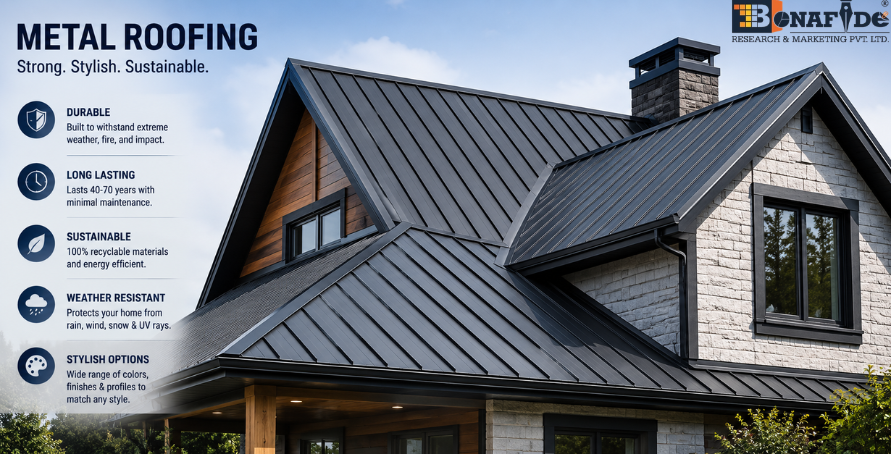
weather resistance, and enhance the aesthetic appeal of residential, commercial, and industrial structures across all continents. Metal roofing encompasses various settings, including single-family homes, apartment buildings, office complexes, warehouses, manufacturing facilities, retail centers, hospitals, schools, and agricultural buildings, where durable roofing protects interior spaces, reduces heating and cooling costs, and provides long-term value for building owners. The concept of metal roofing first emerged in the early 20th century, starting with simple corrugated steel panels for agricultural and industrial buildings. Over the years, this market has grown to feature standing seam panels, corrugated profiles, metal shingles and tiles, insulated metal panels, and architectural metal systems from both major manufacturers and specialty producers. Such technologies are extensively utilized within residential, commercial, and industrial construction environments, particularly in regions with extreme weather conditions including hurricanes, hailstorms, heavy snow, and wildfires. From a technical viewpoint, metal roofing involves the application of coated steel,
aluminum,
copper, or zinc panels and tiles using standing seam, exposed fastener, or interlocking attachment systems, followed by proper flashing and trim installation for weather-tight performance. These products tackle essential issues like roof leaks, wind damage, hail impact, fire spread, high energy bills from poor
insulation, and frequent replacement costs associated with traditional roofing materials.
According to the research report " Metal Roofing Market Outlook, 2031," published by Bonafide Research, the Metal Roofing market was valued at USD 24.26 Billion in 2025 and is expected to reach a market size of USD 33.35 Billion by 2031 and is anticipated to grow at 5.59% CAGR from 2026 to 2031. The metal roofing market is witnessing steady expansion owing to the heightened demand for durable building materials, increasing extreme weather events driving demand for resilient roofing, expanding residential and commercial construction activity, and the shift toward energy-efficient and sustainable building practices. Recent innovations involve the launch of cool metal roofing panels with enhanced reflective coatings, stone-coated steel tiles with extended warranties exceeding fifty years, insulated metal panels achieving ultra-low U-values for commercial construction, and heat-reflective products specifically designed for extreme climate conditions in the Middle East and Africa. Businesses are concentrating more on intelligent solutions that support energy efficiency, rapid installation, and compatibility with solar panel integration. Major companies are at the forefront of the market, providing a diverse array of systems including standing seam panels, corrugated profiles, metal shingles and tiles, insulated panels, and architectural metal systems for residential, commercial, and industrial applications. These firms are pouring resources into innovation to mitigate extreme weather damage, address energy efficiency concerns, and improve the durability and aesthetics of building enclosures.
By product type, metal roofing tiles represent the fastest growing segment, driven by increasing demand for premium aesthetic solutions that emulate traditional
clay tiles, slate, or wood shakes while delivering superior durability and longevity. These tiles are manufactured in various profiles including Spanish barrel, French tile, Mediterranean, and fish-scale styles that replicate conventional materials while offering superior weather resistance and lower maintenance requirements. Homeowners in growing residential communities increasingly specify metal tiles for new construction and renovation projects, recognizing the aesthetic value and lifecycle cost advantages compared to traditional materials. Historic renovation projects across various regions increasingly specify metal tiles to match original materials while delivering modern performance standards. The tile segment benefits from increasing consumer preference for premium building materials that enhance property value and visual appeal. Metal tiles offer the additional advantage of significantly lighter weight compared to traditional clay or concrete tiles, reducing structural requirements and enabling installation on buildings that may not support the weight of conventional materials. This weight advantage is particularly valuable in renovation projects where structural reinforcement would add significant cost and complexity. The interlocking design of many metal tile systems provides enhanced wind resistance and water shedding performance compared to traditional tile installations, where individual tiles can become dislodged in severe weather. The growing availability of metal tiles in a wide range of colors and finishes has expanded design possibilities, allowing architects and homeowners to achieve the desired aesthetic while benefiting from the durability and longevity of metal.
By material type, copper represents the fastest growing material segment, driven by increasing demand for premium architectural solutions in high-end residential and commercial applications. Copper roofing is specified for landmark commercial buildings including museums, government buildings, and corporate headquarters where the material's elegance and prestige align with institutional image and quality standards. Luxury residential homeowners increasingly specify copper roofing for primary residences where the material's natural beauty and long lifespan enhance property value and distinguish homes in competitive real estate markets. The natural patina that develops on copper roofing over time creates a unique, evolving finish that cannot be replicated with painted steel, providing a compelling value proposition for architects seeking distinctive design solutions. Copper's exceptional corrosion resistance makes it appropriate for coastal applications where
salt exposure would compromise alternative metals, expanding addressable markets for copper roofing systems. The longevity of copper roofing, often exceeding one hundred years with proper maintenance, provides exceptional lifecycle value for building owners willing to make the initial investment. Copper is also one hundred percent recyclable without quality loss, aligning with sustainability priorities and green building requirements. Copper systems with 99.9% pure architectural copper conforming to ASTM B370 are available in Mediterranean tile profiles that reproduce traditional clay barrel tile silhouettes at approximately one-tenth the structural load. Interlocking copper tile systems with concealed fasteners and
stainless steel fasteners throughout provide Class A fire ratings, UL 2218 Class 4 impact resistance, and 120 mph wind resistance warranties, making them suitable for diverse climate conditions.
By end user, residential construction represents both the largest and fastest growing segment for metal roofing across all regions. Homeowners in growing suburban communities increasingly specify metal roofing tiles for new construction and renovation projects, recognizing the lifecycle cost advantages and reduced maintenance requirements compared to traditional materials. The residential sector has experienced significant growth with increasing homeowner awareness of metal roofing benefits following extreme weather events that damaged conventional roofing, driving demand for more resilient roofing systems. Premium home builders specify metal tiles and copper systems to differentiate their projects and justify higher property valuations. Renovation activity in established residential neighborhoods drives significant demand as homeowners replace aging roofs with premium metal systems that offer longer warranties and better performance. The aesthetic versatility of metal tiles, available in colors, finishes, and profiles that complement various architectural styles, has expanded residential adoption beyond contemporary homes to include traditional and historic properties. Copper systems with evolving patina finishes are particularly valued for luxury residences and historic renovations where architectural authenticity and material quality are paramount. The growing availability of metal roofing tiles with extended warranties, including lifetime transferable warranties for copper systems, provides homeowners with confidence in their investment and contributes to residential segment growth.
By construction type, renovation and re-roofing represents both the largest and fastest growing segment, driven by aging building stock and increasing preference for upgrading to premium roofing systems during replacement cycles. Renovation and re-roofing projects across all regions generate significant demand for metal roofing as building owners invest in upgrading existing structures with durable, energy-efficient roofing systems. Residential re-roofing projects represent the majority of metal roofing installations, with homeowners replacing aging roofs with metal systems that offer longer service life and reduced maintenance requirements. Commercial re-roofing projects contribute significant demand as building owners seek to extend roof service life and reduce energy costs through cool roof applications. Extreme weather events have damaged roofing systems across all regions, accelerating replacement cycles and driving demand for more resilient metal roofing solutions. The aging building stock across developed markets is reaching the end of its roof service life, creating sustained demand for re-roofing projects. The renovation segment benefits from metal roofing's lightweight characteristics that allow installation over existing roofing without additional structural reinforcement. The ability to install metal roofing over existing roofing materials in many cases reduces disposal costs and installation time, making it attractive for renovation projects where minimizing disruption is important. Government incentives for energy renovation, including tax credits and subsidy programs across various countries, further support renovation activity and metal roofing adoption.

















 We are friendly and approachable, give us a call.