The convergence of stringent environmental mandates and heightened performance requirements is accelerating the global
polymer binders market toward advanced, sustainable chemistries. This expansion is heavily fueled by the construction, automotive, and
packaging industries, which are transitioning away from high-VOC, solvent-based systems toward eco-friendly waterborne, liquid, and powder formulations. In the building and infrastructure sector, advanced binders like acrylics and vinyl acetate are essential for reinforcing the tensile strength,
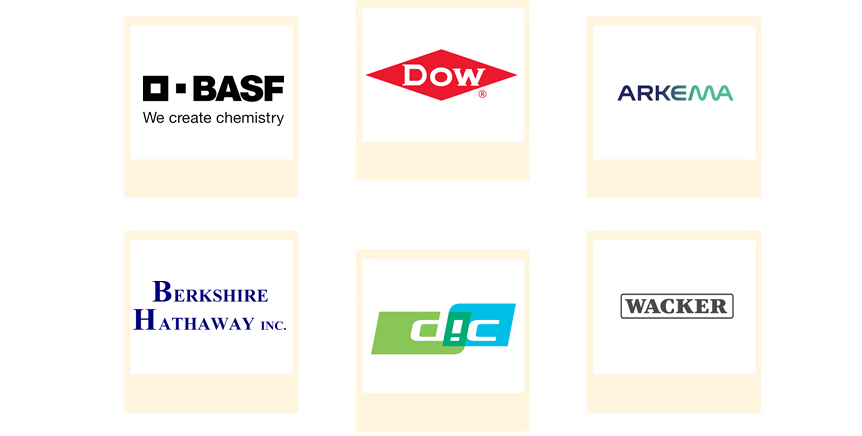
weather resistance, and overall structural longevity of architectural coatings and concrete matrices. Simultaneously, the green wave is driving significant research and development investments into bio-based, bio-hybrid, and biodegradable binders to support circular economy goals without compromising material durability. To capitalize on these opportunities, major multinational chemical corporations are aggressively upgrading their product portfolios and regional manufacturing capacities. For instance, Arkema has heavily advanced its water-based binder portfolio to target low-emission architectural and industrial coating sectors in Europe and the Asia-Pacific region. Simultaneously, Dow Inc. continues to optimize its global latex and emulsion polymer binder production network to secure supply chain efficiencies for the expanding packaging and adhesives markets. Demonstrating a targeted geographical strategy, BASF SE has significantly strengthened its polymer dispersions business by expanding its production capacity in Dahej, India, to capture soaring demand across South Asia's construction and paper industries. Concurrently, Wacker Chemie remains at the forefront of the building sector by engineering innovative dispersible polymer powders that provide a remarkably creamy, high-workability consistency to dry-mix mortars and tile adhesives, successfully bridging the gap between high mechanical performance and sustainable chemistry.
According to the research report "Global Polymer Binders Market Outlook, 2031," published by Bonafide Research, the Global Polymer Binders Market was valued at more than USD 40.79 Billion in 2025, and expected to reach a market size of more than USD 62.09 Billion by 2031 with the CAGR of 7.44% from 2026-2031. The global polymer binders market is a crucial sector within the
specialty chemicals industry, acting as the fundamental film-forming and cohesive backbone for architectural coatings, industrial adhesives,
textile treatments, and construction additive formulations. Additionally, a critical macroeconomic
catalyst is the shifting of major end-use sectors such as the automotive and aerospace industries toward lightweight, fuel-efficient manufacturing, which heavily relies on high-performance polymer matrices for structural resilience. Tightening environmental regulations, especially strict mandates regarding Volatile Organic Compound (VOC) emissions, act as both an operational challenge and a major driver, structurally pushing manufacturers away from legacy solvent-borne systems toward eco-friendly waterborne alternatives. This evolving regulatory landscape opens up lucrative, high-margin market opportunities. Prominent among these is the exponential demand for specialized, highly stable
lithium-ion
battery cell binders (such as polyvinylidene fluoride [PVDF]) triggered by the global
electric vehicle boom. Furthermore, the rapid industrial adoption of additive manufacturing and binder jetting
3D printing presents a unique opportunity for custom, low-waste liquid and powder polymer binder formulations. Organizations such as the European Chemical Industry Council (Cefic), the American Chemistry Council (ACC), and regional groups like the Middle East Coatings Association (MECA) direct the market. Their ongoing activities include establishing unified global chemical safety standards, coordinating international technical exhibitions, and actively leading cross-border advocacy initiatives to smooth the industry's transition toward sustainable, mass-balance circular chemistry.
Across global industries, the growing preference for alkyd, epoxy, and acrylonitrile copolymer binders is strongly influenced by the rising complexity of performance requirements in construction, infrastructure, energy, transportation, and manufacturing sectors. Epoxy binders are widely recognized for their exceptional adhesion strength, high mechanical performance, and resistance to moisture, chemicals, and abrasion, making them essential in protective coatings used on bridges, industrial floors, pipelines, marine equipment, and heavy machinery. Alkyd binders continue to play an important role in maintenance coatings and decorative applications because they provide good
surface leveling, ease of application, and reliable film formation, particularly in cost-sensitive applications where balanced performance is required. Acrylonitrile copolymer binders add specialized value through their resistance to oils, fuels,
solvents, and aggressive chemicals, making them suitable for industrial coatings and technical applications in automotive and energy-related sectors. Globally, increasing industrialization and infrastructure expansion are placing assets under more severe operational stress, including exposure to corrosive environments, fluctuating weather conditions, and heavy mechanical loads. Aging infrastructure in many developed and emerging economies is also creating significant demand for refurbishment and protective coating systems that can extend service life and reduce maintenance frequency. Additionally, industries are focusing more on lifecycle cost reduction, where higher-performing binders are preferred because they minimize repair cycles and improve long-term asset integrity.
The expansion of energy storage applications globally is strongly connected to the increasing reliance on
renewable energy systems, electrified transportation, and advanced grid infrastructure, all of which depend heavily on efficient and durable battery technologies. Within batteries, polymer binders play a crucial role in holding active electrode materials and conductive additives together while maintaining strong adhesion to metal current collectors. This structural function is essential because electrodes undergo continuous expansion and contraction during charge and discharge cycles, which can lead to cracking or material degradation if not properly stabilized. Polymer binders help maintain electrode cohesion, ensuring consistent ion transport and electrical conductivity over extended usage periods. The rapid growth of electric vehicles is one of the most significant drivers, as automotive batteries require high energy density, long cycle life, and improved safety, all of which depend on advanced binder systems. Similarly, the increasing integration of solar and wind power into global energy grids has created a strong need for
stationary energy storage systems that can store excess energy and release it when required. These applications demand batteries with long operational lifespans and high reliability, further increasing the importance of high-performance binders. In addition, consumer electronics, industrial backup systems, and portable power devices continue to expand globally, further strengthening demand for battery materials.
Powder-form polymer binders have gained widespread global adoption due to their practical advantages in manufacturing,
logistics, and end-use performance across construction and industrial sectors. One of the key strengths of powder binders is their excellent stability during storage and transportation, as they are less sensitive to temperature fluctuations and do not require complex handling conditions compared to many liquid-based systems. This makes them highly suitable for global supply chains where materials are transported across long distances and stored for extended periods. Powder binders are extensively used in dry-mix construction products such as tile adhesives, grouts, repair mortars, waterproofing systems, renders, and self-leveling compounds. When mixed with water at the application site, these binders significantly enhance adhesion, flexibility, crack resistance, impact strength, and overall durability of
cement-based systems. The increasing global preference for pre-packaged dry-mix materials has further strengthened demand because these products ensure consistent quality, reduce application errors, and simplify construction processes. Powder binders also provide advantages in packaging efficiency, reduced transportation weight, and optimized storage space, making them highly cost-effective for manufacturers and distributors. In industrial applications, powder forms support automated production systems and enable precise formulation control, improving manufacturing efficiency and product consistency.







 We are friendly and approachable, give us a call.