The
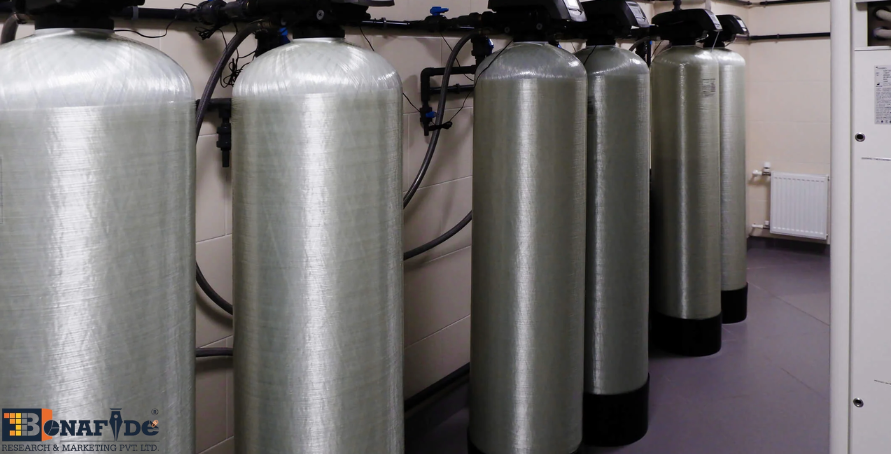
water softener market has become increasingly important in both residential and industrial sectors due to growing concerns over water quality and the adverse effects of hard water. Hard water, which contains high concentrations of calcium, magnesium, and other minerals, can cause significant problems, including scale buildup in pipes and appliances, reduced efficiency of heating systems, and damage to clothing and skin. As a result, water softening systems, which remove or neutralize these minerals, have emerged as essential solutions in households, commercial buildings, and industrial facilities. In recent years, consumer awareness regarding water quality has grown substantially, driven by health concerns and the need for long-lasting household appliances. This awareness has fueled the adoption of water softeners, particularly in regions with naturally hard water or limited access to alternative water treatment methods. Technological innovations are also shaping the market, with modern systems offering features such as
salt-free softening, energy-efficient operation, and smart connectivity, allowing users to monitor water usage and system performance in real time. Residential applications continue to dominate the market, largely because homeowners prioritize water quality to protect plumbing systems, extend the life of appliances, and improve personal comfort. However, industrial and commercial adoption is expanding rapidly, particularly in industries such as food and
beverage processing, textiles, pharmaceuticals, and power generation, where soft water is critical for operational efficiency and product quality. Environmental and regulatory factors are further influencing market dynamics, as there is increasing demand for eco-friendly and sustainable water softening solutions that reduce chemical use and water waste. Market growth is also supported by urbanization, population growth, and rising disposable incomes in emerging economies, which drive demand for modern water treatment solutions.
According to the research report “Global Water Softener Market Outlook, 2030” published by Bonafide Research, the Global Water Softener market is projected to reach market size of USD 5.56 Billion by 2030 increasing from USD 4.09 Billion in 2024, growing with 5.36% CAGR by 2025-30. The global water softener market is experiencing substantial growth due to a combination of technological, economic, and environmental factors. One of the primary drivers is the prevalence of hard water in many regions worldwide, which negatively impacts domestic and industrial water systems. Hard water causes scale formation in pipes, boilers, and appliances, leading to higher maintenance costs, reduced energy efficiency, and shorter equipment lifespans. Water softeners address these challenges by using ion-exchange, reverse osmosis, or salt-free technologies to remove or neutralize calcium and magnesium ions, making them essential for households, commercial establishments, and industrial processes. The market is further influenced by the rising adoption of advanced water softening technologies, including smart and energy-efficient systems that monitor water usage and optimize softening cycles, reducing operational costs and environmental impact. These innovations have increased the appeal of water softeners among environmentally conscious consumers and businesses. Industrial demand is another significant factor, particularly from sectors such as pharmaceuticals, food and beverage processing,
textile manufacturing, and power generation, where the use of soft water ensures product quality, equipment longevity, and energy efficiency. Geographically, North America has maintained a dominant position due to high consumer awareness, stringent regulations on water quality, and widespread adoption of modern water treatment technologies. Meanwhile, the Asia-Pacific region is emerging as the fastest-growing market, driven by rapid urbanization, industrialization, and increasing disposable incomes in countries like India, China, and Southeast Asian nations. Environmental sustainability trends are also shaping the market, with a growing preference for salt-free and low-waste water softening systems to minimize ecological impact. Market players are focusing on product innovation, partnerships, and regional expansion to capture opportunities in these high-growth areas. Additionally, government initiatives and regulatory frameworks promoting clean and safe water further support market growth.
Salt-based ion exchange softeners have emerged as the dominant type in the global
fragrance ingredients market due to their exceptional efficiency in removing hardness-causing ions such as calcium and magnesium from water, which is a critical component in the production and formulation of fragrances. In the fragrance industry, water quality plays a pivotal role, as even minor impurities can alter the scent, stability, or color of aromatic compounds, affecting the final product’s quality and consistency. Salt-based ion exchange softeners utilize a resin bed to exchange sodium ions for calcium and magnesium ions, effectively softening the water to a high degree of purity. This process ensures that water used in fragrance formulation, extraction, or dilution does not introduce unwanted minerals that could react with delicate aromatic molecules. Additionally, these systems are highly reliable, easy to maintain, and capable of treating large volumes of water, which is particularly important for industrial-scale fragrance manufacturing. The cost-effectiveness of salt-based systems, combined with their ability to provide consistent performance, further reinforces their widespread adoption in fragrance production facilities. Another factor contributing to their dominance is the compatibility of salt-based softeners with various downstream processes in fragrance production, including distillation, blending, and bottling, where mineral-free water is essential to maintain product integrity. Environmental regulations and industry standards for product quality also drive the preference for salt-based ion exchange systems, as they ensure compliance while minimizing the risk of off-spec products. Moreover, technological advancements in resin efficiency and system automation have made salt-based softeners more adaptable and efficient, reducing water and salt consumption while maintaining optimal softening capacity.
The ion exchange process has become the most widely used method in the global fragrance ingredients market because of its unparalleled ability to purify, separate, and refine critical aromatic compounds essential for high-quality fragrance production. In this process, ions in a liquid are selectively replaced with other ions using specialized resins, enabling the removal of impurities such as metals, salts, and other contaminants that can negatively impact the aroma, stability, and shelf life of fragrance products. The fragrance industry demands exceptionally pure raw materials, as even trace impurities can alter the fragrance profile, reduce consistency between batches, or cause degradation over time. Ion exchange processes are particularly effective in treating water and other
solvents used in the extraction and blending of essential oils, natural extracts, and synthetic aromatic compounds, ensuring that the final products meet stringent industry standards. Additionally, ion exchange is adaptable to different scales of production, from laboratory-level fragrance formulation to large-scale industrial manufacturing, making it highly versatile and suitable for various applications. The process also enhances yield and efficiency by selectively isolating desired components while removing unwanted ions, which is crucial for high-value fragrance ingredients where purity directly affects market value. Advances in ion exchange resin technology, including higher selectivity, longer life spans, and reduced regeneration requirements, have further strengthened its adoption in the fragrance sector. Environmental sustainability and regulatory compliance are additional drivers, as ion exchange systems reduce chemical waste and enable the recovery of valuable compounds, aligning with modern industry trends.
The residential end-user segment dominates the global fragrance ingredients market primarily due to the increasing demand for personal care and
home fragrance products among consumers worldwide. Households represent the largest consumption base for fragrances, including perfumes, deodorants, air fresheners, scented candles, and other home care products. Rising disposable incomes, changing lifestyles, and growing awareness of personal grooming and home ambiance have significantly driven consumer spending in this segment. Fragrance ingredients play a crucial role in ensuring high-quality, long-lasting scents in personal and household products, making them indispensable in residential applications. The proliferation of premium and niche perfumes targeted at households has also contributed to the growing demand for high-quality fragrance raw materials. Furthermore, the increasing focus on wellness, aromatherapy, and home experiences has led consumers to purchase more scented products for personal use, boosting the residential end-user segment. Emerging trends such as customization of fragrances, eco-friendly and natural ingredients, and ready-to-use home fragrance kits have further enhanced residential adoption. The growth of
e-commerce platforms and retail availability has made fragrances more accessible to households, facilitating higher consumption rates. Additionally, demographic factors such as urbanization, young population, and higher consumer awareness in developing countries are expanding the residential consumer base for fragrance products. Manufacturers are increasingly targeting residential users through innovative formulations, marketing campaigns, and product personalization, which has reinforced this segment's dominance in the market.
The offline distribution channel holds the largest share in the global fragrance ingredients market due to its extensive reach, customer engagement, and ability to provide a tactile and experiential buying environment. Fragrance products, including perfumes, deodorants, and home fragrance solutions, rely heavily on sensory experience, which is best delivered through offline channels such as specialty stores, supermarkets, hypermarkets, and brand-owned retail outlets. Consumers often prefer to smell, test, and compare fragrances before making a purchase, making offline channels critical for driving sales and enhancing customer satisfaction. Additionally, offline channels offer direct interaction with trained sales staff, enabling better product education, personalized recommendations, and guidance on fragrance selection, which online platforms cannot fully replicate. Many premium and luxury fragrance brands also rely on offline retail to maintain brand exclusivity, ensure proper product presentation, and deliver a high-end purchasing experience. Established distribution networks in traditional retail, including partnerships with regional distributors and wholesalers, ensure wide availability of fragrance products across various geographies, from urban centers to smaller towns. Moreover, marketing campaigns and in-store promotions are more impactful in offline environments, influencing impulse buying and repeat purchases. Despite the growing popularity of e-commerce, offline channels continue to dominate due to consumer trust, brand loyalty, and the preference for in-person shopping experiences, particularly for high-value fragrance products.








 We are friendly and approachable, give us a call.