The Global Pressure Relief
Valves Market is undergoing significant transformation as manufacturers increasingly require reliable, certified, high-performance, and digitally connected overpressure protection technologies across oil and gas, chemical and petrochemical, power generation, pharmaceuticals, water and wastewater, mining, food and
beverage, and other industrial applications. Pressure relief valves play a critical role in protecting boilers,
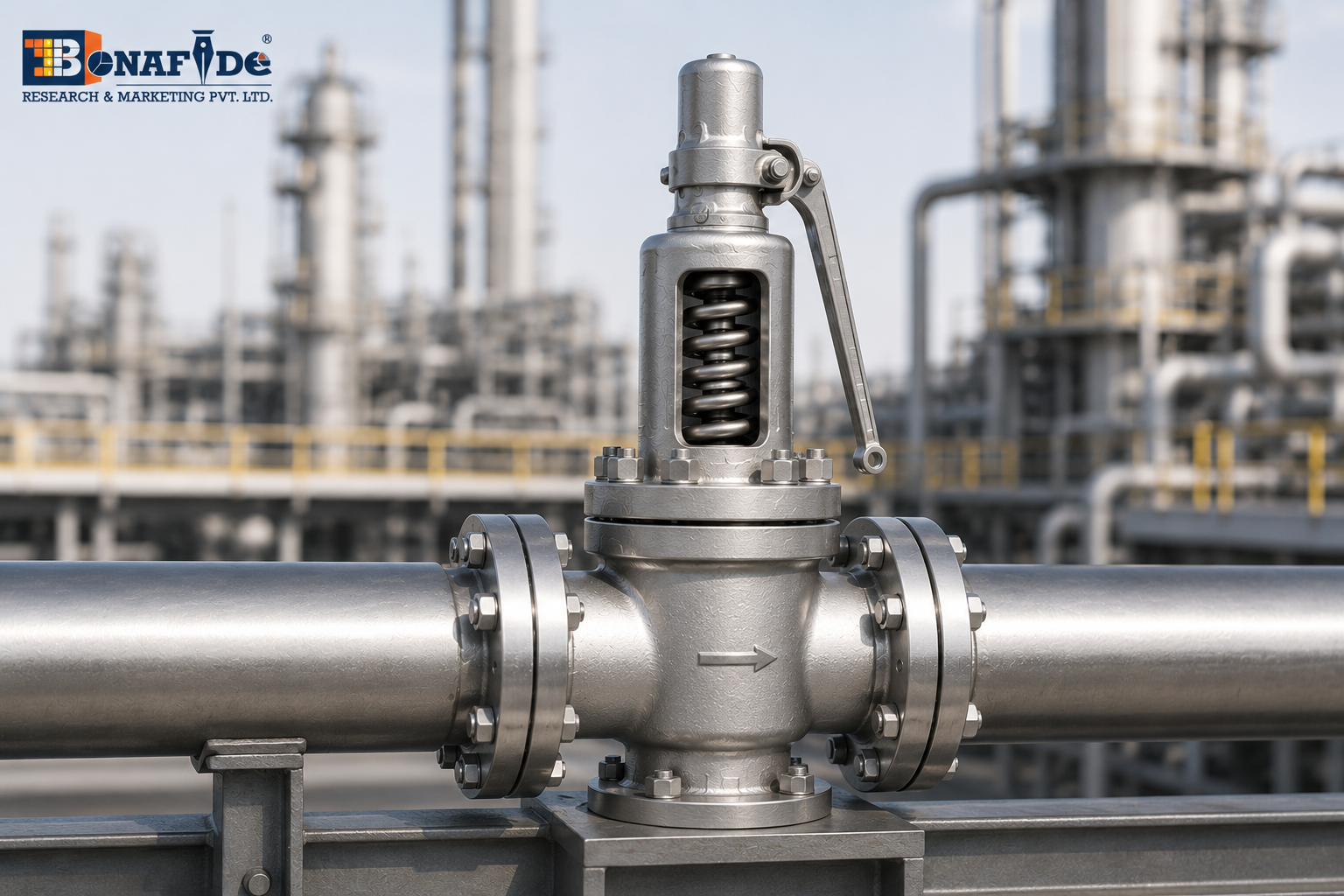
pressure vessels, pipelines, reactors, storage tanks, and process equipment, enabling operators to achieve improved safety, reduced fugitive emissions, regulatory compliance, and greater operational reliability. The market includes spring-loaded pressure relief valves, pilot-operated pressure relief valves, balanced bellows designs, thermal relief valves, vacuum relief valves, smart valves, valve bodies, springs, pilots, bellows, seats, seals, sensors,
digital monitoring systems, and associated equipment. Demand is evolving beyond conventional spring-loaded designs toward pilot-operated technology, smart valves with integrated sensors, low-emission configurations, high-pressure systems, corrosion-resistant materials, and digitally connected production systems. Manufacturers are increasingly focusing on higher performance, improved sealing technology, energy efficiency, automation compatibility, intelligent process controls, real-time monitoring,
predictive maintenance, and Industry 4.0 connectivity to improve safety and reduce operating costs. Spring-loaded pressure relief valves represent the largest product category because of their proven reliability, simplicity, cost-effectiveness, and suitability for a broad range of standard industrial applications. Pilot-operated valves are becoming increasingly important as manufacturers seek higher accuracy, tighter shutoff, reduced fugitive emissions, and greater capacity for demanding high-pressure applications. Balanced bellows designs are gaining attention across chemical processing, refining, and applications with variable backpressure conditions. Smart valves with integrated sensors and
wireless connectivity are emerging as a major growth opportunity. These systems enable real-time condition monitoring, leak detection; remote diagnostics, predictive maintenance, and automated documentation, helping operators improve asset integrity and reduce unplanned downtime. The market is also being transformed by increasing emphasis on environmental compliance and fugitive emission reduction. Low-emission valve designs, advanced sealing technologies and certified performance are increasingly being incorporated into pressure relief valve specifications. These technologies reduce product loss, support regulatory compliance, and improve operational safety across critical industrial applications. Oil and gas, chemical processing, and power generation remain major demand centers, while pharmaceuticals, water and wastewater, hydrogen production, carbon capture, LNG infrastructure, and advanced manufacturing are creating additional opportunities. The growing use of high-pressure systems, corrosive materials, and demanding process conditions is also increasing demand for specialized and high-performance pressure relief valve technologies.
According to the research report, "Global Pressure Relief Valve Market Outlook, 2031," published by Bonafide Research, the global pressure relief valves market was valued at more than USD 4.91 Billion in 2025 and is anticipated to grow at more than 5.34 % CAGR from 2026 to 2031. Market estimates can vary depending on the definition of pressure relief valves, product categories included, geographic coverage, and whether smart valves, digital monitoring systems, accessories, and related services are included in the market value. For this analysis, the market is defined around commercially manufactured valves specifically designed for overpressure protection applications. The scope includes spring-loaded pressure relief valves, pilot-operated pressure relief valves, balanced bellows designs, thermal relief valves, vacuum relief valves, smart valves with sensors, low-emission configurations, valve bodies, springs, pilots, bellows, seats, seals, digital monitoring systems, and associated accessories. The material scope includes
carbon steel,
stainless steel, alloy and exotic materials, and specialized materials depending on application requirements. This definition provides a focused assessment of equipment directly associated with industrial overpressure protection while minimizing overlap between valve types, monitoring systems, and related components. The competitive landscape includes global valve manufacturers, specialized pressure relief valve suppliers, smart valve technology providers, regional manufacturers, and service companies. Competition is increasingly shifting from basic equipment pricing toward valve performance,
certification, emissions compliance, smart monitoring capabilities, customization, reliability, technical support, and lifecycle services. Manufacturers are expanding their portfolios across different product types, materials, and pressure ranges to serve customers ranging from small industrial facilities to large oil and gas and chemical complexes.
Oil and gas applications provide significant commercial opportunities because pressure relief valves are used for wellheads, separators, pipelines, compressors, storage tanks, and processing units. Chemical and petrochemical applications create demand for corrosion resistant and high performance valves for reactors, distillation columns,
heat exchangers, and process piping. Power generation contributes through boiler safety valves, steam system relief valves, and auxiliary equipment protection. Water and wastewater applications provide a broad and diversified customer base requiring cost effective valve solutions. The transition toward hydrogen production, carbon capture, LNG infrastructure, and advanced energy systems is creating additional requirements that favor pilot-operated and smart valve systems. Manufacturers are increasingly replacing older, non-compliant valves with certified, high-performance alternatives where modern designs can provide improved safety, reduced emissions, and enhanced operational reliability. Smart valve adoption is also expanding as operators seek to monitor valve condition, detect leakage, and optimize maintenance schedules using a single integrated digital platform. Digitalization is changing pressure relief valve design as manufacturers integrate sensors, wireless connectivity, remote monitoring, data analytics, intelligent diagnostics, and predictive-maintenance technologies. These capabilities can improve safety, reduce downtime, optimize maintenance schedules, increase asset utilization, and support data-driven operations.
Artificial intelligence and software-based condition monitoring are also creating opportunities for automated performance tracking, leak detection, and maintenance optimization. Automation represents another major development area. Manufacturers are increasingly integrating automated testing, digital documentation, remote calibration, and connected monitoring systems. These systems help address labor shortages while improving safety and compliance. Fully integrated smart valve systems can connect pressure relief valves with plant
asset management platforms, supporting the development of smart factories and connected industrial operations. Overall, the global pressure relief valves market is positioned for sustained expansion through 2031, supported by the replacement of aging equipment, increasing adoption of pilot-operated and smart valves, rising demand for low-emission designs, automation and digital integration, hydrogen and carbon capture development, LNG infrastructure expansion, and industrial modernization. Pilot-operated technology, smart valves, low-emission designs, corrosion-resistant materials, and digitally connected equipment are expected to remain the most important areas of market development through the forecast period. These developments are expected to strengthen the strategic importance of pressure relief valves across the global industrial and manufacturing landscape.


















 We are friendly and approachable, give us a call.