The Global
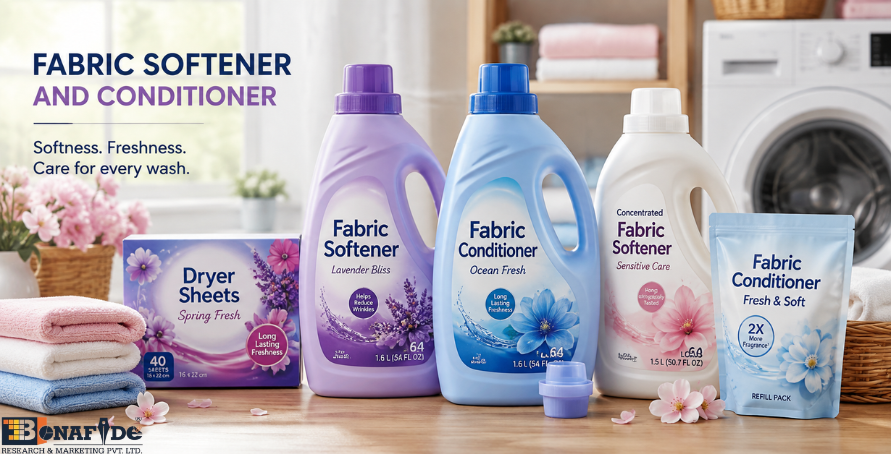
Fabric Softener and Conditioner Market are entering a new phase of development as consumers increasingly seek laundry products that deliver more than basic fabric softening. Growing interest in long-lasting fragrance, enhanced fabric care, convenience, and premium laundry experiences is encouraging manufacturers to expand their portfolios with differentiated formulations and innovative product formats. The market is increasingly moving toward products that combine softness with fragrance enhancement, static control, deodorizing, garment-care, and other specialized benefits. Premiumization is emerging as a major direction within the market, with fragrance becoming an increasingly important element of product differentiation. Manufacturers are investing in sophisticated fragrance profiles, longer-lasting scent technologies, and premium fabric-care experiences to appeal to consumers seeking elevated laundry routines. Recent product innovation from Procter & Gamble's Downy, including its Boutique Botanicals Scent Beads launched in June 2026, demonstrates how nature-inspired and fine-fragrance positioning is being extended into laundry-care products. Sustainability is also reshaping product development across the Fabric Softener and Conditioner Market. Manufacturers are increasingly exploring concentrated formulations, reduced-
packaging solutions, plant-derived ingredients, and other approaches designed to improve resource efficiency while maintaining product performance. Concentrated formats can reduce packaging requirements and transportation volume per wash, while innovative formats such as sheets, beads, and other single-dose products are creating additional opportunities for convenience and sustainability. The shift toward concentrated and innovative formats is particularly significant as consumers look for convenient products that require less storage space and provide efficient dosing. Liquid fabric softeners continue to represent an important part of the category, while manufacturers are expanding into alternative formats and multifunctional products to address changing consumer preferences. The increasing availability of concentrated products is also supporting product differentiation through improved dosing efficiency, packaging reduction, and premium positioning.
According to the research report, "Global Fabric Softener and Conditioner Market Outlook, 2031," published by Bonafide Research, the Global Fabric Softener and Conditioner Market was valued than USD 16.94 Billion in 2025.
Liquid fabric softeners continue to hold a leading position within the global fabric conditioner market, supported by decades of consumer familiarity and extensive retail distribution across all regions. Liquid formulations offer several advantages, including effective softening performance, fragrance customization, static-control benefits, and compatibility with a wide range of conventional and high-efficiency washing machines when used according to manufacturer instructions. The format also provides manufacturers with flexibility to incorporate additional benefits such as fragrance longevity, wrinkle reduction, static control, and specialized fabric-care positioning. Strong brand recognition and established purchasing habits have further supported the continued importance of liquid fabric softeners globally. Consumer purchasing behavior is characterized by strong brand loyalty in mature markets and increasing brand consideration in emerging markets. Product innovations include enhanced fragrance technologies, concentrated formulations, sensitive-skin variants, and specialized products designed for different fabric-care requirements. Business opportunities exist in developing premium liquid formulations with distinctive fragrance profiles tailored to regional preferences, creating product lines targeting specific consumer needs, and establishing direct-to-consumer subscription models that capitalize on recurring household purchasing patterns.
E-commerce marketplaces represent one of the fastest-growing distribution channels in the global fabric conditioner market, benefiting from the expansion of online retail and changing consumer purchasing behavior worldwide. The shift toward
digital channels is supported by home-delivery convenience, subscription models, product comparison capabilities, consumer reviews, and broader product availability. E-commerce platforms also enable manufacturers to offer expanded product assortments, including premium and niche products that may have more limited availability through traditional retail channels. Online purchasing is particularly well established in North America, Europe, and developed Asia Pacific markets, with rapidly growing adoption in Latin America, Middle East, and Africa. Product innovations include subscription models offering automatic delivery, exclusive online product variants, expanded fragrance collections, and digital tools that help consumers identify suitable products. Business opportunities exist in developing direct-to-consumer platforms, creating exclusive online product lines, and establishing partnerships with major e-commerce platforms to increase product visibility and consumer reach globally.
Conventional fabric softeners continue to represent the leading nature segment of the global fabric conditioner market, supported by established consumer usage patterns, extensive distribution networks, and competitive pricing. These products have been part of household laundry routines for decades across all regions, creating strong familiarity with conventional formulations and established brand preferences. Conventional fabric conditioners offer reliable performance and broad accessibility across major retail channels worldwide. Consumer purchasing behavior reveals strong reliance on conventional products among families, budget-conscious households, and consumers who prioritize functionality over sustainability attributes across all regions. Product innovations in the conventional segment include enhanced fragrance technologies, improved softening performance, concentrated formulations, and specialized products addressing different fabric-care requirements. Business opportunities exist in developing value-oriented product lines, improving product performance, reinforcing brand loyalty through promotional programs, and establishing strategic partnerships with major retailers globally.
Commercial end-users represent an important and steadily growing segment in the global fabric conditioner market, with businesses and institutions requiring professional-grade fabric care products for their operations. The commercial segment encompasses a diverse range of customers, including hotels and hospitality businesses that maintain high-quality linens, healthcare facilities that require hygienic and soft linens for patient comfort, and professional laundry services that serve commercial and residential customers. Commercial users have distinct requirements, including consistent performance, efficient dosing, cost-effectiveness, bulk packaging, and compatibility with high-volume laundry operations. Purchasing behavior is generally characterized by professional procurement processes, emphasis on cost-per-wash economics, and preference for reliable performance at scale. Commercial demand is particularly relevant in regions with strong tourism, hospitality, and healthcare sectors. Product innovations include professional-grade formulations optimized for commercial washing equipment, bulk packaging options, and specialized formulations designed for different
textile applications. Business opportunities exist in developing comprehensive commercial product portfolios, establishing direct sales relationships with institutional customers, and developing partnerships with commercial laundry service providers and equipment suppliers globally.
Mass-price-range products hold a leading position in the global fabric conditioner market, supported by broad retail availability, competitive pricing, frequent promotional activity, and established consumer purchasing patterns worldwide. These products appeal to consumers seeking reliable fabric-care performance at accessible price points. Consumer purchasing behavior within the mass segment is influenced by price promotions, bulk purchasing opportunities, value-oriented pack sizes, and perceived cost per wash globally. Product innovations in the mass segment include value-added formulations, concentrated products designed to improve usage efficiency, enhanced fragrances, and packaging designed to differentiate products at retail. Business opportunities exist in developing value-oriented product lines, creating promotional programs that strengthen brand loyalty, and improving supply-chain efficiency to maintain competitive pricing across all regions.
















 We are friendly and approachable, give us a call.