Rapid transformation has repositioned the global
nitrogenous fertilizer market from a volume-focused agricultural input industry into a strategically important component of
food security, energy economics, and industrial decarbonization. Demand recovery across major crop-producing regions since 2021 has been supported by expanding corn, wheat,
rice, and
oilseed cultivation, while the International
Fertilizer Association has highlighted a return to record fertilizer consumption levels driven largely by
nitrogen nutrient requirements. Supply dynamics have become increasingly linked to natural gas availability, particularly across Europe, the Middle East, North America, and North Africa, making energy security a central determinant of production competitiveness. Regulatory frameworks are also influencing market evolution, with the European Union’s Carbon Border Adjustment Mechanism creating new incentives for lower-emission
ammonia and nitrogen products, encouraging producers to reassess manufacturing pathways and carbon intensity standards. Simultaneously, government-backed initiatives such as India’s National Green Hydrogen Mission and related
green ammonia procurement programs are accelerating the commercialization of cleaner nitrogen value chains. Technological advancement has shifted beyond conventional
urea production toward renewable hydrogen integration, carbon capture-enabled ammonia synthesis,
digital nutrient management platforms, and precision agriculture systems that optimize nitrogen application efficiency. Industry forums including the International Fertilizer Association Annual Conference and specialized ammonia-focused events have become key venues for discussing supply resilience, emissions reduction, and nutrient stewardship. Alternative nutrient strategies involving
biofertilizers, controlled-release formulations, and enhanced-efficiency fertilizers continue to gain attention, although conventional ammonia and urea remain indispensable due to their agronomic effectiveness and established infrastructure. Persistent challenges include feedstock price volatility, environmental scrutiny surrounding nitrogen losses,
logistics disruptions, and evolving carbon regulations, all of which continue to shape investment priorities and competitive positioning across the global nitrogenous fertilizer ecosystem.
According to the research report "Global Nitrogenous Fertilizer Market Outlook, 2031," published by Bonafide Research, the Global Nitrogenous Fertilizer market was valued at more than USD 80.68 Billion in 2025, and expected to reach a market size of more than USD 100.42 Billion by 2031 with the CAGR of 3.84% from 2026-2031. Competitive intensity within the global nitrogenous fertilizer market is increasingly defined by scale, feedstock access, technological capability, and carbon-management strategies rather than production volume alone. Industry leadership remains concentrated among established producers such as Yara International, CF Industries, Nutrien, OCI Global, and Fertiglobe, all of which continue to expand low-carbon ammonia, operational efficiency, and global distribution capabilities. Merchant ammonia trade remains a specialized segment due to transportation complexity and infrastructure requirements, creating significant entry barriers for new participants and reinforcing the advantages of vertically integrated producers. Transaction economics are heavily influenced by natural gas costs, freight rates, export restrictions, and regional supply availability, leading buyers to increasingly diversify sourcing strategies. Recent market activity has reflected strong interest in decarbonized ammonia projects, renewable hydrogen integration, and carbon-capture-enabled production facilities. Yara’s renewable hydrogen deployment at Her?ya and ongoing low-carbon ammonia initiatives across North America illustrate the sector’s transition toward cleaner production pathways. Investment decisions are increasingly shaped by carbon pricing mechanisms, sustainability mandates, and food supply security objectives. Purchasing behavior among agricultural enterprises has also evolved, with greater emphasis on nutrient-use efficiency, digital agronomy tools, and optimized application timing to improve return on fertilizer expenditure. Supply constraints linked to natural gas shortages in producing regions such as Iran and Egypt, along with periodic export controls from China, have reinforced the strategic importance of diversified production networks.
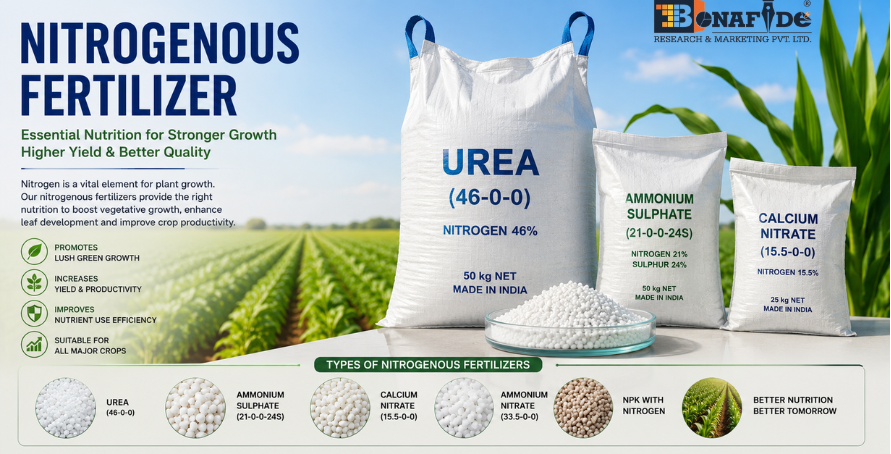
Ammonium sulfate is gaining significant traction in the global fertilizer market as growers increasingly address sulfur-deficient soils while seeking cost-effective nutrient solutions. Its growing adoption reflects a broader shift in crop nutrition strategies, supported by the fertilizer’s ability to supply both nitrogen and sulfur in a single application. Large agricultural regions across Asia, Europe, and the Americas have reported declining soil sulfur levels due to intensive cultivation practices, increasing demand for fertilizers that can restore nutrient balance. This trend is particularly evident in crops such as oil palm in Southeast Asia and corn in Brazil, where sulfur requirements are substantial. Market expansion has also been reinforced by the fertilizer’s origin as a byproduct of
caprolactam production, enabling manufacturers to convert industrial output into a competitively priced agricultural input. Southeast Asia imported approximately 5.14 million tonnes of ammonium sulfate in 2025, while China has continued to expand byproduct-based production capacity to around 25 million tonnes annually. Brazil remains one of the largest destinations for Chinese exports, supported by persistent sulfur deficiencies across key farming regions. Strong agronomic value, reliable availability, and
insulation from fluctuations in urea pricing have elevated ammonium sulfate from a supplementary nutrient source to an increasingly important component of modern crop fertility programs worldwide.
Granular urea remains the dominant nitrogen fertilizer worldwide because its
high nutrient density, durability, ease of handling, and cost-efficient logistics align with the practical realities of global agriculture. With a nitrogen content of 46%, it delivers more nutrient per tonne than most alternatives, reducing transportation costs and maximizing freight efficiency. Large-scale granulation facilities, capable of producing up to 5,000 tonnes per day, further lower production costs through economies of scale while creating a premium product that can withstand extended storage and demanding shipping conditions. For example, transporting granular urea from Qingdao to Rotterdam typically adds about USD 40–60 per tonne in logistics costs, yet alternative nitrogen products would require greater shipment volumes to deliver an equivalent amount of nitrogen, increasing overall transport expenses. These efficiencies are particularly important for major exporters such as China, which exported 281 tonnes of urea during the first nine months of 2025. Demand is also reinforced by the needs of hundreds of millions of smallholder farmers across Asia, Africa, and Latin America, many of whom lack access to liquid application systems, fertigation networks, or precision spraying equipment, making hand broadcasting of prilled or granular urea the most practical option. In addition, granular urea's free-flowing characteristics and resistance to caking enable reliable long-term storage in tropical and humid environments, supporting stockpiling between monsoon and dry seasons.
Cereal crops remain the cornerstone of global nitrogen fertilizer demand due to their dominant role in food production and land use. Maize, rice, wheat, and
soybean collectively cover more than half of the world’s cultivated agricultural area and consume over 60% of total fertilizer inputs, reflecting their importance in feeding a growing population and supplying a substantial share of global dietary protein. Nitrogen application remains particularly critical for grain production because nutrient deficiencies can rapidly reduce yields within a single growing season, creating immediate implications for food availability and farm profitability. Nutrient removal rates further reinforce this dependence, with every tonne of harvested grain extracting roughly 20 kilograms of nitrogen from the soil that must be replenished to sustain future productivity. High-yield production systems illustrate this challenge, as corn and soybean harvests remove significant quantities of nitrogen through grain extraction alone. Organic nutrient sources and biological fixation contribute to soil fertility but remain insufficient to meet the requirements of modern large-scale cereal cultivation, making synthetic nitrogen fertilizers indispensable. Global cereal consumption has reached approximately 3.2 billion tonnes, supported by strong demand from food processing, livestock feed, biofuel production, and industrial applications. Long-term projections from international agricultural outlooks continue to indicate rising grain requirements despite advances in nutrient-use efficiency. Commercial fertilizers are estimated to support between 40% and 60% of global cereal output, particularly as improved seed genetics and high-yield cropping systems require greater nutrient management precision. Maize remains the single largest consumer of nitrogen fertilizers worldwide, accounting for roughly one-fifth of total nitrogen use and underscoring the crop’s central role in shaping global fertilizer demand patterns.
Foliar nitrogen application is becoming an increasingly important component of modern crop nutrition programs as growers seek greater efficiency, flexibility, and responsiveness in nutrient management. Its adoption has accelerated alongside the expansion of precision agriculture technologies that enable targeted nutrient delivery during key growth stages. Unlike soil-applied fertilizers, foliar treatments allow nutrients to be absorbed directly through plant leaves, providing a faster response when root uptake is constrained by drought, excessive moisture, low temperatures, or other adverse soil conditions. Advanced spraying systems incorporating
artificial intelligence,
sensor-based monitoring, and connected farm technologies are helping producers optimize application timing while reducing fertilizer losses by as much as 30%.
Drone-assisted spraying is also gaining momentum, particularly in high-value horticultural and specialty crop production, where precise nutrient placement can support crop quality and maximize returns. Nitrogen-based foliar formulations are widely used to stimulate vegetative growth, correct nutrient deficiencies, and maintain plant performance during periods of environmental stress. Research on precision farming practices indicates that integrating foliar nutrition with
data-driven crop management can enhance yields by 15% to 20% while lowering overall fertilizer consumption. Growing pressure to improve nutrient-use efficiency, reduce environmental losses, and manage rising input costs has further strengthened the appeal of foliar strategies. Direct leaf absorption minimizes risks associated with nutrient immobilization, leaching, and denitrification, making foliar nitrogen an increasingly valuable tool for maintaining crop productivity under variable growing conditions.







 We are friendly and approachable, give us a call.