Transformed by the explosive proliferation of Internet of Things (IoT) endpoints, connected automobiles, and industrial edge nodes, the global
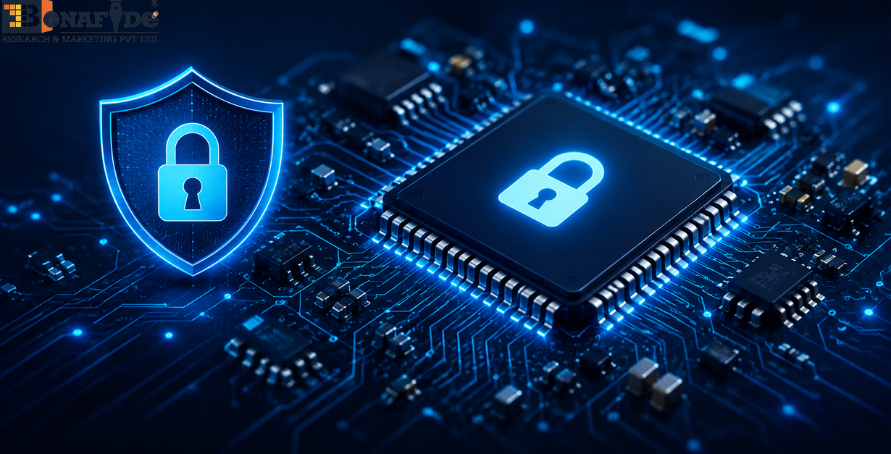
embedded security market is experiencing a profound architectural shift to meet escalating cyber-defense requirements. Because traditional software-only encryption models routinely choke on the tight size, weight, and power (SWaP) constraints of resource-limited modern hardware, manufacturers are systematically pivoting toward silicon-level protection. This massive integration of dedicated hardware roots of trust (RoT) such as embedded secure elements, physical unclonable functions (PUFs), and trusted platform modules (TPMs) allows connected systems to execute lightweight, tamper-resistant cryptographic processes directly at the physical layer. Furthermore, as international data sovereignty laws tighten and cyber threats advance toward persistent firmware manipulation, the demand for device-bound
identity verification, secure boot sequences, and quantum-resistant edge processors has established hardware-centric security as a non-negotiable baseline across the global tech supply chain. Increased focus on regulatory alignment and compliance tools, including frameworks from STMicroelectronics (STM32Trust, PQC libraries) and NXP’s EdgeLock Assurance programs to help manufacturers meet CRA, RED, and UN R155 standards. Major exporting countries include semiconductor and electronics manufacturing hubs such as Taiwan, South Korea, China, the United States, and several European nations, while imports are driven by growing demand for connected devices and
cybersecurity infrastructure across both developed and emerging economies. As cyber threats continue to evolve and connected devices become increasingly integrated into critical operations, embedded security has emerged as a foundational technology supporting secure
digital transformation, regulatory compliance, consumer trust, and the resilience of modern connected ecosystems worldwide.
According to the research report "Global Embedded Security Market Outlook, 2031," published by Bonafide Research, the Global Embedded Security Market was valued at more than USD 10.22 Billion in 2025, and expected to reach a market size of more than USD 16.60 Billion by 2031 with the CAGR of 8.63% from 2026-2031. The competitive market is dominated by semiconductor pioneers who are continuously rolling out next-generation hardware security architectures. For instance, NXP Semiconductors expanded its ecosystem with the EdgeLock secure element designed for unified smart-home protocols, while industry leaders like Infineon Technologies, STMicroelectronics, and tech consortiums like Quintauris are aggressively transitioning toward open-source RISC-V architectures to deploy certified, customizable cryptographic co-processors for automotive and industrial workloads. However, the industry faces severe supply chain concentration risks. Driven by the explosive proliferation of Internet of Things (IoT) endpoints, software-defined vehicles, and strict regulatory frameworks like the EU Cyber Resilience Act, the demand for immutable trust anchors has never been higher. This landscape presents significant opportunities in high-growth verticals like Edge AI confidential computing and Post-
Quantum Cryptography (PQC) hardware acceleration. The complex supply chain relies heavily on Western intellectual property and electronic design automation tools from firms like ARM, Synopsys, and Cadence. Yet, the physical manufacturing ecosystem exhibits extreme geographic bottlenecks. Foundries in Taiwan and South Korea account for more than 65% of advanced secure-element wafer fabrication capacity. This chip infrastructure then travels to regional Outsourced Semiconductor Assembly and Test (OSAT) facilities for anti-tamper
packaging and cryptographic key injection. Consequently, while the convergence of hardware-backed FIDO2 passkeys,
digital banking tokens, and smart utility grids creates unprecedented revenue opportunities, the global market remains structurally vulnerable to localized geopolitical tensions and maritime
logistics disruptions.
The rapid proliferation of connected devices across industries has significantly increased the complexity of securing
embedded systems, making services a critical component of cybersecurity strategies. Unlike traditional security deployments that could often rely on standalone hardware or software products, embedded security requires continuous support across device design, implementation, deployment, maintenance, and upgrade phases. Modern connected products, ranging from
industrial sensors and
medical equipment to smart appliances and connected vehicles, must remain protected against evolving cyber threats throughout their operational lifespan. This has created strong demand for consulting, integration, testing,
certification, vulnerability assessment,
incident response, and
managed security services. Manufacturers increasingly seek external expertise because embedded security involves highly specialized disciplines such as cryptographic key management, secure boot implementation, firmware integrity verification, hardware-rooted trust establishment, and compliance validation. In many cases, organizations lack internal resources capable of handling these sophisticated security requirements. The increasing frequency of firmware vulnerabilities and software supply-chain attacks has further emphasized the need for continuous monitoring and security maintenance services. Additionally, regulatory frameworks governing connected devices often require ongoing security updates, vulnerability disclosures, and lifecycle risk management, encouraging companies to engage service providers that can ensure compliance and operational continuity.
As embedded systems become increasingly interconnected, ensuring that only authorized entities can access devices, networks, and sensitive information has become one of the most fundamental cybersecurity requirements. The expansion of IoT ecosystems has introduced billions of connected endpoints that continuously exchange data across industrial, commercial, consumer, healthcare, and automotive environments. Every connected endpoint represents a potential entry point for cyberattacks if proper authentication controls are not in place. Consequently, organizations are prioritizing authentication and access management technologies to establish trust between devices and users before any communication or transaction occurs. Embedded devices often operate autonomously and may interact with cloud platforms, mobile applications, enterprise systems, and other machines without direct human intervention. This machine-to-machine communication requires secure identity verification mechanisms that can prevent impersonation, unauthorized access, and credential misuse. The increasing adoption of digital certificates, cryptographic identities, hardware security modules, secure elements, and multi-factor authentication techniques reflects the growing importance of device identity management. In addition, cybersecurity incidents involving compromised credentials remain among the most common attack vectors globally, prompting organizations to strengthen
access control frameworks at the device level.
The automotive industry has undergone a major technological transformation as vehicles evolve from primarily mechanical machines into sophisticated digital systems containing numerous electronic control units, sensors, communication modules, and software-driven functionalities. Modern vehicles support connected services such as telematics, navigation, infotainment, remote diagnostics, smartphone integration, advanced driver-assistance systems, and over-the-air software updates. These capabilities significantly increase the number of potential cyberattack surfaces within vehicles, creating a substantial need for embedded security technologies. Security has become particularly important because cyber incidents affecting vehicles can have direct implications for passenger safety, operational reliability, and data privacy. Embedded security solutions help establish secure communication channels, protect software integrity, manage cryptographic keys, and prevent unauthorized access to vehicle systems. The growing adoption of electric vehicles further strengthens this requirement, as
battery management systems, charging infrastructure communication, and energy management platforms depend heavily on secure embedded electronics. Additionally, autonomous driving technologies generate and process large volumes of
sensor data that must be protected from manipulation or interference. Automotive manufacturers increasingly implement secure boot mechanisms, hardware security modules, intrusion detection systems, and secure firmware update frameworks to safeguard vehicle operations. International
automotive cybersecurity regulations and standards have also elevated security requirements across the industry, encouraging manufacturers and suppliers to integrate cybersecurity measures throughout vehicle development lifecycles. Vehicle-to-vehicle and vehicle-to-infrastructure communication systems add another layer of complexity, requiring trusted authentication and encrypted data exchange between connected transportation elements.
The widespread adoption of cloud computing has fundamentally changed how embedded devices are deployed, managed, and protected across modern digital ecosystems. Connected devices no longer operate as isolated endpoints; instead, they continuously communicate with cloud platforms that facilitate data processing, analytics, storage, device management, and software delivery. As organizations deploy increasingly large networks of IoT devices, industrial equipment, medical systems, consumer electronics, and connected vehicles, cloud-based security architectures provide the flexibility required to manage these distributed assets efficiently. One of the key advantages of cloud deployment is the ability to centrally administer security policies, digital certificates, authentication credentials, encryption keys, and software updates across millions of devices simultaneously. This capability is particularly important because embedded devices often operate in remote or geographically dispersed environments where physical maintenance is impractical. Cloud platforms also support real-time monitoring, anomaly detection, threat intelligence integration, and automated response mechanisms that improve overall security visibility. Furthermore, modern embedded devices frequently depend on cloud services for identity management, secure communication, and remote access control functions. The growth of over-the-air firmware updates has further increased cloud dependence, allowing manufacturers to rapidly address vulnerabilities and deploy security patches without requiring physical intervention. Enterprises increasingly favor cloud deployment because it simplifies device lifecycle management while reducing infrastructure complexity and operational overhead. In addition, cloud environments facilitate advanced security analytics through the aggregation of device telemetry data, enabling organizations to identify emerging threats and abnormal behavior patterns more effectively.








 We are friendly and approachable, give us a call.