The Global
Automated Storage and Retrieval System market is experiencing robust growth, driven by the relentless push for warehouse automation across industries. Government policies and regulations are playing an increasingly pivotal role in shaping the AS/RS landscape. In a bold stride towards Industry 4.0, the Malaysian government introduced the Smart
Logistics Complex (SLC) Incentive in Budget 2025, offering a 60% Investment Tax Allowance on qualifying capital expenditure for companies establishing smart warehouses. To qualify, facilities must have a built-up area of at least 30,000m? and be equipped with at least three Industry 4.0 enabling technologies such as AI, IoT, or
big data analytics. Similarly, the Saudi Arabian government enacted regulations in 2023 mandating the integration of automated systems in warehouses as part of its Vision 2030 strategy to diversify the economy and enhance logistics competitiveness. Leading industry participants such as Daifuku Co., Ltd. and Murata Machinery, Ltd. continue to dominate, with both being recognized as leaders in the automotive AS/RS segment. Strategic partnerships are emerging as a critical growth strategy; for instance, MHS Lift and Movu
Robotics announced an expanding partnership to enhance automated material handling solutions, while OPEX and Peltier partnered to deliver cold storage solutions for automated fulfillment systems.
According to the research report "Global Automated Storage and Retrieval System Market Outlook, 2031," published by Bonafide Research, the Global Automated Storage and Retrieval System Market was valued at more than USD 9.78 Billion in 2025, and expected to reach a market size of more than USD 15.63 Billion by 2031 with the CAGR of 8.34% from 2026-2031.The raw materials and import-export dynamics of the AS/RS market are increasingly influenced by geopolitical factors and supply chain resilience concerns. The industry relies heavily on critical minerals and rare earth elements including cobalt,
lithium, neodymium, and dysprosium which are essential for manufacturing electric motors, sensors, and advanced robotics components. The 2025 geopolitical events have driven a focus toward establishing alternative ex-China supply chains for these materials. Australian Strategic Materials (ASM) is positioning itself as a rare ex-China supplier of heavy rare earth metals and alloys, with production ramping up significantly. In Europe, Solvay inaugurated a new production line in 2025 for neodymium and praseodymium oxides, marking its entry into commercial-scale production for the European permanent magnet supply chain. U.S. tariff policy changes in 2025 have compelled procurement teams to reassess total landed costs and supplier strategies, accelerating interest in reshoring and domestic manufacturing partnerships. One of the most significant developments is Hai Robotics' HaiPick Climb, a next-generation goods-to-person system that won the Technology Excellence Award at PACK EXPO Las Vegas 2025. This innovative solution uses compact climbing robots that mount to just one side of standard warehouse racking, delivering totes up to 34% faster than traditional AS/RS while condensing storage footprint by up to 75%.
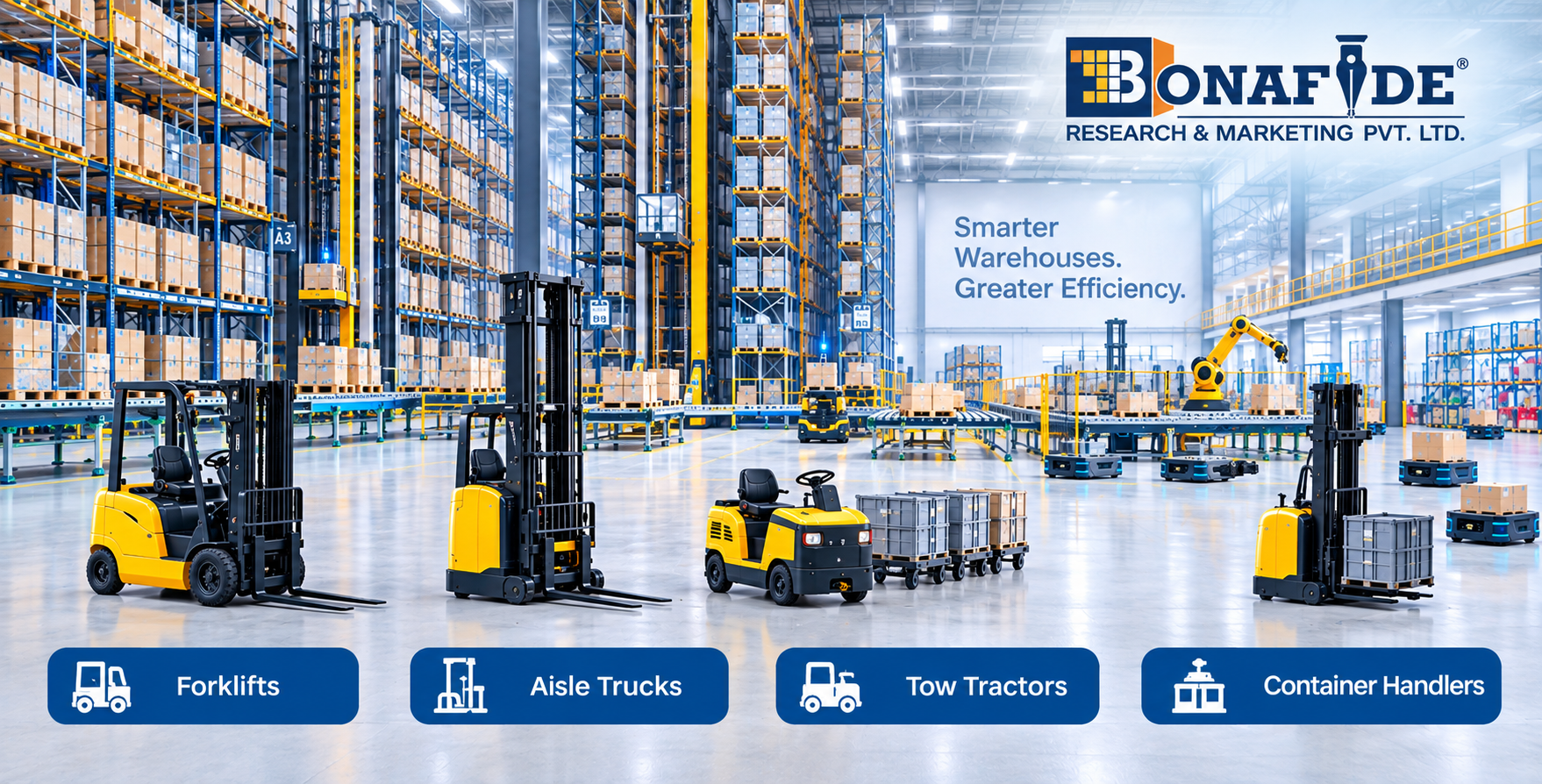
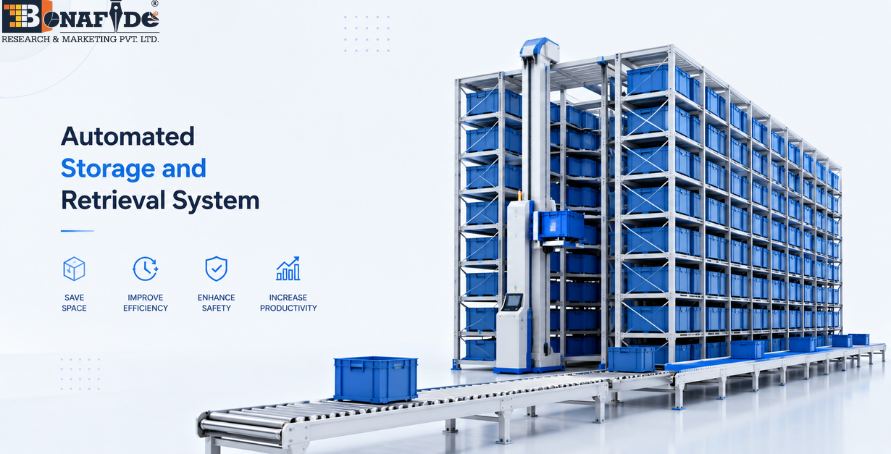
The dominance of crane-based automated storage and retrieval systems globally is strongly influenced by the widespread need for efficient bulk material handling across major industrial and logistics operations. Across regions such as North America, Europe, Asia-Pacific, and emerging markets, industries including automotive, food and
beverage, pharmaceuticals, chemicals, retail distribution, and
general manufacturing rely heavily on palletized storage systems to manage large volumes of raw materials, components, and finished products. Crane-based AS/RS technology is particularly well suited for these requirements because it is designed to operate in high-bay warehouses where vertical space utilization is essential, enabling companies to significantly increase storage capacity without expanding physical facility footprints. This is especially important in regions where land availability is limited or expensive, or where companies aim to maximize warehouse efficiency within existing infrastructure. Another key factor driving global adoption is the need for operational consistency and accuracy in large-scale distribution centers, where crane systems provide precise, automated movement of
pallets with minimal human intervention, reducing errors and improving inventory control. These systems also integrate effectively with warehouse management software, enabling real-time tracking of stock levels, batch information, and movement history, which is critical for industries with strict traceability requirements such as pharmaceuticals and food logistics.
The accelerating adoption of tote and carton load automated storage and retrieval systems worldwide are closely linked to the structural transformation of retail, logistics, and consumer purchasing behavior driven by
digital commerce. Across global markets, the expansion of
e-commerce platforms has significantly increased the number of small, fragmented, and multi-item orders, which has reduced the effectiveness of traditional pallet-based storage systems for order fulfillment operations. Instead, warehouses are increasingly required to manage individual items or small grouped units stored in bins, totes, or cartons, making tote and carton AS/RS solutions highly suitable for modern fulfillment needs. These systems are specifically designed to support high-speed retrieval of small load carriers, enabling efficient goods-to-person operations that significantly reduce walking time and improve picking productivity. The rise of omnichannel retail strategies has further intensified this trend, as retailers now manage inventory across both physical stores and online platforms, requiring highly flexible and responsive storage systems capable of handling dynamic demand patterns. In addition, the growth of micro-fulfillment centers in urban areas has increased the need for compact, high-density automation solutions that can operate efficiently within limited warehouse space while maintaining rapid order processing capabilities. Tote and carton systems address this requirement by maximizing vertical and horizontal storage utilization while ensuring quick access to individual SKUs.
The leading position of storage and buffering applications in the global automated storage and retrieval system market is strongly connected to the fundamental role these systems play in maintaining operational continuity across complex and interconnected supply chains. In modern industrial and logistics environments, production, storage, and distribution processes rarely operate at perfectly synchronized speeds, which create the need for intermediate holding points that can absorb fluctuations and prevent disruptions. Storage and buffering systems within AS/RS environments address this requirement by temporarily holding raw materials, semi-finished goods, or finished products until they are required in the next stage of operations. This function is particularly important in industries such as automotive, electronics, pharmaceuticals, food and beverage, and consumer goods, where production lines operate continuously but demand patterns and downstream logistics schedules may vary. In global supply chains, transportation delays, seasonal demand fluctuations, and variability in supplier output make buffering systems critical for maintaining smooth operational flow. Automated storage systems help decouple these processes by acting as dynamic inventory reservoirs that ensure materials are available when needed without causing bottlenecks in production or distribution. Another key factor driving adoption is the increasing implementation of lean manufacturing and just-in-time inventory strategies, which require precise coordination between supply and demand while minimizing excess stock.
The rapid expansion of automated storage and retrieval systems in the healthcare and pharmaceutical sector globally is closely tied to the critical importance of accuracy, safety, and traceability in medical supply chains. Healthcare operations, including hospitals,
pharmaceutical manufacturing facilities, and large distribution centers, must manage a wide range of sensitive products such as
vaccines, biologics, prescription drugs, and surgical supplies, many of which require strict storage conditions and precise inventory control. AS/RS technology plays a key role in ensuring that these requirements are consistently met by providing automated, controlled environments where products can be stored and retrieved with minimal human intervention, reducing the risk of errors and contamination. One of the most important factors driving adoption is the need for end-to-end traceability in
pharmaceutical logistics, where regulatory frameworks across many countries require detailed tracking of batch numbers, expiry dates, and movement history to ensure patient safety and compliance with quality standards. Automated storage systems support this by integrating with warehouse and hospital information systems to provide real-time inventory visibility and accurate recordkeeping. Another contributing factor is the increasing complexity of pharmaceutical supply chains, driven by the growth of specialty medicines, biologics, and personalized treatments, which has expanded the variety of stock keeping units and increased storage management challenges.







 We are friendly and approachable, give us a call.