The global
motion control market has the industry involved in designing manufacturing, and distributing systems and components that regulate and control the movement of mechanical systems, catering to diverse applications across industries such as manufacturing, automotive,
robotics, and aerospace has been the main driver of growth for the Motion Control Market. As companies strive to increase efficiency, reduce errors, and promote output, motion control systems have become indispensable. Brazil, India, China, and other developing nations' expanding manufacturing sectors resolve to propel the
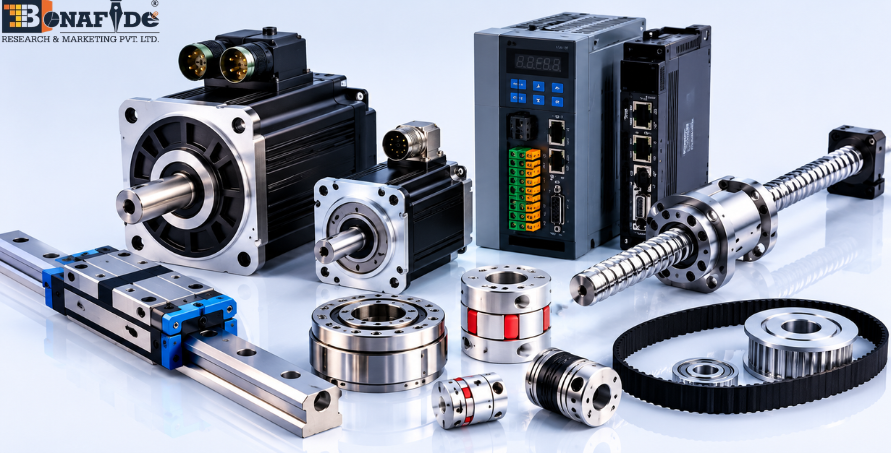
motor control center market's expansion. The market is characterized by its continuous evolution and dynamic nature, with ongoing advancements in technology driving innovation across various sectors. Brushless DC motors, a key component in motion control systems, are increasingly adopted for their power efficiency and
high torque output.
Thermal management solutions are essential for ensuring the reliable operation of motion control systems, particularly in high-performance applications. Precision motion is a critical requirement in industries such as machine tool and
semiconductor manufacturing, where open-loop control systems are often utilized for their simplicity and cost-effectiveness. However, the demand for greater accuracy and consistency is driving the adoption of closed-loop control systems, which utilize feedback sensors to continuously adjust motor output. Motion controllers play a central role in coordinating the operation of various motion control components, including cam profiles, process automation, and factory automation systems.
According to the research report "Global Motion Control Market Outlook, 2031," published by Bonafide Research, the Global Motion Control market was valued at more than USD 17.41 Billion in 2025, and expected to reach a market size of more than USD 24.26 Billion by 2031 with a CAGR of 5.83 %from 2026 to 2031. Torque control and
embedded systems are also crucial for optimizing the performance of motion control systems, particularly in applications requiring high-speed motion and vibration control.
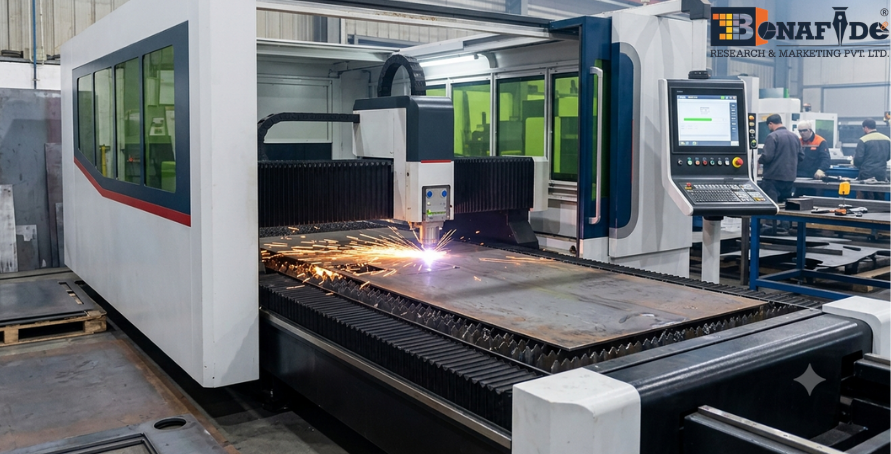
Industrial automation sectors, such as material handling and CNC machining, are major consumers of motion control technologies. The integration of machine vision systems and
linear actuators enables advanced automation capabilities, while electro-mechanical systems and multi-axis control provide the flexibility and precision required for complex manufacturing processes. The Global Motion Control market is highly dynamic, marked by significant mergers and acquisitions. In April 2026, German cybertronics expert Wittenstein acquired a majority stake in Israeli motion specialist STXI Motion to expand its electronics and software capabilities, particularly to penetrate the fast-growing
mobile robotics and intralogistics sectors. Similarly, Allient Inc., a global designer of precision motion solutions, acquired Sierramotion, a specialist in mechatronic and turn-key motion components for robotics and medical applications, to advance its integrated motion strategy. In a notable collaboration, Swiss drive specialist maxon acquired a strategic minority stake in Germany's Synapticon in 2025, aiming to co-develop high-performance drive solutions with integrated functional safety.
The rapid growth of software and services in the global motion control market is primarily driven by the ongoing transformation of industrial systems from hardware-centric automation to highly
digital,
data-driven, and interconnected manufacturing ecosystems. Modern industries such as automotive, electronics, semiconductor, pharmaceuticals, and
logistics are increasingly relying on advanced software platforms to manage, optimize, and synchronize complex motion control operations. Unlike traditional systems that depended mainly on hardware components for motion execution, today’s industrial environments require software layers that enable real-time monitoring,
predictive maintenance, remote diagnostics, and adaptive control. Motion control software plays a critical role in coordinating multi-axis movements, optimizing machine performance, and integrating robotics with broader
industrial control systems. Another major factor is the rapid expansion of Industry 4.0 technologies, where factories are becoming fully connected ecosystems using Industrial Internet of Things (IIoT), cloud computing, and edge analytics. In such environments, motion control systems are no longer standalone units but part of a larger intelligent network that requires continuous software support for configuration, updates, simulation, and performance optimization.
Digital twin technology is also becoming widely adopted, allowing industries to simulate motion systems virtually before physical deployment, reducing errors and improving efficiency in manufacturing processes. Services are also gaining strong momentum due to the increasing complexity of automation systems and the shortage of skilled industrial engineers in many regions. Industries now rely heavily on external service providers for system integration, installation, commissioning, programming, and maintenance of motion control systems.
Closed-loop systems are witnessing rapid growth in the global motion control market due to their ability to continuously monitor and correct machine performance using real-time feedback mechanisms, ensuring high accuracy, stability, and operational efficiency. Unlike open-loop systems that operate without feedback, closed-loop motion control systems use sensors such as encoders, resolvers, and feedback devices to constantly measure output and compare it with desired input values. This allows automatic correction of deviations in speed, torque, and position, making these systems highly suitable for precision-driven industrial applications. The increasing complexity of modern manufacturing processes is a key driver of closed-loop system adoption. Industries such as automotive, aerospace, electronics, semiconductor fabrication, pharmaceuticals, and robotics require extremely accurate motion control to ensure product quality and reduce defects. In robotic applications, which are expanding globally, closed-loop systems are essential for performing tasks such as welding, assembly, painting, and inspection, where even minor errors can significantly impact production outcomes. Another important factor is the growing emphasis on energy efficiency and operational optimization in industrial environments. Closed-loop systems improve energy usage by ensuring motors and drives operate only as needed, reducing wastage and improving system efficiency. They also support predictive maintenance by generating continuous performance data that can be analyzed to detect faults, wear, or inefficiencies before failures occur.
The rapid growth of
3D printing and additive manufacturing in the global motion control market is driven by its fundamental dependence on extremely accurate motion systems that control the movement of print heads, build platforms, laser systems, and material deposition mechanisms. Unlike traditional manufacturing processes, additive manufacturing builds components layer by layer using controlled digital instructions, requiring precise coordination of motion control systems to ensure accuracy, consistency, and structural integrity of the final product. Industries such as aerospace, automotive, healthcare, electronics and industrial tooling are increasingly adopting additive manufacturing for rapid prototyping, lightweight component production, and customized part fabrication. In aerospace and automotive sectors, it is used to produce complex geometries that reduce weight and improve performance, while in healthcare, it enables production of patient-specific implants, prosthetics, and
dental components. All these applications depend on motion control systems that can execute highly precise movements with minimal deviation. Another key driver is the integration of additive manufacturing into digital production ecosystems. Modern factories are combining CAD/CAM software, simulation tools, and real-time monitoring systems with motion control technologies to create fully automated and intelligent production workflows. This integration improves design accuracy, reduces material waste, and shortens product development cycles.
The electronics and semiconductor industry is experiencing the fastest growth in the global motion control market due to its extreme requirement for ultra-precise, high-speed, and contamination-free manufacturing processes. Semiconductor fabrication involves highly sensitive operations such as wafer handling, lithography, etching, inspection, and
packaging, all of which depend on motion control systems capable of nanometer-level accuracy. Even the smallest deviation in motion can lead to defects, making precision motion control essential in this industry. The rapid expansion of consumer electronics, electric vehicles,
telecommunications infrastructure, and smart devices has significantly increased demand for semiconductor chips, thereby driving investment in advanced manufacturing facilities. These fabs rely heavily on motion control systems to manage wafer positioning, robotic transfer systems, and micro-scale assembly operations. Similarly, electronics manufacturing, including printed circuit boards and microchips, requires high-speed pick-and-place machines and inspection systems that depend on synchronized motion control technologies. Another key factor is the increasing adoption of automation and
smart manufacturing in semiconductor production. Modern fabrication plants integrate motion control systems with AI-based monitoring, predictive maintenance, and digital twin technologies to improve yield, reduce defects, and optimize production efficiency. These systems require extremely precise motion coordination across multiple axes and environments. The shift toward advanced technologies such as 5G,
artificial intelligence, IoT devices, and electric mobility has further intensified demand for semiconductors, indirectly boosting motion control adoption.















 We are friendly and approachable, give us a call.