Global Flanges Market Gains Momentum as Industrial Modernization, Energy Infrastructure, and Advanced Connection Technologies Reshape Demand
Manufacturing & Industry

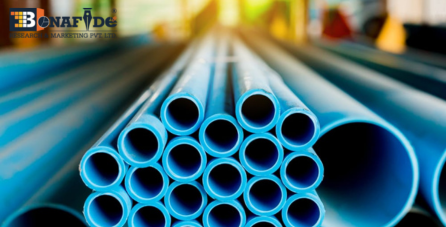
The global plastic pipe market has become a cornerstone of modern infrastructure, providing lightweight, cost effective, corrosion resistant and flexible solutions for fluid and gas transportation across residential, commercial, agricultural and industrial sectors. Over the past several decades, advances in polymer chemistry, extrusion technologies and jointing methods have transformed plastic piping from a niche alternative into a preferred material for a wide array of applications ranging from potable water distribution and sewage systems to irrigation, gas pipelines and industrial process lines. Plastic materials such as PVC, CPVC, HDPE, PPR and PE have each carved out distinct segments based on performance attributes where PVC and CPVC are favored for cold and hot water distribution respectively, HDPE is prized for flexible high pressure and trenchless installations and PPR finds strong demand in building services and plumbing where thermal and chemical resistance matter. Market expansion is propelled by several interlocking drivers. Rapid urbanization and population growth create continuous demand for new housing, sanitation networks and municipal services while economic development in emerging regions fuels investments in infrastructure projects. Regulatory standards that target safe drinking water and efficient wastewater management also encourage replacement and upgrading of aging metallic pipelines. From a cost perspective, plastic pipes offer lower lifecycle costs because of reduced maintenance, resistance to corrosion and scaling and simpler installation techniques that cut labor and time. At the same time, manufacturers are investing in performance improvements such as enhanced UV stabilization, antimicrobial additives and higher pressure rated compounds to broaden the addressable applications.
According to the research report "Global Plastic Pipes Market Outlook, 2031," published by Bonafide Research, the Global Plastic Pipes market was valued at more than USD 87.99 Billion in 2025, and expected to reach a market size of more than USD 120.97 Billion by 2031 with the CAGR of 5.59% from 2026-2031. Industry dynamics reveal a mix of global players and regional specialists tied together by a supply chain sensitive to fluctuations in polymer resin pricing and feedstock availability. Opportunities are expanding with the rise of trenchless installation and directional drilling, smart water management systems that integrate sensors with piping networks and circular economy initiatives focused on recycling and reclaiming polymer waste, all of which point toward a more resilient and technologically enabled market. Technological progress is one of the most influential developments in the market. Enhanced polymer blends, higher pressure rated HDPE variants and improved joining methods reduce failure rates and widen the suitability of plastic pipes for demanding uses such as gas transmission and long distance trunklines. Another emerging trend is the integration of sensors and smart devices into piping systems to support leak detection, flow monitoring and predictive maintenance, which attracts increased funding for modern water infrastructure. Regulatory frameworks promoting potable water safety, recycled plastic use and circular economy goals further shape product standards and procurement strategies and they encourage manufacturers to demonstrate traceability and adopt recycled content materials. Environmental concerns have accelerated investment in recycling technologies such as mechanical and chemical recycling along with design strategies that simplify end of life processing. Regionally, Asia Pacific has emerged as a major growth engine due to large scale urban infrastructure programs, agricultural modernization and strong manufacturing ecosystems while North America and Europe emphasize renovation of aging urban systems and stricter potable water regulations.
PVC plastic pipe type is the largest segment in the global plastic pipes market because it offers the most balanced combination of affordability, performance, versatility and durability across a wide range of water supply, drainage, irrigation and construction applications. PVC pipes are widely adopted because they provide an ideal alternative to metal pipes due to their resistance to corrosion, abrasion and chemical exposure which significantly reduces maintenance costs and extends service life in both residential and industrial environments. One of the key strengths of PVC pipes is their cost efficiency. Compared with CPVC, HDPE, PPR or metal pipes, PVC pipes require lower production energy, use less expensive raw materials and can be produced at scale, which helps manufacturers meet high volume infrastructure demands economically. This affordability makes PVC the preferred choice for government funded water supply projects, rural water schemes and large-scale urban drainage development, especially in developing regions where cost sensitivity is high. PVC pipes are also lightweight and easy to handle which reduces transportation and installation costs for contractors and simplifies labor requirements, enabling faster project completion. Their smooth internal surface minimizes friction losses and improves flow efficiency which is an important advantage in water distribution networks. PVC also supports a variety of pressure ratings and diameters which makes it suitable for diverse applications such as cold-water plumbing, sewage networks, stormwater management and agricultural irrigation systems. Additionally, PVC has a strong global supply chain with large established manufacturers, standardized production processes and widespread availability through construction retailers. Its compatibility with various joining methods such as solvent cementing and push fit joints makes installation more reliable and leak free.
Liquid conduits application type is the largest segment in the global plastic pipes market because the movement, distribution and management of liquids is the core requirement of residential, commercial, industrial and municipal infrastructure systems. Plastic pipes are primarily used to transport liquids such as potable water, wastewater, industrial fluids, irrigation water and process chemicals, and this broad utility makes liquid conduits the dominant application. The expanding global population and rapid urbanization require extensive water supply networks and drainage systems which depend heavily on plastic piping due to its lower installation cost, corrosion resistance and long service life compared with metal alternatives. Municipal water supply and sanitation projects represent some of the largest infrastructure investments worldwide and these projects rely extensively on plastic pipes for both pressure and non-pressure liquid transport applications. In the residential and commercial sectors, plastic pipes are vital for plumbing, wastewater discharge, rainwater management and fire protection systems. Their ability to handle varying pressures and temperatures makes them suitable for diverse building requirements. In agriculture, which consumes a significant share of global water resources, plastic pipes are widely used in drip irrigation, sprinkler systems and water conveyance because they minimize leakage, reduce water wastage and improve crop productivity. Industrial applications also contribute to the dominance of liquid conduits since plastic pipes are often preferred for chemical handling, cooling water circulation and fluid processing due to their chemical resistance and smooth interior surfaces that prevent scaling and contamination.
Water and wastewater end user type is the largest segment in the global plastic pipes market because the development, expansion and maintenance of water supply and sanitation systems represent the most extensive and continuous infrastructure need across both developed and emerging economies. Plastic pipes are widely used in municipal water distribution, sewer networks, stormwater management and wastewater treatment facilities due to their corrosion resistance, cost efficiency, long service life and ease of installation. As urban populations grow, cities require large scale networks to supply clean drinking water and manage wastewater safely, and plastic pipes provide an economical and durable solution for these essential utilities. Unlike metal pipes that corrode, scale or react with chemicals, plastic pipes maintain consistent flow capacity and water quality, making them ideal for transporting potable water over long distances. The lightweight nature of PVC, HDPE and PPR pipes reduces transportation and labor costs during installation which is especially beneficial for extensive municipal projects. Water scarcity and climate variability have increased the urgency for efficient water management, leading governments to invest heavily in leakage reduction, pipeline rehabilitation and modernized water distribution systems. Plastic pipes play a crucial role in these upgrades because of their flexibility, joint reliability and high-pressure handling capabilities. HDPE pipes in particular are favored for trenchless installation methods which minimize surface disruption and reduce project costs in congested urban areas.












 We are friendly and approachable, give us a call.