The
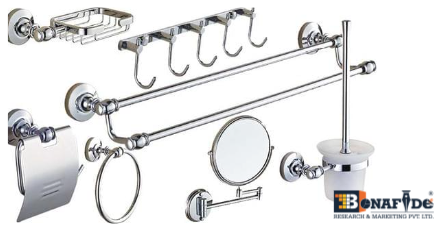
bathroom fitting and accessories market plays a vital role within the global construction and home improvement ecosystem, reflecting evolving standards of living, design preferences, and functional expectations. Bathroom fittings and accessories include a broad range of products such as faucets, showers, bathtubs,
sanitary ware, mirrors, towel holders, cabinets, and other essential hardware that combine utility with aesthetics. Once considered purely functional spaces, bathrooms have transformed into comfort-oriented, wellness-focused, and design-driven areas, significantly influencing product demand and innovation within the market. Growing urbanization and population expansion are central to the market’s development. Rapid migration toward urban centers has increased residential and commercial construction activities, directly driving the need for modern bathroom installations. New housing developments, high-rise apartments, office buildings, hotels, hospitals, and shopping complexes require standardized yet visually appealing bathroom solutions, ensuring consistent market demand. Additionally, renovation and remodeling activities, particularly in mature economies, further contribute to market expansion as homeowners seek to upgrade outdated fixtures to improve functionality, hygiene, and property value. Consumer preferences are increasingly shaped by lifestyle improvements and rising disposable incomes. Bathrooms are now perceived as personal spaces reflecting comfort, luxury, and individuality. This shift has fueled demand for premium finishes, innovative designs, ergonomic products, and customized accessories. Minimalist aesthetics, space-saving solutions, and coordinated bathroom collections have become popular, encouraging manufacturers to offer integrated product portfolios rather than standalone items.
According to the research report "Global Bathroom Fittings & Accessories Market Outlook, 2031," published by Bonafide Research, the Global Bathroom Fittings & Accessories market was valued at more than USD 118.52 Billion in 2025, and expected to reach a market size of more than USD 174.02 Billion by 2031 with the CAGR of 6.78% from 2027-2031. The most significant driving factors is the expansion of residential and commercial construction worldwide. Rapid urban development in emerging economies and continuous infrastructure upgrades in developed regions ensure long-term demand for bathroom fittings and accessories across all price segments. Another key factor is the growing focus on renovation and remodeling activities. Aging housing stock in many regions has increased the replacement rate of bathroom fixtures, with homeowners prioritizing modern designs, improved water efficiency, and enhanced durability. Bathroom upgrades are often viewed as value-adding investments, making them a preferred area for renovation spending. From a factual standpoint, the residential sector remains the largest consumer of bathroom fittings and accessories, supported by rising homeownership rates and increasing interest in interior aesthetics. Asia Pacific stands out as a leading market due to large-scale urbanization, expanding middle-class populations, and growing awareness of modern living standards. Meanwhile, developed regions continue to generate demand through premium, smart, and sustainable product offerings. Manufacturers are increasingly introducing water-saving faucets, low-flow shower systems, and eco-friendly materials to comply with environmental regulations and consumer expectations. Smart bathroom solutions, including
sensor-based fittings and digitally controlled accessories, are becoming more common in urban households, luxury residences, and hospitality projects. Design trends also play a crucial role in market development. Sleek finishes, matte textures, compact accessories, and modular designs are gaining popularity, particularly in space-constrained urban homes. Customization and coordinated bathroom themes are increasingly influencing purchasing decisions.
Bathroom fittings represent the largest product type within the global
fragrance ingredients market primarily because bathrooms are among the most frequent and consistent points of fragrance consumption in daily life. Products associated with bathroom fittings—such as air fresheners, scented cleaners, fragranced sanitizers, and odor-control solutions—require continuous fragrance integration to enhance user experience, hygiene perception, and comfort. Unlike occasional or seasonal fragrance applications, bathroom-related fragrance usage is routine, repetitive, and essential, leading to sustained demand for fragrance ingredients. Bathrooms are enclosed spaces where odor management is a key concern. As a result, fragrance ingredients are extensively used to neutralize unpleasant smells while creating a clean and refreshing atmosphere. This functional necessity ensures that fragrance ingredients are not merely aesthetic additions but core components of bathroom-related products. The constant need for freshness in bathrooms across homes, hotels, offices, hospitals, malls, and public facilities significantly amplifies consumption volumes, making bathroom fittings a dominant product category. Consumers increasingly associate pleasant fragrances with sanitation and quality, especially in bathroom environments. This perception drives manufacturers to invest heavily in fragrance formulation for bathroom fittings and related products. Fragrance ingredients used in this segment are often designed to be long-lasting, moisture-resistant, and compatible with
cleaning chemicals, increasing formulation complexity and ingredient usage. Innovation further strengthens the dominance of bathroom fittings. Smart air fresheners, automatic dispensers, scented flush systems, and aromatherapy-inspired
bathroom products have expanded fragrance application intensity and variety. These advancements require specialized fragrance ingredients with controlled release, stability, and safety profiles, increasing overall ingredient demand.
The residential segment dominates the global fragrance ingredients market because households represent the most widespread, consistent, and emotionally driven consumers of fragranced products. Fragrance ingredients are deeply embedded in everyday residential products such as soaps, detergents, air fresheners, candles, personal care items, and cleaning solutions. This continuous, high-frequency usage across millions of homes worldwide results in significantly higher cumulative demand compared to commercial or industrial end users. Fragrance plays a crucial role in shaping the home environment. Consumers increasingly prioritize pleasant-smelling living spaces as part of comfort, relaxation, and emotional well-being. This has led to strong demand for fragranced household products that enhance mood, reduce stress, and create personalized living experiences. As a result, fragrance ingredients are no longer considered optional but essential components in residential consumption patterns. Rising disposable incomes and changing lifestyles further support residential dominance. Middle-class growth, urban living, and increased awareness of home aesthetics have encouraged consumers to invest in premium fragranced products, including scented candles, diffusers, and luxury home care items. This trend significantly increases the value and volume of fragrance ingredients used per household. Unlike commercial users who often rely on standardized formulations, households consume a wide range of fragranced products with varied scent profiles. This diversity requires larger volumes and a broader spectrum of fragrance ingredients, strengthening residential demand. Moreover, emotional and sensory branding strongly affects residential buyers. Fragrance is often linked to personal identity, cultural preferences, and seasonal moods, prompting frequent product switching and experimentation. This behavior sustains steady ingredient demand and accelerates product turnover.
Specialty stores represent the largest distribution channel in the global fragrance ingredients market because they offer a highly focused, expertise-driven, and trust-based purchasing environment that aligns closely with the technical and creative nature of fragrance ingredients. Unlike mass retail or
general trade channels, specialty stores cater specifically to perfumers, cosmetic formulators, personal care brands, and small-to-medium manufacturers who require precision, quality assurance, and in-depth product knowledge when sourcing fragrance ingredients. One of the primary reasons for the dominance of specialty stores is the complexity of fragrance ingredients themselves. These ingredients include essential oils,
aroma chemicals, natural extracts, and specialty blends that demand careful selection based on purity, stability, olfactory profile, and regulatory compliance. Specialty stores are equipped with trained staff who can provide technical guidance, formulation advice, and compatibility insights, making them the preferred channel for professional buyers and niche brands. This level of service is difficult to replicate in online marketplaces or large-scale distributors. Specialty stores also enable sensory evaluation, which is critical in fragrance ingredient procurement. Buyers often need to smell, compare, and test fragrance ingredients before purchase to ensure consistency and desired performance in final formulations. Physical specialty outlets offer controlled environments for olfactory testing, sampling, and blending demonstrations, reinforcing buyer confidence and encouraging repeat purchases. This sensory engagement significantly strengthens their role in the fragrance ingredients supply chain. Regulatory compliance and quality assurance further contribute to the dominance of specialty stores. Fragrance ingredients are subject to strict safety, labeling, and usage regulations. Specialty stores typically ensure proper documentation, traceability, and compliance with international standards, reducing risk for buyers and enhancing channel credibility.

















 We are friendly and approachable, give us a call.