The
cocktail mixer industry on a global scale has steadily advanced in line with the
digital evolution of the
beverage field, aiming to decrease preparation complexity and boost the quality of home-crafted cocktails. Cocktail mixer encompasses various settings, including retail off-trade and on-trade bars, hotels, restaurants, where mixer solutions enhance the convenience and consistency of cocktail preparation. The idea of commercial cocktail mixers first emerged in the mid-20th century, starting with basic powdered sour mixes created for
high-volume bar service. Over the years, this market has grown to feature craft
ginger beers, organic margarita mixes, low-calorie tonics, and functional botanical syrups. Such products are extensively utilized within busy hospitality environments, particularly in developed areas with sophisticated cocktail cultures. From a technical viewpoint, cocktail mixer production merges cold-filling, pasteurization, carbonation, and natural extraction to automate the delivery of balanced flavors, ensuring taste stability and consumer satisfaction. These products tackle essential issues like inconsistent drink quality, slow service, high labor costs, and ingredient waste. They greatly enhance consumer experience, lower beverage costs, improve operational efficiency, and support home bartending trends. Ongoing improvements such as
functional ingredients, AI flavor profiling, and sustainable
packaging have further expanded the functionality of these products. Adherence to regulations such as FDA
food safety, USDA Organic, EU food safety, and Halal and Kosher certifications guarantees product safety, traceability, and adherence to quality benchmarks, thus reinforcing trust and compliance within beverage environments.
According to the research report "Global Cocktail Mixer Market Outlook, 2031," published by Bonafide Research, the Global Cocktail Mixer market was valued at more than USD 12.93 Billion in 2025, and expected to reach a market size of more than USD 18.32 Billion by 2031 with a CAGR of 6.13% from 2026-2031. The cocktail mixer market is witnessing steady expansion owing to the heightened demand for home cocktail making, increasing craft cocktail culture, expanding
e-commerce distribution, and the global shift towards low-sugar and organic ingredients. Recent innovations involve the launch of functional mixers, botanical sodas, sustainable packaging, and AI-powered flavor prediction systems. Businesses are concentrating more on intelligent solutions that support clean labels, natural preservation, and integrated recipe discovery. Major companies are at the forefront of the market, providing a diverse array of products including classic mixers, craft mixers, organic mixers, sugar-free mixers, and concentrated syrups. These firms are pouring resources into innovation to mitigate preparation complexity, address health-conscious demand, and improve consumer satisfaction. The market offers significant chances fueled by the rising need for premium non-alcoholic experiences, heightened investments in direct-to-consumer e-commerce, and the growing prevalence of social media cocktail content. The increasing frequency of home entertaining and a heightened emphasis on clean-label ingredients are prompting consumers to purchase automated mixer systems. Developments in natural preservation, functional ingredients, and flavor technology are anticipated to further stimulate innovation, making cocktail mixers an essential element in contemporary beverage delivery systems.
Ready-to-Use Mixers lead the product type segment as consumers prioritize convenience and ease of preparation over fresh ingredient preparation, with these products offering unmatched simplicity and decades of established consumer trust. Ready-to-use mixers command the largest position in the cocktail mixer sector because they offer immediate convenience no dilution, no measuring, no additional ingredients required making them the preferred choice for time-constrained consumers who want to prepare cocktails quickly without sacrificing quality. These bottled or canned products are shelf-stable for 12-24 months using approved preservatives or aseptic processing, widely available across all retail channels, and familiar to consumers through decades of brand presence from companies like Master of Mixes, Mr & Mrs T, and Rose's. The shift from fresh-ingredient cocktail preparation to ready-to-use mixer platforms reduces preparation time from 3-5 minutes per drink to under 30 seconds, eliminates the need for specialized equipment such as citrus juicers, muddlers, and fine strainers, and removes the requirement for culinary skills like balancing sweet-sour ratios or creating simple syrups. For bars and restaurants operating at high volumes serving hundreds or thousands of cocktails daily during peak periods like Friday nights, New Year's Eve, or Super Bowl Sunday ready-to-use mixers provide operational efficiency that directly impacts profitability by reducing labor costs and ensuring consistent drink quality across different bartenders. The consistency guarantee of ready-to-use mixers means that a margarita made on a busy Saturday night tastes identical to one made on a quiet Tuesday afternoon, which is difficult to achieve when using fresh juices that vary in sweetness and acidity by season and source.
Conventional Mixers lead the type segment as they offer affordability and widespread distribution, while Organic and Natural Mixers continue to gain consumer attention. Conventional mixers command the largest position in the cocktail mixer sector because they offer affordability at retail price points accessible to everyday household budgets $3-8 per bottle, extended shelf life of 18-24 months using approved chemical preservatives such as sodium benzoate and potassium sorbate, and widespread distribution through mass retail channels including supermarkets, mass merchandisers, and convenience stores worldwide. These traditional formulations, including margarita mix, sweet and sour mix, tonic water, bloody mary mix, and cola mixers, have been trusted by professional bartenders and home consumers for decades, providing consistent flavor profiles that consumers recognize and expect at accessible price points that fit everyday household budgets. Large multinational brands have optimized their supply chains, manufacturing processes, and
logistics networks for conventional mixers over 50 years of market presence, enabling efficient global distribution and economies of scale that make it difficult for smaller organic brands to compete on price alone. The chemical preservatives used in conventional mixers allow them to sit on supermarket shelves for months without refrigeration, surviving temperature fluctuations during transport and storage that would spoil natural products. For value-conscious consumers families on tight budgets, college students, seniors on fixed incomes conventional mixers represent an affordable way to enjoy cocktails at home without the premium pricing of organic or craft alternatives. Major retailers continue to dedicate substantial shelf space to conventional mixers, recognizing their high turnover rates and consistent demand across all demographic segments.
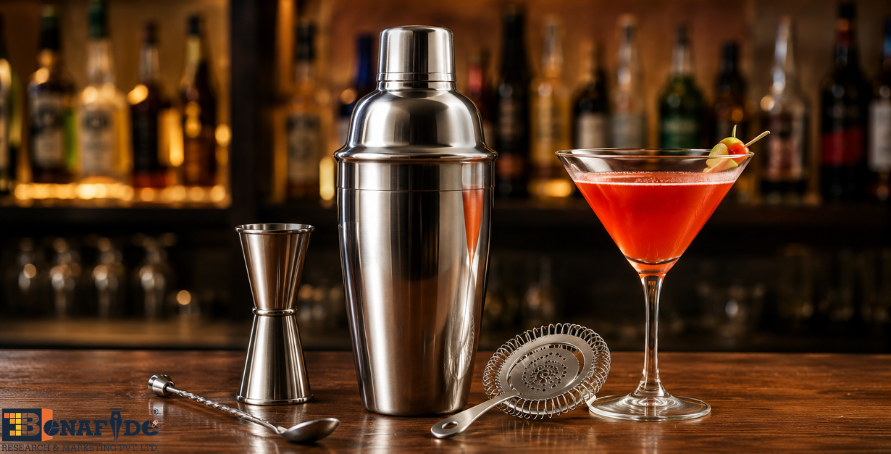
Retail Off-trade is the largest and fastest-growing end-use application as home cocktail culture permanently shifted during the pandemic and e-commerce expands consumer access to craft and specialty mixers. Retail off-trade represents both the largest and fastest-growing end-use application in the cocktail mixer industry because consumers dramatically accelerated home bartending during COVID-19 lockdowns when bars and restaurants were closed or severely restricted, and contrary to early industry predictions, these habits have proven persistent rather than temporary. Consumers who invested in home bar equipment shakers, strainers, jiggers,
copper mugs,
glassware, and ice molds during 2020-2022 continue to use that equipment regularly, having developed cocktail making as a durable hobby rather than a pandemic-driven trend. Off-trade channels include supermarkets, hypermarkets, liquor stores, specialty food stores, warehouse clubs Costco, Sam's Club, convenience stores, and increasingly e-commerce platforms. The pandemic permanently shifted consumption occasions from on-premise bars and restaurants where mixers are purchased as part of cocktail to off-premise retail where mixers are purchased and combined with
spirits the consumer already owns, representing a fundamental restructuring of how consumers access cocktail ingredients. E-commerce has emerged as the fastest-growing off-trade sub-channel, with direct-to-consumer brands offering subscription mixer boxes monthly delivery of 3-4 different craft mixers with recipe cards, virtual tasting experiences hosted on Zoom, and cocktail kits that include both mixers and miniatures of premium spirits.
Online is the fastest-growing distribution channel as direct-to-consumer brands, subscription services, and delivery apps expand consumer access to craft and specialty mixers beyond what local retail offers. Online distribution is expanding most rapidly in the cocktail mixer sector, fueled by direct-to-consumer DTC brands that bypass retailers entirely, subscription services that generate recurring revenue, and the convenience of home delivery through specialized platforms that offer broader selection than physical stores. E-commerce platforms such as Amazon, Drizly alcohol delivery marketplace, Instacart grocery delivery, and Thirstie direct DTC fulfillment have developed specialized capabilities for beverage alcohol and mixer delivery, often offering selection that includes small-batch, craft, and regional mixers not distributed nationally to physical retail stores. Online channels enable discovery through algorithm-driven recommendations consumers who bought this also bought that, user reviews and ratings that build trust for unknown brands, and educational content such as recipe videos and pairing suggestions that drive higher average order values compared to offline purchases. For example, a consumer shopping for ginger
beer online might see recommendations for copper mugs, premium
vodka, and a cocktail recipe book, increasing the total basket. The COVID-19 pandemic accelerated e-commerce adoption permanently, with consumer surveys indicating that consumers who started ordering beverage alcohol and mixers online during the pandemic continue to do so at least monthly, having grown accustomed to the convenience of home delivery.

















 We are friendly and approachable, give us a call.