The global
lipid market encompasses a broad range of naturally occurring and synthetic lipid compounds, including
omega-3 and omega-6 fatty acids, phospholipids, medium-chain triglycerides (MCTs), sterols, sphingolipids, and specialized lipid excipients used across food, nutraceutical, pharmaceutical, personal care,
animal nutrition, and biotechnology industries. Lipids play a fundamental role in human health and industrial applications due to their functions in energy storage, cell
membrane structure, nutrient absorption, metabolic regulation, and drug delivery. The market has gained significant importance as consumers increasingly prioritize preventive healthcare, functional nutrition, and scientifically supported wellness products. Growing awareness of cardiovascular health, cognitive function, immune support, and healthy aging has fueled demand for omega-3-rich
dietary supplements and fortified foods. In the pharmaceutical sector, lipid-based formulations have become critical for improving the bioavailability of poorly soluble drugs and for advanced delivery systems, including
lipid nanoparticles used in modern vaccine and therapeutic development. Rising demand for infant nutrition products,
sports nutrition supplements,
clinical nutrition formulations, and premium
pet food further supports market expansion. Technological advancements in lipid extraction, purification, microencapsulation, and algae-based production are enabling manufacturers to develop high-purity and sustainable lipid ingredients. The market is also benefiting from increasing investments in biotechnology,
precision fermentation, and plant-based nutrition solutions that address sustainability concerns associated with traditional marine sources. Industry activities include research and development, ingredient innovation, regulatory compliance, strategic partnerships, capacity expansions, and international trade of lipid raw materials and finished products. Organizations such as the Global Organization for EPA and DHA Omega-3s, the International Fishmeal and
Fish Oil Organisation, and the European Food Safety Authority play influential roles in promoting quality standards, scientific research, sustainability initiatives, and regulatory guidance.
According to the research report "Global Lipid Market Outlook, 2031," published by Bonafide Research, the Global Lipid Market was valued at more than USD 14.86 Billion in 2025, and expected to reach a market size of more than USD 21.20 Billion by 2031 with the CAGR of 6.27% from 2026-2031. The global lipid market is a strategically important segment of the health, nutrition, pharmaceutical, and biotechnology industries, encompassing products such as omega-3 fatty acids, phospholipids, medium-chain triglycerides (MCTs), sterols, and lipid nanoparticle (LNP) systems. The market is driven by rising demand for dietary supplements, functional foods, infant nutrition, clinical nutrition, advanced drug delivery technologies, and personalized healthcare solutions. Major industry participants include DSM-Firmenich, BASF, Croda International, Evonik Industries, CordenPharma, ADM, and Aker BioMarine, which are investing heavily in specialty lipids,
pharmaceutical excipients, and sustainable omega-3 production. Recent developments highlight the sector’s evolution toward high-value applications; for example, Evonik expanded its pharmaceutical lipid capabilities through a strategic collaboration with Ethris to develop lipid nanoparticle delivery technologies for RNA therapeutics, while also investing US$220 million in a specialty lipid production facility in the United States to strengthen global supply security for mRNA medicines. CordenPharma has expanded its Lipids & LNP platform, adding approximately 900 square meters of GMP-certified manufacturing capacity and strengthening end-to-end nanomedicine supply capabilities. On the supply-chain side, the market relies on a network that begins with marine resources, vegetable oils, algae cultivation, and specialty chemical feedstocks, followed by extraction, purification, concentration, formulation, and distribution to pharmaceutical, food, and nutraceutical manufacturers. Opportunities are emerging in algae-derived lipids, precision fermentation, obesity therapeutics, RNA-based medicines, and sustainable nutrition products. Croda alone offers more than 2,000 lipid products for drug research and development, illustrating the increasing complexity and innovation intensity across the global lipid value chain.
Medium-chain triglycerides occupy a unique position within the lipid industry because their metabolic behavior differs significantly from that of conventional long-chain fats. Unlike most dietary fats that require extensive digestion and transport through the lymphatic system, MCTs are absorbed directly into the bloodstream and transported to the liver, where they are rapidly converted into energy. This characteristic has made them highly valuable in nutritional science,
medical nutrition, and performance-focused dietary products. MCTs have long been used in enteral nutrition formulas for patients experiencing fat malabsorption, pancreatic insufficiency, gastrointestinal disorders, and other conditions that impair normal lipid digestion. Their role has expanded beyond clinical settings as consumer interest in ketogenic diets, low-carbohydrate nutrition, and metabolic wellness has increased globally. Food and
beverage manufacturers increasingly incorporate MCT oils into meal replacements, nutritional beverages, powdered supplements, energy products, and functional foods because they are colorless, relatively stable, and easy to formulate. The ingredient has also gained attention in sports nutrition due to its ability to provide an alternative energy source during endurance activities. In pharmaceutical applications, MCTs are widely used as carriers and excipients for lipid-based drug formulations because of their excellent solubilizing properties and compatibility with active ingredients.
Plant sources have become increasingly important in the lipid industry because they provide a reliable and versatile
foundation for producing a wide variety of lipid ingredients used in food, nutrition, pharmaceuticals,
cosmetics, and industrial applications. Major plant-derived lipid feedstocks include
soybean, sunflower, canola, flaxseed, rapeseed, coconut, palm, and algal sources, each offering distinct fatty acid profiles suited to different end uses. One of the primary advantages of plant-derived lipids is the ability to cultivate raw materials at large agricultural scales across multiple geographic regions, reducing dependence on finite marine resources and improving supply stability. Consumer interest in vegetarian, vegan, and flexitarian lifestyles has further elevated demand for plant-based ingredients, prompting manufacturers to reformulate products using non-animal lipid sources. In addition, plant-derived lipids align with corporate sustainability initiatives because many agricultural production systems offer opportunities for traceability,
certification, and environmental stewardship. The pharmaceutical sector increasingly utilizes plant-derived lipids as excipients, carriers, and formulation ingredients due to their availability and well-established safety profiles. Technological advancements have also significantly expanded the value of plant sources. Modern extraction, enzymatic modification, fractionation, and precision fermentation techniques enable manufacturers to tailor lipid functionality for specific applications. Algae-derived omega-3 oils have emerged as an important alternative to marine-derived omega-3 ingredients, helping address concerns regarding fishery dependence while meeting demand for DHA-rich formulations.
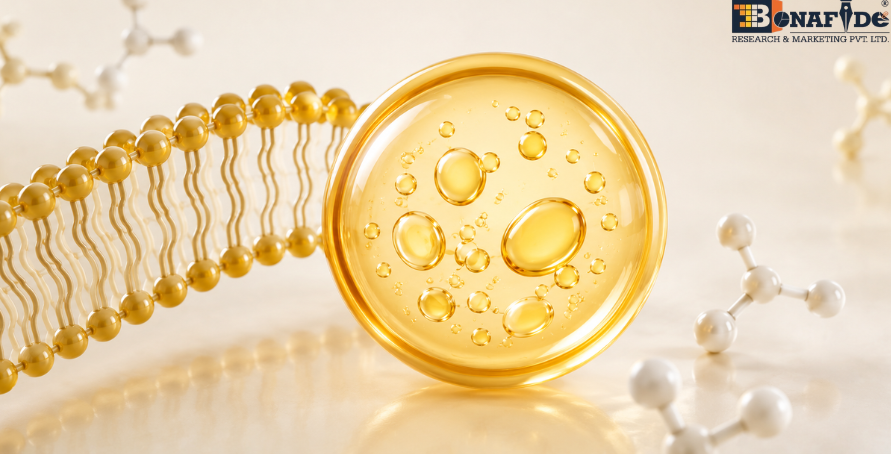
Liquid lipid formats have become the preferred form across many industries because they provide operational and functional advantages that solid and semi-solid formats often cannot match. In food and beverage manufacturing, liquid lipids are easier to blend, homogenize, emulsify, and incorporate into production systems, making them suitable for large-scale industrial processing.
Nutritional supplements frequently utilize liquid oils because they allow manufacturers to deliver concentrated doses of essential fatty acids, MCTs, and specialty lipids while facilitating rapid absorption and convenient consumption. Liquid formulations are also widely used in infant nutrition products,
functional beverages, enteral nutrition solutions, and clinical nutrition preparations where uniform distribution and digestibility are critical requirements. In pharmaceutical applications, liquid lipids play a crucial role as drug carriers and solubilization agents, particularly for active pharmaceutical ingredients that exhibit poor water solubility. Many lipid-based drug delivery systems rely on liquid excipients to enhance bioavailability and improve therapeutic performance. From a manufacturing perspective, liquid lipids simplify storage, transportation, pumping, and mixing operations, reducing processing complexity compared with solid lipid materials that often require melting or additional handling steps. Advances in encapsulation and emulsion technologies have further expanded the commercial utility of liquid lipids by enabling improved stability and targeted delivery of sensitive bioactive compounds.
The pharmaceutical industry's increasing reliance on lipid technologies has transformed lipids from simple excipients into critical
functional ingredients within modern therapeutics. A large proportion of pharmaceutical compounds exhibit poor water solubility, creating challenges for effective absorption and bioavailability. Lipid-based formulations help address these limitations by enhancing solubilization, improving drug stability, and facilitating efficient delivery within the body. Beyond traditional oral medicines, lipids now play a central role in sophisticated delivery platforms used for biologics,
vaccines, gene therapies, and RNA-based medicines. The global attention surrounding lipid nanoparticles demonstrated their ability to protect fragile nucleic acids and transport them effectively into target cells, highlighting the strategic importance of specialized lipids in next-generation medicine. Pharmaceutical companies continue to invest heavily in research focused on ionizable lipids, phospholipids, PEGylated lipids, and other advanced lipid materials designed to improve therapeutic performance. Lipids are also extensively used in
parenteral nutrition, injectable emulsions, topical formulations, ophthalmic products, and controlled-release drug delivery systems. The rise of personalized medicine and precision therapeutics further supports lipid utilization because many emerging treatments require highly specialized delivery technologies. Regulatory agencies increasingly recognize the value of lipid-based formulations in improving drug efficacy and patient outcomes, encouraging continued development in this area. Manufacturing investments by major pharmaceutical suppliers have expanded global production capacity for pharmaceutical-grade lipids, strengthening supply chains and enabling commercial-scale deployment.

















 We are friendly and approachable, give us a call.