

Yoga Unveiled: The Path to Mind-Body Harmony
Explore the ancient practice of yoga and its transformative impact on mind and body. From poses to philosophy, embark on a journey to inner peace and holistic well-being.

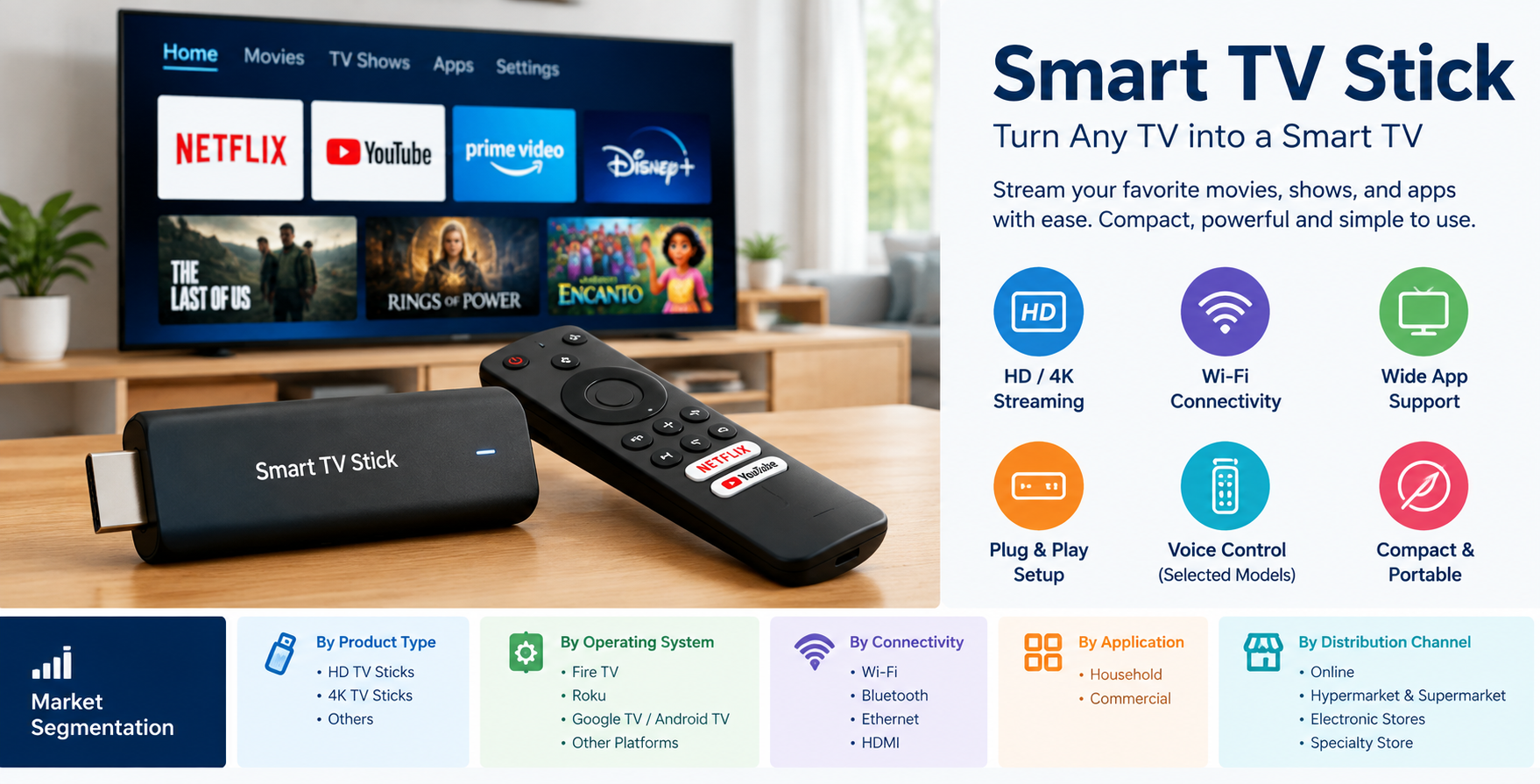
The Global Smart TV Stick Market is experiencing sustained expansion as consumers increasingly shift toward internet-based entertainment, on-demand video, connected television platforms, and flexible digital viewing experiences. Smart TV Sticks are compact external streaming devices that connect compatible televisions through HDMI and provide access to online video platforms, streaming applications, live channels, music, sports, news, and other digital entertainment services. Unlike integrated smart televisions, these devices allow consumers to upgrade compatible existing televisions without replacing the complete display. Their compact form factor, relatively simple installation, wireless connectivity, operating system integration, voice-enabled controls, and expanding support for high-resolution content are strengthening their role within the connected entertainment ecosystem.
According to the research report, "Global Smart TV Stick Market Outlook, 2031," published by Bonafide Research, the Global Smart TV Stick Market was valued at more than USD 10.93 billion in 2025 and is expected to reach more than USD 16.04 billion by 2031, growing at a CAGR of 6.77% from 2026 to 2031. The market is projected to expand throughout the forecast period as streaming services become increasingly embedded in household entertainment, consumers seek convenient ways to access multiple digital platforms, and manufacturers continue introducing devices with improved processing, higher-resolution video, stronger wireless connectivity, voice controls, and more integrated software experiences.
Streaming Consumption: The Primary Driver of Market Expansion
The expansion of online video consumption represents one of the fundamental factors supporting Smart TV Stick demand. Television viewing is increasingly moving from traditional linear broadcasting toward subscription video-on-demand, advertising-supported streaming, free streaming channels, live digital programming, and application-based entertainment. Consumers are also managing a growing combination of streaming services, creating demand for devices that can provide a centralized interface for accessing multiple content platforms. Deloitte's 2025 Digital Media Trends research found that 53% of surveyed consumers identified SVOD services as the paid media and entertainment services they use most frequently, while 47% said they pay too much for the streaming services they use. The changing economics of streaming are also influencing the connected entertainment environment. Deloitte's 2026 Digital Media Trends research reported that average household spending on streaming video services remained around USD 69 per month, while 68% of SVOD subscribing households had at least one advertising-supported video service. This indicates that streaming is developing beyond a simple subscription model toward a combination of paid, ad-supported, free, bundled, and aggregated content services. Such diversification can increase the importance of accessible connected-TV hardware because consumers need practical interfaces through which different types of digital entertainment can be discovered and consumed. The changing definition of television viewing is another important market consideration. Deloitte's fall 2025 Digital Media Trends research found that 41% of surveyed consumers considered both social media videos and streaming services to be forms of "watching TV." This demonstrates how entertainment consumption is becoming increasingly fragmented across traditional television, streaming platforms, social video, creator content, and other digital formats. For Smart TV Stick manufacturers, this environment creates opportunities to provide broader content discovery and platform integration through the television screen.
Connected Television and Smart TV Upgrades Supporting Adoption
Smart TV Sticks provide an alternative pathway for consumers who want connected entertainment functionality without immediately replacing their existing television. A compatible television equipped with an HDMI input can potentially be upgraded with a streaming stick, allowing users to access supported applications and online content through the device's operating system. This upgrade-oriented use case is particularly relevant where consumers own functional televisions but want access to newer streaming services, applications, higher-resolution content, voice controls, or updated user interfaces. The importance of this upgrade proposition is also visible in product strategies adopted by major manufacturers. Roku's 2025 Streaming Stick and Streaming Stick Plus launch positioned its new devices as compact solutions for upgrading television experiences, with the company highlighting improved performance, voice controls, access to streaming content, and 4K functionality on the Streaming Stick Plus. Roku stated that the new devices were more than 35% smaller than other brands and designed to fit behind televisions, while the products could also be powered directly from compatible TVs. Amazon has similarly developed its Fire TV Stick portfolio around upgrading existing television setups. In India, Amazon launched its Fire TV Stick 4K in May 2024 with 4K Ultra HD, Dolby Vision, HDR10+, Dolby Atmos, Wi-Fi 6 support, a 1.7 GHz quad-core processor, and Alexa Voice Remote functionality. Amazon also stated that the device provided access to more than 12,000 applications through its Appstore. These product developments illustrate how manufacturers are positioning Smart TV Sticks as compact connected-TV platforms rather than simply basic streaming accessories.
4K and High-Resolution Streaming Transforming Product Development
The transition toward higher-resolution entertainment is becoming an important product-development trend within the Smart TV Stick Market. As consumers increasingly purchase 4K televisions and access higher-resolution streaming content, demand is developing for external streaming devices capable of supporting corresponding picture quality. 4K TV Sticks provide higher-resolution output than conventional HD devices and are increasingly combined with HDR technologies and advanced audio formats to create more immersive home entertainment experiences. Amazon's Fire TV Stick portfolio demonstrates this shift toward higher-performance streaming hardware. Its 4K products support 4K Ultra HD content together with technologies such as Dolby Vision, HDR10+, Dolby Atmos, and Wi-Fi 6, while its newer products continue to focus on faster application launches and improved software experiences. Roku's 2025 Streaming Stick Plus similarly introduced 4K streaming and HDR alongside a compact form factor and voice remote. The growing importance of 4K also creates opportunities for manufacturers to differentiate products across multiple price points. Entry-level HD devices can address consumers seeking basic streaming access, while 4K products can target users with compatible displays who place greater importance on image quality, HDR support, advanced audio, and faster hardware. This differentiation allows the market to address a broad consumer base while encouraging replacement and upgrading as television technology and content quality improve.
Technology Integration Transforming the Smart TV Stick Experience
Technology integration is increasingly shifting Smart TV Sticks from basic playback devices toward broader digital entertainment platforms. Modern devices combine processors, operating systems, wireless connectivity, application stores, voice-enabled remotes, content recommendation systems, smart-home controls, and increasingly sophisticated user interfaces. These features can improve navigation, content discovery, personalization, and interaction with connected devices. Wireless connectivity remains fundamental because streaming performance depends heavily on stable internet access between the device and the user's network. Wi-Fi is therefore the primary connectivity technology across the Smart TV Stick ecosystem, while Bluetooth supports remote controls and compatible peripherals and HDMI provides the physical connection to the television. The introduction of Wi-Fi 6 into newer products reflects the industry's focus on improving wireless performance and supporting demanding high-resolution streaming workloads. Amazon's Fire TV Stick 4K, for example, supports Wi-Fi 6-compatible routers as well as both 5 GHz and 2.4 GHz Wi-Fi bands. Device design is also becoming an important area of innovation. Consumers increasingly prefer compact hardware that remains hidden behind the television and minimizes visible cables. Roku's 2025 Streaming Stick products were designed around this requirement, including direct TV power capability and a compact form factor. Amazon's 2026 Fire TV Stick HD similarly focuses on a slimmer design, direct power through a compatible TV USB port, Wi-Fi 6, Bluetooth 5.3, and faster performance compared with its previous HD generation. These developments demonstrate that physical convenience and installation simplicity are becoming important alongside video and software capabilities.
Operating Systems and Platform Ecosystems Increasingly Important
Operating systems represent a major competitive component of the Smart TV Stick Market because they determine how consumers interact with content, applications, recommendations, voice assistants, and connected services. Android TV OS, Google TV, Roku OS, Amazon Fire TV OS, and Linux-based platforms provide different approaches to content discovery and application management. As consumers use multiple streaming services, the interface through which those services are organized can become an important part of the overall user experience. The evolution of platform software is increasingly extending beyond simple application access. Content aggregation, personalized recommendations, voice search, smart-home controls, watchlists, and cross-service discovery are becoming integrated into streaming interfaces. Amazon's 2026 Fire TV software update introduced a redesigned interface focused on faster content discovery and also expanded Alexa+ functionality for personalized recommendations and interactions. Amazon stated that the redesigned experience was being made available across current-generation Fire TV Sticks and other supported Fire TV devices. This development suggests that future competition in the Smart TV Stick Market will increasingly involve both hardware and software. Manufacturers can differentiate through processing performance and connectivity, but platform experience, application availability, recommendation capabilities, voice interaction, and ecosystem compatibility can also influence product selection. As streaming services become more fragmented, aggregation and discovery capabilities may become increasingly relevant to consumers navigating multiple entertainment platforms. Deloitte has also identified aggregation as an important direction within the evolving streaming ecosystem as consumers face increasingly fragmented content choices.
Shift Toward Affordable and Flexible Entertainment Hardware
Consumer sensitivity toward entertainment costs is creating additional relevance for affordable streaming hardware. Deloitte's 2025 research found that 47% of surveyed consumers believed they were paying too much for their streaming services, while 41% said the available SVOD content was not worth the price. Such cost sensitivity can encourage consumers to reassess how they access entertainment and how many services they maintain. Smart TV Sticks can complement this environment by providing access to multiple supported services through one compact device. Consumers do not necessarily need to purchase a new television simply to access an updated streaming interface. Instead, a streaming stick can extend the useful functionality of an existing compatible display. The affordability and portability of these devices can also make them suitable for secondary televisions, bedrooms, guest rooms, rental properties, and temporary accommodation. Manufacturers are responding with multiple price and performance tiers. Roku introduced its 2025 Streaming Stick at USD 29.99 and Streaming Stick Plus at USD 39.99, offering HD and 4K-oriented options respectively. Amazon has similarly expanded its portfolio across HD and 4K products, including its Fire TV Stick 4K Select introduced in India in October 2025 at INR 5,499. This product segmentation allows companies to address different consumer requirements while expanding the overall addressable market for streaming-stick hardware.
Regional Insights: North America Leads, Asia Pacific Expands
North America represents the largest regional market for Smart TV Sticks**, supported by established streaming consumption, widespread broadband connectivity, high consumer electronics adoption, and the presence of major technology and streaming companies. The United States represents the largest country market within the region. The maturity of streaming services and the established presence of external streaming devices provide a strong foundation for continued product replacement and upgrading. Product innovation from companies such as Amazon and Roku continues to demonstrate the importance of compact streaming hardware within the North American connected-TV environment. Roku's 2025 streaming-stick launch initially targeted the United States before expanding availability to additional international markets.
Europe represents another significant Smart TV Stick market**, supported by established digital entertainment consumption, broadband availability, and widespread use of streaming platforms. The European market includes countries with mature connected-TV ecosystems as well as markets where consumers continue transitioning from traditional television toward online video services. Roku's 2025 Streaming Stick products were announced for expansion into several European and Latin American markets, including the United Kingdom, demonstrating continued international development of compact streaming hardware.
Asia Pacific represents a major market supported by its large consumer population, expanding digital entertainment ecosystem, and strong consumer electronics industry.** China represents the largest country market in the region, while India and other Asian economies provide opportunities for affordable streaming devices as internet access and digital content consumption expand. Amazon's continued investment in Fire TV products in India illustrates the importance of the region to streaming-device manufacturers. Its Fire TV Stick 4K launch in 2024 combined 4K video, Wi-Fi 6, voice control, and access to thousands of applications, while its subsequent Fire TV Stick 4K Select launch in 2025 expanded the company's 4K product range in the Indian market.
South America is developing as streaming services and internet connectivity become increasingly important components of household entertainment.** Brazil represents an important market within the region, while countries including Colombia and other Latin American markets provide opportunities for manufacturers expanding compact streaming devices. Roku's 2025 product announcement included planned availability across several Latin American countries, including Argentina, Brazil, Chile, Colombia, Mexico, Peru, and others, indicating the continuing geographic expansion of streaming-stick platforms.
The Middle East and Africa represent emerging opportunities for Smart TV Stick adoption**, supported by improving connectivity, increasing digital entertainment consumption, and expanding consumer electronics ecosystems. The United Arab Emirates represents an important market within the region because of its developed digital infrastructure and high adoption of connected consumer technologies. As streaming services expand their geographic availability and households gain greater access to reliable broadband networks, compact streaming devices can provide an accessible route to internet-based entertainment through compatible televisions.
Competitive Landscape: Hardware, Software and Ecosystem Integration
The Smart TV Stick Market includes major technology and consumer electronics companies competing through hardware specifications, operating systems, content ecosystems, distribution reach, pricing, and software features. Key companies associated with the market include Amazon.com, Inc., Roku, Inc., Google LLC, Xiaomi Corporation, Realme, and Thomson, alongside other regional and technology-focused manufacturers. Competition is increasingly moving beyond basic streaming capability toward differentiated user experiences. Amazon's Fire TV portfolio emphasizes Alexa integration, application access, high-resolution streaming, and software-based content discovery. Roku's latest streaming-stick portfolio focuses on compact designs, voice interaction, simplified content discovery, and HD or 4K options. Xiaomi and other consumer electronics companies compete through integration with broader device ecosystems, competitive hardware specifications, and regional distribution. Product launches also demonstrate how manufacturers are progressively upgrading their devices. Amazon's Fire TV Stick HD introduced a slimmer design, direct TV USB power, Wi-Fi 6, Bluetooth 5.3, and an updated Fire TV experience, while Amazon's Fire TV Stick 4K Select introduced a new Vega operating system alongside 4K streaming and Alexa functionality in India. Such developments indicate that future competition will increasingly involve the combined value of hardware performance, operating system functionality, content discovery, voice interaction, connectivity, and ecosystem integration.
Future Outlook
The global Smart TV Stick Market is expected to maintain steady growth through 2031 as streaming services continue to evolve, consumers increasingly rely on digital entertainment, and manufacturers introduce more capable and compact connected-TV devices. The market's development will be influenced by the continued adoption of 4K content, improvements in wireless connectivity, growth of advertising-supported streaming, expansion of content aggregation, voice-enabled interfaces, personalized recommendations, and the integration of artificial intelligence into entertainment discovery. The evolution of streaming economics will remain an important factor. Consumers are increasingly balancing the number of services they subscribe to against perceived content value and monthly costs, while providers are expanding advertising-supported models and exploring aggregation. Deloitte's 2026 research indicates that advertising-supported streaming continues to expand, with 68% of surveyed SVOD subscribing households reporting at least one AVOD service. These developments can influence Smart TV Stick software strategies because devices increasingly serve as interfaces through which consumers discover and access a mixture of subscription, free, and advertising-supported content. Technology innovation is also expected to remain central to market development.
Future Smart TV Stick products are likely to focus on faster processors, stronger wireless connectivity, higher-resolution output, improved HDR and audio support, voice interaction, personalized content discovery, smart-home integration, and more compact designs. The integration of AI-powered recommendation capabilities into television platforms could further change how users search for and consume content. Amazon's 2026 Fire TV updates, including AI-powered Alexa+ capabilities and personalized recommendations, illustrate this direction of development. At the same time, Smart TV Sticks will continue to face competition from televisions with integrated smart platforms, streaming boxes, gaming consoles, and other connected entertainment devices. The ability of manufacturers to differentiate through affordability, portability, application ecosystems, software experience, performance, and platform integration will therefore remain important. Despite this competitive environment, the ability to upgrade compatible televisions without replacing the complete display provides Smart TV Sticks with a distinct use case across household and selected commercial applications. As streaming becomes increasingly integrated into everyday entertainment, the Smart TV Stick Market is evolving from a basic connectivity accessory into a broader connected-TV platform. The combination of growing digital video consumption, demand for flexible entertainment, 4K adoption, improved wireless technologies, expanding application ecosystems, and increasingly intelligent user interfaces will continue shaping the market through 2031. With the global market projected by Bonafide Research to increase from more than USD 10.93 billion in 2025 to more than USD 16.04 billion by 2031, Smart TV Sticks are expected to remain an important hardware component within the wider connected entertainment ecosystem.
See how you can up your career status

Explore the ancient practice of yoga and its transformative impact on mind and body. From poses to philosophy, embark on a journey to inner peace and holistic well-being.

Global Athleisure Market Outlook 2029 anticipated to cross USD 560 Billion by 2029, increasing from USD 359.63 Billion in 2023.
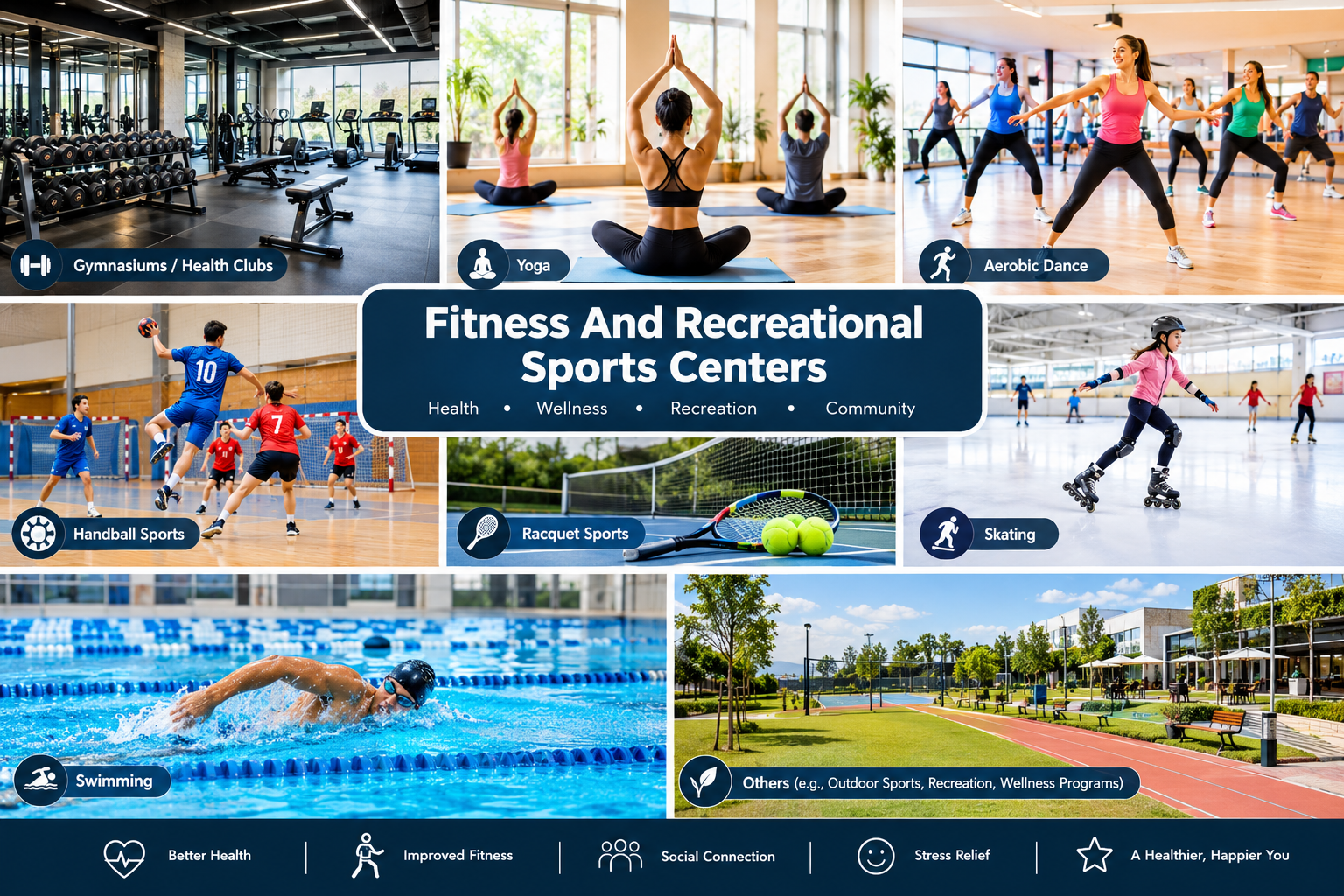
The Global Fitness And Recreational Sports Centers Market was valued at approximately USD 143.86 Billion in 2025 and is expected to reach approximately USD 227.26 Billion by 2031, expanding at a CAGR of approximately 8.12% from 2026 to 2031.

Global Self-Storage Market was valued at more than USD 62.75 billion in 2025 and is expected to reach more than USD 87.73 billion by 2031, growing at a CAGR of 5.89% from 2026 to 2031.
 We are friendly and approachable, give us a call.