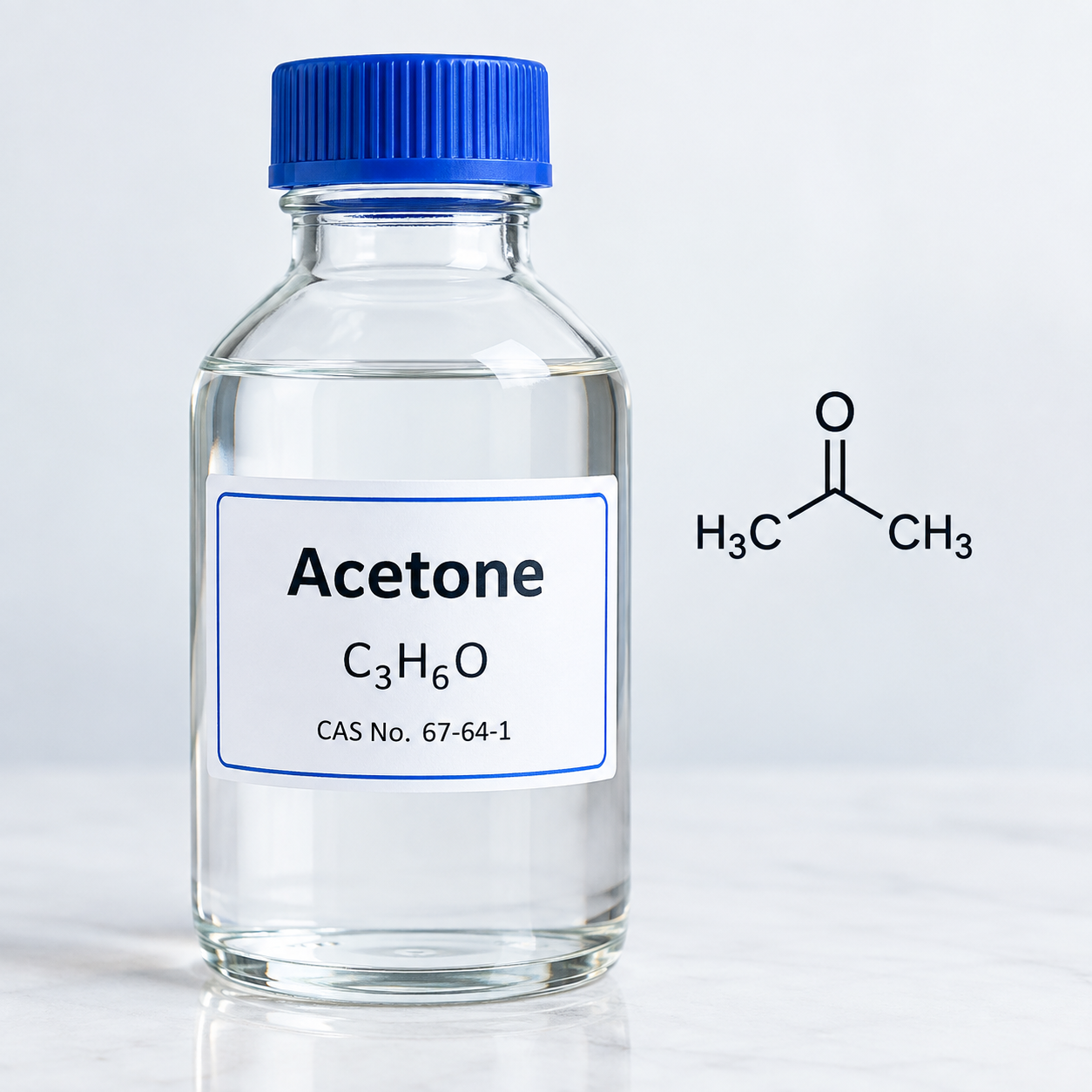
Acetone is a clear, volatile, and colorless liquid with a sweet odor. It is the simplest aliphatic ketone and the most important solvent from the commercial point of view. Factors such as increasing usage of
solvents and high demand in the pharmaceutical, cosmetic,
adhesive, and automotive industries are expected to drive growth. The demand for acetone is primarily driven by the development of end-use industries such as textiles, electronics, personal care, pharmaceuticals, cleaning, and petroleum. The increasing demand for chemicals and petrochemicals from various end-use industries is set to promote the growth of the market. Shifting consumer preferences towards a healthy lifestyle is leading
cosmetics and personal care manufacturers to switch to eco-friendly products. In order to practice green, sustainable, and eco-friendly chemistry, manufacturers have developed various pathways and processes that do not cause any harm to the environment. Renewable dimethyl ketone is one of such products that are completely renewable and natural. It also subsequently reduces the use of toxic and corrosive chemicals that can harm the environment. There has been a significant increase in the demand for green solvents from the industrial sector attributed to their possession of numerous attractive advantages over petrochemical solvents. Some of the petrochemical solvents are expensive, carcinogenic, corrosive, ozone-depleting, toxic, and cause severe implications on the environment. Green solvents are non-toxic, non-corrosive, and non-carcinogenic.
According to the research report "Global Acetone Market Outlook, 2031," published by Bonafide Research, the Global Acetone Market was valued at more than USD 7.78 Billion in 2025, and expected to reach a market size of more than USD 11.08 Billion by 2031 with the CAGR of 6.23% from 2026-2031.North America has significant manufacturing, as well as a consumer base for dimethyl ketone. Increasing R&D in the electronics sector in this region is expected to fuel the demand for Bisphenol A which, in turn, is anticipated to drive the regional market growth. The feedstock price advantage provided by Canada, as compared to the other North American countries, would attract manufacturers to set up their production facilities in Canada. Increasing disposable income has led consumers to spend considerably on skincare, cosmetics, and lifestyle products. The high demand for make-up, skincare, and other cosmetic products has surged the demand for dimethyl ketone in the region. Moreover, the presence of large chemical industries in Germany, Italy, and the U.K. has a significant impact on the total consumption of base chemicals such as dimethyl ketone in Europe. The Europe acetone industry is at its peak in recent times. Rising incomes and urbanization in Southeast Asia are reshaping beauty routines, making acetone a preferred solvent for nail polish removers and cosmetic blends. The chemical’s rapid evaporation and low dermal irritation suit premium formulations. Local producers capitalize on acetone’s VOC-exempt status, avoiding the stricter emission fees faced by alternative solvents and enhancing cost competitiveness across Thailand, Vietnam, and Indonesia.
Acetone has a leading position in solvent applications because its physical and chemical properties allow manufacturers to use the same basic material across a remarkably broad range of industrial operations rather than limiting it to one specialized process. Its high solvency power enables it to dissolve or disperse many resins, polymers, oils, greases and other organic substances, while its relatively low boiling point and rapid evaporation make it useful when solvent removal needs to occur quickly after application. Acetone is also miscible with water and many common organic solvents, which gives formulators flexibility when developing solvent blends for different products. These characteristics make it particularly valuable in paints, coatings, inks, adhesives,
sealants, plastics,
rubber products and
surface-treatment formulations. Official chemical assessments identify acetone as an industrial solvent used in paints, dyes, adhesives, coatings,
cleaners and degreasers, while its use extends into pharmaceuticals, cosmetics, electronics and other manufacturing activities. In coatings and paints, acetone can help dissolve resins, adjust viscosity and clean production or application equipment. In adhesives, it assists with dissolving polymer systems and preparing formulations with appropriate handling characteristics. Industrial cleaning is another important pathway because acetone can rapidly remove
grease, oil, residues and other contaminants from equipment, tools and surfaces.
Electronics and electrical applications are becoming increasingly important for acetone because modern electronic manufacturing depends on exceptionally clean surfaces and carefully controlled chemical processes. Acetone is particularly useful where organic residues, oils, processing contaminants or unwanted polymeric materials need to be removed without leaving significant residue after evaporation. In
semiconductor manufacturing, electronic-grade acetone is used in processes involving photo-sensitive polymers and wafer cleaning, while its high-purity form is important because trace metallic contamination can interfere with semiconductor performance. The European Solvents Industry Group specifically identifies acetone among electronic-grade solvents used to dissolve photoresist materials and clean wafers and circuits during microchip production. This role becomes more significant as
electronic components become smaller and manufacturing tolerances become tighter, since contamination that might have been acceptable in conventional industrial processing can create defects in highly miniaturized devices. Acetone also has applications beyond front-end semiconductor fabrication. It is used for cleaning electronic components, preparing metallic surfaces, removing unwanted material from circuit-related surfaces and supporting precision maintenance activities. Electronics manufacturing increasingly spans semiconductors, printed circuit boards, sensors, displays,
power electronics,
automotive electronics,
telecommunications equipment, consumer devices and
industrial control systems, creating multiple pathways for solvent consumption.
Technical / Industrial Grade acetone has the broadest practical application base because it is suitable for the routine manufacturing activities that consume acetone as a solvent, processing aid, cleaner or formulation component. Acetone is widely used in paints, coatings, adhesives, inks, resins, plastics, rubber products, automotive care, industrial cleaning and degreasing, giving standard industrial material a role across many different production environments rather than restricting it to one specialized industry. Government assessments identify acetone as an industrial and laboratory solvent as well as a cleaner and degreaser, with established uses in paints, dyes, adhesives and coatings. (canada.ca) The reason technical or industrial grade is particularly well suited to these applications is that manufacturers in such processes generally prioritize consistent solvent performance, compatibility with the formulation, evaporation characteristics, reliable supply and practical handling rather than the extremely low impurity levels required for sensitive electronic manufacturing. In
paint and coating production, for example, acetone can assist with dissolving resins and other formulation components and can also be used for equipment and surface cleaning. Adhesive manufacturers can use it as a solvent for suitable polymer systems, while industrial maintenance operations use it to remove oils, grease, residues and other contaminants from machinery and surfaces.







 We are friendly and approachable, give us a call.