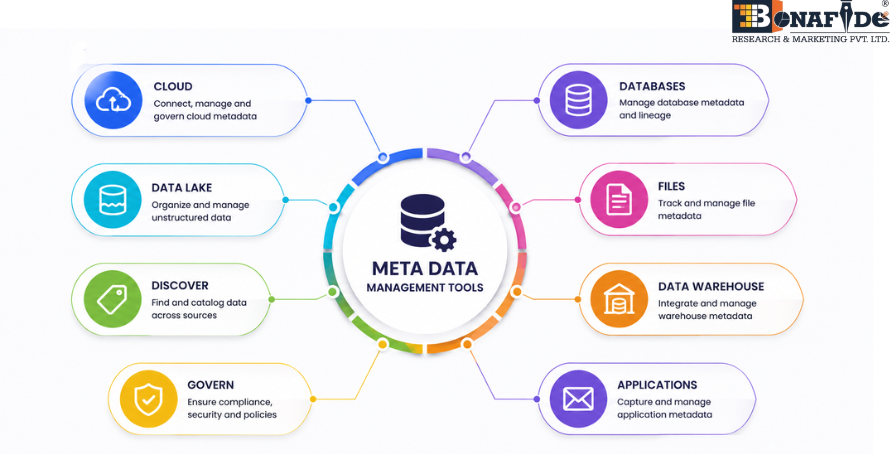
Metadata management is the practice of organizing, governing, and providing context to an organization's data assets. Modern metadata management platforms serve as the connective tissue for enterprise data, enabling discovery, lineage, governance, and providing the essential context for AI and analytics. The metadata management landscape is experiencing a decisive shift, moving beyond traditional data cataloging to become the foundational context layer essential for reliable enterprise AI. This evolution is sparking a wave of strategic acquisitions and product innovations as major technology vendors race to equip organizations with the tools needed to govern complex, hybrid data environments and build trustworthy AI applications. In a landmark move, Salesforce announced its acquisition of Informatica, signaling the critical importance of metadata management for powering next-generation agentic AI platforms. This consolidation trend is further highlighted by Snowflake’s agreement to acquire Select Star, aiming to enhance its Horizon Catalog with automated discovery and column-level lineage to better contextualize data for AI applications. Meanwhile, Coalesce acquired CastorDoc to integrate dynamic, AI-driven metadata management directly into its data transformation platform, embedding governance from the start.
According to the research report "Global Metadata Management Tools Market Outlook, 2031," published by Bonafide Research, the Global Metadata Management Tools market was valued at more than USD 14.16 Billion in 2025, and expected to reach a market size of more than USD 40.15 Billion by 2031 with the CAGR of 19.46% from 2026-2031. The focus on unstructured data, which constitutes over 80% of enterprise information, is also intensifying. Collibra acquired Deasy Labs to automate the governance of unstructured data like PDFs and emails, a process previously manual and error-prone. Industry analysts note this acquisition provides crucial tools to extract intelligence from this dark data, a capability vital for comprehensive AI initiatives. Similarly, Theobald Software acquired bluetelligence to bolster SAP metadata management, enabling businesses to intelligently automate and analyze their critical SAP data. These developments underscore a market-wide consensus: effective metadata management is no longer a back-office function but a strategic imperative for AI readiness, data governance, and regulatory compliance. As enterprises face the challenge of making data usable for AI, the industry is coalescing around active metadata platforms that provide the intelligence and orchestration required to turn vast data estates into a competitive advantage. The market is witnessing increasing consolidation and investment activity, exemplified by Progress Software Corporation's acquisition of MarkLogic for $355 million in February 2023 to establish a unified enterprise-grade data platform. As organizations across BFSI, healthcare, and government sectors prioritize data governance, AI readiness, and regulatory compliance, the
metadata management tools market is poised for sustained expansion, with cloud-based solutions leading the deployment mode and Asia-Pacific emerging as the fastest-growing regional market.
The healthcare and life sciences sector leads growth due to the European Health Data Space Regulation creating binding obligations for standardized metadata cataloguing, combined with the sector's massive data generation from
genomics,
clinical trials, and electronic health records. The EHDS Regulation (2025/327), which entered into force on 26 March 2025, requires electronic health data eligible for secondary use to be described and included in national and EU-level metadata catalogues using the HealthDCAT-AP metadata model, creating immediate compliance demand across the sector. The global healthcare and life sciences metadata management tools market is experiencing robust growth driven by the increasing volume of patient data, clinical trial data, and genomic data that requires sophisticated metadata frameworks for discoverability, governance, and compliance. Pharmaceutical companies and research institutions must prepare for implementing acts that will shape Europe's shared infrastructure for health data reuse, with metadata catalogues serving as the foundational layer for data sharing and secondary use. The EHDS requires electronic health data to be described across 17 legal categories outlined in Article 51 of the regulation, creating extensive metadata documentation obligations for data holders across the healthcare ecosystem. Cross-border research currently faces heterogeneous data access processes across member states, and EHDS aims to implement a homogeneous mechanism for accessing health-related data, requiring standardized metadata across national boundaries. The regulation's secondary use provisions for research, evidence-based policy making, and regulatory decisions create new metadata requirements that extend beyond traditional healthcare operations. The growing adoption of
precision medicine and AI-driven diagnostics demands rigorous metadata governance to ensure data quality, lineage, and explainability, with metadata serving as the connective tissue between disparate clinical and research datasets.
Risk and Compliance Management is growing most rapidly because the global regulatory landscape, including GDPR, CCPA, HIPAA, and the EU AI Act, imposes stringent documentation and transparency requirements that make metadata management essential for auditability and regulatory reporting. Regulatory requirements such as GDPR, CCPA, and HIPAA have mandated organizations to implement effective metadata management practices to ensure data privacy, security, and compliance. The EU AI Act's transparency obligations under Article 50 require providers and deployers of AI systems to ensure users are informed when interacting with AI systems, with technical measures such as metadata tagging serving as the compliance mechanism. Sarbanes-Oxley (SOX) and other financial reporting regulations demand rigorous data governance, with metadata providing the necessary documentation for internal controls and audit trails. The rise of
generative AI in the workplace has introduced new compliance risks around data exposure and model bias, requiring metadata to govern and monitor AI system inputs and outputs. Cross-border data transfer regulations require organizations to maintain detailed metadata about data origin, purpose, and processing to ensure compliance with varying international laws.
Operational metadata is growing most rapidly because enterprises increasingly require real-time visibility into data pipeline performance, system health, and process efficiency to support agile decision-making and regulatory compliance across distributed operations. Operational metadata provides critical insights into data movement, transformation events, and system interactions, enabling organizations to monitor and optimize their data supply chains in real time across complex hybrid environments. Organizations leverage operational metadata to implement data observability practices, detecting anomalies and ensuring data quality across increasingly complex hybrid and multi-cloud environments. Regulatory requirements for data lineage and audit trails rely heavily on operational metadata to document the complete journey of data from source to consumption. The growing adoption of real-time analytics and streaming data architectures demands operational metadata that can capture and report on data-in-motion rather than just data-at-rest. Country-wise, South Korea is expected to register the highest CAGR for operational metadata from 2025 to 2030, reflecting the rapid digitalization of Asia-Pacific economies.
Cloud deployment dominates and grows fastest because enterprises globally are migrating to cloud-native architectures that offer scalability, cost-efficiency, and the agility needed to support AI workloads and comply with evolving data sovereignty requirements. Cloud solutions offer subscription-based pricing models that lower the barrier to entry, enabling mid-market enterprises to access enterprise-grade metadata capabilities without massive upfront capital expenditure. Cloud platforms facilitate seamless integration with AI and machine learning services, enabling automated metadata tagging and
predictive analytics that are difficult to achieve with on-premises deployments. The distributed nature of modern workforces across global markets demands cloud-based metadata solutions that provide secure, remote access to data governance tools from any location. Cloud providers offer robust security and compliance certifications that ease the regulatory burden for organizations navigating complex data protection requirements across multiple jurisdictions. Most businesses have already adopted cloud-based metadata management tools for storing their data in the cloud and it is more used in organizations because they are easily available and scalable. The ability to automatically update and patch cloud solutions ensures organizations always have access to the latest compliance features and security enhancements, reducing maintenance overhead.
The Solutions segment expands most rapidly as enterprises seek comprehensive, integrated platforms that combine data cataloging, governance, lineage, and quality management to address complex regulatory requirements and reduce vendor fragmentation. Organizations increasingly prefer integrated solutions over standalone tools to streamline vendor management and ensure seamless interoperability between different metadata functions in complex multi-vendor environments. The shift toward active metadata orchestration platforms requires solutions that can manage metadata across the entire data pipeline rather than isolated point products. Software grows offering robust metadata platforms with trends favoring automation and cloud deployment. Enterprises are consolidating their technology stacks to reduce costs and improve efficiency, driving demand for comprehensive metadata platforms that can replace multiple point solutions. Agentic AI capabilities are being embedded directly into solutions, allowing for automated governance and policy enforcement without extensive manual configuration across distributed global operations. Solution providers are enhancing their offerings with native support for data sovereignty and interoperability standards, positioning themselves as strategic partners for
digital transformation initiatives.










 We are friendly and approachable, give us a call.