The global
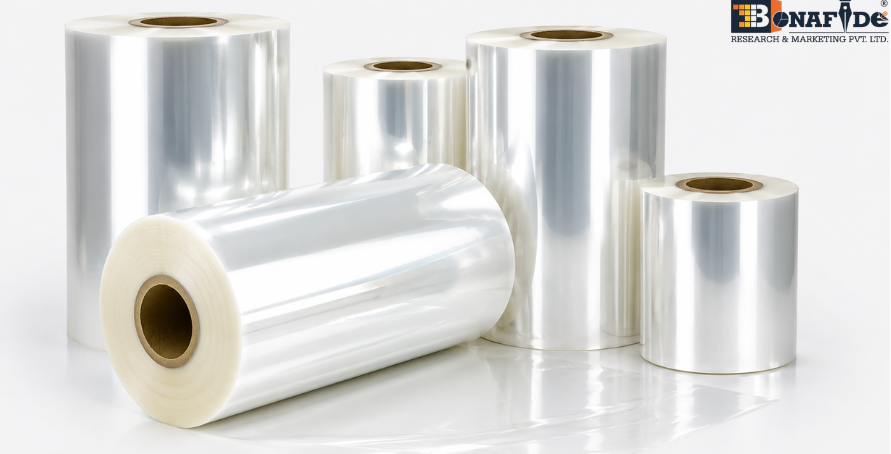
BOPP films market is experiencing steady transformation as
packaging requirements evolve across food, consumer goods, personal care, and industrial sectors. Demand for lightweight, durable, and cost-efficient packaging materials continues to strengthen the position of biaxially oriented
polypropylene films as a preferred solution for
flexible packaging applications. One of the key drivers of this market is the increasing shift toward packaged and
processed food consumption, supported by urban lifestyles, expanding retail networks, and changing dietary habits across both developed and emerging economies. In addition, the material’s excellent moisture resistance, high clarity, printability, and mechanical strength make it highly suitable for modern packaging needs where product protection and visual appeal are equally important. Sustainability considerations are also influencing market development, with manufacturers focusing on improving recyclability, material efficiency, and downgauging to reduce environmental impact while maintaining performance standards. Opportunities in the market are expanding through advancements in high-performance film grades, including heat-sealable, metallized, and specialty coated variants that support enhanced barrier properties and longer shelf life applications. The growth of
e-commerce and organized retail further strengthens the need for reliable packaging solutions that can withstand handling and
logistics pressures. Collaboration across the value chain is also shaping the future of the industry, with associations and industry bodies working alongside packaging converters, resin producers, and brand owners to promote standardization, innovation, and sustainable practices. The supply chain of the global BOPP films market is built around a structured flow that begins with raw material suppliers providing polypropylene resin derived from petrochemical feedstocks. This is followed by film manufacturers who convert the resin into biaxially oriented polypropylene films using specialized production processes such as tenter frame technology. The produced films are then supplied to converters and packaging companies, where they are further processed through printing, coating, lamination, and slitting to meet specific application requirements. These converted materials are widely used by end-use industries including food and
beverage, personal care, pharmaceuticals, and consumer goods for packaging and labeling purposes.
According to the research report "Global BOPP FIlms Market Outlook, 2031," published by Bonafide Research, the Global BOPP Films Market was valued at more than USD 30.91 Billion in 2025, and expected to reach a market size of more than USD 41.89 Billion by 2031 with the CAGR of 5.33% from 2026-2031. The industry is dominated by major multinational corporations, including Taghleef Industries, Jindal Films, Toray Industries, Oben Holding Group, UFlex Limited, and Cosmo First. These market participants engage in intense rivalry, competing primarily on manufacturing scale and technological edge. Their corporate strategies focus heavily on shifting production capabilities toward premium, high-barrier applications such as ultra-thin dielectric films for automotive
capacitors and specialized anti-fog films for fresh
produce packaging to capture high-margin industrial and fast-moving consumer goods segments. This global competitive dynamic is heavily governed by strict environmental regulations and international food safety standards. Mandates such as the European Union’s Packaging and Packaging Waste Regulation (PPWR) and escalating Extended Producer Responsibility (EPR) frameworks across North America and Asia-Pacific have reshaped manufacturer R&D pipelines. Furthermore, stringent food-contact material regulations enforced by the United States Food and Drug Administration (FDA) and the European Food Safety Authority (EFSA) compel producers to eliminate multi-material, non-recyclable laminates. This forces a rapid commercial pivot toward certified, recycle-ready mono-material polyolefin films. Prominent trade and industry associations play a vital role in steering this market evolution. Organizations such as the Flexible Packaging Association (FPA), the Association of International Metallizers, Coaters, and Laminators (AIMCAL), European Plastics Converters, and the World Packaging Organisation function as critical collaborative platforms. These associations work alongside regulatory bodies to establish global design-for-recycling metrics, standardize plastic collection infrastructures, and guide manufacturers through the changing compliance landscape to ensure a circular future.
The rapid growth of coated and anti-fog BOPP films is strongly linked to the increasing complexity of modern packaging requirements, particularly in
food retail,
cold chain logistics, and premium consumer goods distribution. As global food supply chains expand, there is a growing need for packaging that not only protects products but also maintains visual clarity under changing temperature and humidity conditions. Anti-fog films are especially important for refrigerated foods such as fresh produce,
meat, dairy, and ready-to-eat meals, where condensation can obscure visibility and negatively impact consumer perception. Coated BOPP films further enhance performance by improving print adhesion, heat resistance, sealing strength, and
oxygen or moisture barrier properties, making them suitable for high-value and sensitive applications. The shift toward convenience foods,
online grocery delivery, and pre-packaged fresh items has significantly increased reliance on packaging that preserves both freshness and appearance during transport and storage. Retailers and brand owners are also focusing more on consumer experience, where clear visibility and attractive packaging directly influence purchasing decisions. Additionally, advancements in coating technologies have enabled manufacturers to develop multifunctional films that reduce the need for multiple packaging layers, improving efficiency and sustainability outcomes.
The pharmaceutical sector is experiencing strong growth in its use of BOPP films due to rising global healthcare needs, increased production of generic medicines, and expanding distribution of over-the-counter drugs.
Pharmaceutical packaging requires strict protection against moisture, oxygen, light, and contamination to ensure drug stability and efficacy throughout shelf life, and BOPP films provide an effective solution when used in laminated or coated structures. Their excellent moisture barrier properties make them suitable for
blister packaging, strip packs, sachets, and labeling applications commonly used in pharmaceutical products. Additionally, BOPP films offer high clarity and printability, which are essential for displaying dosage instructions, safety information, batch numbers, and regulatory compliance details clearly and accurately. The growing emphasis on patient safety and regulatory standards across global healthcare systems has increased demand for tamper-evident and secure packaging formats, where BOPP-based laminates play an important role. The expansion of
pharmaceutical manufacturing in emerging markets, along with rising consumption of medicines in aging populations and chronic disease management, is further contributing to increased packaging requirements. E-commerce pharmacy platforms and direct-to-consumer medicine delivery services have also amplified the need for durable packaging that can withstand transportation stress while maintaining product integrity.
The dominance and rapid growth of bags and pouches are driven by their ability to meet multiple packaging requirements across diverse industries while offering cost efficiency and strong functional performance. These flexible packaging formats are widely used in food, beverages, personal care, household products, and
pet food due to their lightweight structure, durability, and excellent barrier properties when combined with BOPP films. The increasing global shift toward convenient, portable, and resealable packaging has significantly strengthened demand for pouches and bags, as consumers prefer packaging that is easy to handle, store, and reuse. BOPP films enhance these formats by providing high clarity, strong printability, and resistance to moisture, ensuring both product protection and attractive shelf presentation. The rapid expansion of e-commerce and direct-to-consumer delivery models has further increased reliance on flexible packaging that reduces shipping weight and improves logistics efficiency. Additionally, manufacturers benefit from the compatibility of BOPP films with high-speed converting and filling equipment, enabling scalable production at lower operational costs. Innovations in pouch designs, such as
stand-up pouches, zip-lock closures, and spouted formats, have expanded application possibilities across food and non-food sectors. The format also supports sustainability trends through material reduction compared to rigid packaging alternatives.
The increasing adoption of below 15-micron BOPP films is primarily driven by the global packaging industry’s focus on material optimization, cost reduction, and sustainability. Manufacturers are under pressure to reduce plastic consumption while maintaining packaging performance, leading to the development and adoption of thinner yet stronger film structures. These ultra-thin films are widely used in labeling, overwraps, lightweight
food packaging, and single-use consumer goods packaging where minimal material usage is required. Advances in polymer processing and biaxial orientation technology have significantly improved the strength, clarity, and dimensional stability of thinner films, making them suitable for high-speed converting and printing operations. Despite reduced thickness, these films can still provide adequate moisture resistance and durability for many applications, especially when combined with coatings or laminates. The rapid growth of packaged food consumption and
e-commerce packaging has further increased demand for
lightweight materials that reduce transportation costs and environmental footprint. In addition, brand owners are actively seeking downgauged packaging solutions that align with sustainability goals without compromising product safety or visual appeal.
The tenter frame process is experiencing rapid growth due to its ability to produce BOPP films with superior mechanical strength, optical clarity, and uniform thickness, which are essential for modern packaging requirements. This process involves biaxial stretching of polypropylene film in both machine and transverse directions, resulting in enhanced physical properties that support a wide range of applications. As packaging standards become more demanding, manufacturers increasingly prefer tenter-produced films because they deliver consistent quality and reliable performance on high-speed converting and printing lines. The process also allows for greater flexibility in producing specialized film grades such as matte, heat-sealable, white opaque, and high-barrier variants, which are in growing demand across food, pharmaceutical, and consumer goods industries. The expansion of organized retail, e-commerce packaging, and global supply chains has increased the need for films that can withstand mechanical stress while maintaining visual appeal and functional integrity. Additionally, advancements in production technology have improved energy efficiency and output quality in tenter systems, making them more attractive for large-scale manufacturers. The ability to integrate coating and metallization processes further enhances the functionality of tenter-produced films, enabling better barrier performance and print quality.







 We are friendly and approachable, give us a call.