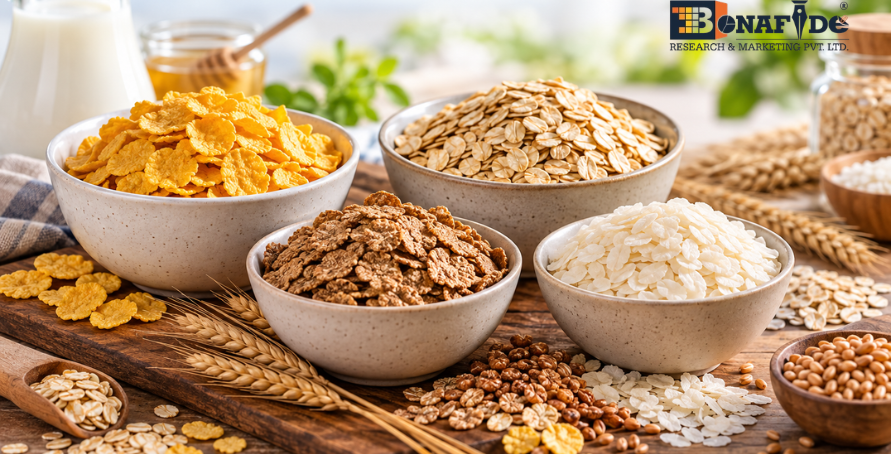
Convenience Breakfast Consumption, Grain-Based Nutrition, Product Innovation, Modern Retail, and E-Commerce Drive Global Edible Flakes Market.
Food & Beverages


Europe is home to about 44 million Muslims and the Muslim population, both in absolute terms as well as percentage terms is expected to increase over time. None of the major economies in the region have more than 10% of the Muslim population except for Russia and Germany where 45.45% and 10.68% of the total population accounts to be following the Muslim faith respectively. As Muslim demography is more favourable in Russia, Russia has the biggest chunk of market share in the region’s halal foods and beverage market. The 2 major points to contend against halal food and regarding the practice and the quality of food. The debate regarding stunning vs non-stunning of animals during slaughtering is not only a scientific debate but also finds grounds in religious laws and rules. Enshrined in European Union Law mandates that animals must be stunned before they are killed so that they are unconscious and do not feel pain or distress. However, even though exceptions can be granted for religious practices, critics charge that halal slaughter causes unnecessary suffering at the time of death. The rules of halal are not just about the process of how the animal in question is slaughtered but also how the animal is raised.
According to the research report, “Europe Halal Food and Beverage Market Outlook, 2029," published by Bonafide Research, the market is projected to reach market size USD 216 Billion by 2029. Halal principles ask for specific attention to animal’s well-being- not only at the moment of death but throughout life. Animals should not be caged or abused and no animal should see other animals getting slaughtered. As demand for processed meat has grown, producers have turned to factory farming where treatment of animals is questionable due to lack of transparency. Another point of contention is about the notion of halal meat being of inferior quality. The process of slaughter has no noted impact on the taste but many have the notion that the meat available at local halal markets in the region have meat, poultry and seafood product which are not fit enough to be commercially sold. These soft factors cannot be quantified but significantly impacts the consumer sentiments in the market and cannot be properly quantified adequately. With increased migration of Muslims from the Middle East and Africa region to Europe has the potential to add scale to the region’s halal food and beverages market and such social factors can drag the momentum down by creating negative sentiments among the people.
The United Kingdom (UK) is the most leading region in the European halal food and beverage market, driven by a large Muslim population, strong retail infrastructure, and increasing consumer demand for halal-certified products. The UK has a well-established halal food industry, with major supermarket chains like Tesco, Sainsbury’s, and Asda offering dedicated halal sections. Additionally, independent halal grocery stores and butcher shops are widely available, catering to the needs of the Muslim community. The UK’s halal meat, poultry, and seafood segment is particularly strong, with brands like Tahira Foods and Najma providing a wide range of certified products. Halal dairy products, processed foods, and confectionery are also gaining traction, with companies expanding their offerings to cater to the growing halal market. The rise of halal-certified restaurants and fast-food chains, including KFC, Nando’s, and Subway, further reflects the UK’s leadership in the sector. Other European countries such as France and Germany also have significant halal markets, particularly due to their large Muslim immigrant populations. However, the UK’s strong regulatory framework, retail expansion, and growing halal-certified foodservice industry make it the leading region in the European halal food and beverage market.
The halal meat, poultry, and seafood segment dominates the European halal food and beverage market, driven by a large Muslim population and increasing demand for ethically sourced and certified products. Countries like the UK, France, and Germany have a strong market for halal meat, with dedicated butcher shops, supermarket sections, and major brands such as Tahira Foods and Isla D?lice offering certified products. Halal milk and milk products are also growing in demand, especially with the rise of halal-certified dairy alternatives, yogurt, and cheese products. Halal-certified fruits and vegetables are expanding as Muslim consumers seek assurance that agricultural practices align with halal standards. Halal grain products, including rice, bread, and pasta, play a significant role in the diet of the Muslim population in Europe. Beverage products, including halal-certified soft drinks, dairy-based beverages, and non-alcoholic malt drinks, are witnessing increased demand. Additionally, other halal-certified products such as ready-to-eat meals, snacks, and confectionery are expanding in retail stores and online platforms. As European consumers become more health-conscious and prefer transparency in food labeling, the demand for halal-certified food and beverages continues to rise.
Hypermarkets and supermarkets are the dominant sales channel for halal food and beverages in Europe, with major retailers such as Tesco, Carrefour, Aldi, and Lidl expanding their halal product ranges. These retail chains have dedicated halal sections that cater to Muslim consumers, offering a variety of products, from meat and dairy to snacks and beverages. Traditional retail stores, including local halal butchers and specialty halal grocery stores, remain a significant sales channel, particularly in Muslim-majority neighborhoods in France, Germany, and the UK. These stores offer fresh halal meat, poultry, and other halal-certified essentials, catering to the community’s cultural preferences. The online sales channel is witnessing rapid growth, with e-commerce platforms such as Amazon, Ocado, and specialized halal food websites providing convenient access to halal-certified products. The shift toward digital grocery shopping and direct-to-consumer models is boosting online sales, especially among younger consumers who prefer home delivery options. Other channels, including wholesale distributors and specialty halal restaurants, also contribute to market expansion. As demand grows, retailers and foodservice providers are investing in halal certification and product diversification, ensuring wider availability and accessibility of halal food and beverages across Europe.














 We are friendly and approachable, give us a call.