

Top 6 Companies in Global Power Inverter Market
Global Power Inverter Market is anticipated to cross USD 100 Billion by 2029, increasing from USD 74.48 Billion in 2023.


Solar Thermal Collectors: The Quiet Revolution Powering the Global Heat Transition
While solar photovoltaic panels dominate headlines, a parallel technology has been steadily decarbonising the world's largest energy demand: heat. Solar thermal collectors capture the sun's energy to produce thermal energy for water heating, industrial processes, and district heating networks. With the global heating sector responsible for over half of final energy consumption, these collectors are emerging as a critical instrument for industrial competitiveness and energy security.
According to the research report, "Global Solar Thermal Collectors Market Outlook, 2031," published by Bonafide Research, the global solar thermal collectors market was valued at more than USD 26.34 Billion in 2025, and expected to reach a market size of more than USD 47.85 Billion by 2031 with the CAGR of 10.73% from 2026-2031.
Why Solar Thermal Matters in 2025
The IEA Solar Heating and Cooling Programme's Solar Heat Worldwide 2025 report confirms that 17.8 GW of new solar thermal capacity was installed globally in 2024, bringing cumulative installed capacity to 544 GWth. The technology's ability to deliver heat at 40–70% conversion efficiency, compared to 15–20% for photovoltaic-driven heat pumps, positions it as the most efficient renewable solution for water and space heating applications.
The market is undergoing a structural pivot. While residential water heating in China has contracted, industrial process heat and district heating are expanding rapidly. Solar Heat for Industrial Processes (SHIP) saw 120 MW of new capacity commissioned globally in 2024, a 28% increase over the previous year, with an additional 125 MWth under construction by year-end.
Technology Overview: Matching Collectors to Applications
Solar thermal collectors are broadly categorised into non-concentrating and concentrating technologies, each suited to specific temperature ranges and applications.
Non-concentrating collectors dominate the global market by volume, comprising flat plate collectors and evacuated tube collectors. Flat plate collectors are the most cost-effective and widely deployed technology for domestic hot water and space heating, offering simplicity, low maintenance, and compatibility with the vast majority of building stock. Evacuated tube collectors provide approximately 20% more hot water per square metre of aperture area and outperform flat plate collectors in colder and cloudy conditions, making them the preferred choice for higher-temperature industrial applications and colder climates.
Concentrating solar thermal (CST) technologies are the fastest-growing segment, delivering the high-temperature heat required by heavy industry. Parabolic troughs, linear Fresnel reflectors, solar towers, and dish systems concentrate sunlight to achieve temperatures from 100°C to over 1,000°C. Global concentrated solar power capacity reached 7.6 GW in 2024, with thermal storage integration now representing 40% of all new projects and providing up to 20 hours of dispatchable energy.
The global weighted average levelized cost of electricity for newly commissioned CSP projects declined from USD 0.38 per kWh in 2010 to USD 0.118 per kWh in 2022, a 72% reduction that has dramatically improved project economics in high-irradiance locations. Solar towers account for 30% of CSP installations globally, while parabolic troughs represent 65%.
Industrial Process Heat: The Fastest-Growing Frontier
Industrial process heat represents the most significant growth opportunity for solar thermal. Approximately 10% of all domestic energy consumption in the United States is dedicated to industrial process heat, with roughly 60% of that demand falling in the medium-temperature range of 100–250°C, according to the U.S. Department of Energy. Fuel costs to generate this heat are typically a top-three cost for industry, making solar thermal an attractive proposition for manufacturers seeking to reduce operational expenditure while decarbonising.
The economics are compelling. A study commissioned by the German Solar Industry Association, involving over 6,000 dynamic system simulations, demonstrated that solar process heat is 50% to 80% cheaper than gas-based alternatives in all examined scenarios. At a Würzburg location, parabolic trough collectors with a 50% solar share produce 120°C process heat at 9.2 eurocents per kilowatt-hour, compared to 14.10 eurocents for pure gas over a 25-year operating period.
Flagship projects are proving the commercial case at scale. The Heineken brewery in Seville, Spain, operates a 30 MW parabolic trough installation, Europe's largest solar process heat plant, delivering an annual usable solar yield of 28.5 GWh and covering approximately 50% of the factory's total heat demand of 56 GWh per year, under a 20-year heat supply agreement. The plant uses water as a heat transfer fluid instead of synthetic oil, providing environmental advantages.
In Chile, three multi-megawatt installations are being built for copper mines, including two large collector fields with a combined capacity of 113 MW for the Minera Escondida copper mine, demonstrating the scalability of concentrating solar thermal for heavy industry. The food and beverage industry leads with 21 SHIP projects commissioned in 2024, followed by the agricultural sector, with growing interest from the chemical and pharmaceutical industries.
Swiss company TVP Solar commissioned a 1 MW system with 1,750 m² of high-vacuum flat plate collectors in Morocco in October 2025, providing 135.6°C saturated steam to a Shell premium lubricant blending plant, reducing propane consumption by 30% and generating 1,162 MWh annually. French pharmaceutical company Ethypharm commissioned a 0.84 MW system with 1,123 m² of parabolic trough collectors in July 2025, providing 90–180°C pressurised water to ensure stable pharmaceutical production temperatures.
District Heating: Scaling Urban Decarbonisation
Solar district heating is expanding rapidly across Europe, with 262 plants and 1,415 MWth in operation, according to the IEA SHC's Solar Heat Worldwide 2025 report. A total of 346 towns and cities worldwide now use solar district heating, with 124 in Denmark, 76 in China, and 59 in Germany.
Germany's solar district heating portfolio is set to double by the end of 2026, with 61 plants and 121 MW in operation as of March 2025, and 16 new plants totalling 135 MW already awarded for construction. The Leipzig project, a 41 MWth vacuum tube field, will become Germany's largest solar thermal plant when operational. However, market growth remains insufficient: an average of 350 MW must be commissioned each year to meet Germany's district heating targets, emphasising the urgent need to accelerate project planning and approval processes.
The Groningen project in the Netherlands, with 34 MWth capacity, represents the largest single new installation, driving a 148.6% increase in Dutch installations in 2025. These projects demonstrate that deployment accelerates rapidly when demand, permitting, and financing conditions align.
Agriculture and Desalination: Addressing Water and Food Security
Solar thermal desalination and agricultural drying are emerging as critical applications, particularly in arid and semi-arid regions. The global solar dryer market is expanding rapidly, with China alone contributing a significant share as government programmes promote solar drying systems for crop preservation and food security. The agricultural solar drying segment grew 21.6% year-on-year, with solar drying applications spanning agricultural products, food and beverage, pharmaceuticals, wood and biomass, and textiles.
The solar thermal desalination segment reflects growing demand for clean water solutions powered by renewable heat, driven by water scarcity concerns across the Middle East, North Africa, and South Asia. The global solar water desalination market is estimated to grow at a 10% CAGR, addressing critical water security challenges in regions with limited freshwater resources and abundant solar irradiation. The industrial solar drying market is expected to grow at a 10.6% CAGR, serving sectors including food processing, pharmaceuticals, and wood and biomass processing.
China's grain post-harvest loss reduction policies are a primary driver of agricultural solar drying adoption, with government programmes promoting solar drying systems for crop preservation and food security across rural areas.
Hybrid PVT Systems: The Best of Both Worlds
The convergence of photovoltaic and thermal technologies in hybrid modules is gaining significant commercial traction globally. In 2024, 72,544 m² of PVT collectors were newly installed worldwide, representing 37.5 MWth of thermal capacity and 18.6 MWp of electrical capacity, a 13% increase in thermal output, with most installations concentrated in Europe and China. Germany leads the global ranking for PVT collectors added to the market, reflecting the technology's growing acceptance as a high-efficiency solution for buildings with limited roof space.
Solar thermal is increasingly being hybridised with heat pumps to relieve pressure on the electricity grid, supporting broader electrification efforts while maximising renewable energy yield. Forty-six manufacturers reported PVT sales, with the market showing significant growth potential as the technology matures and costs decline. Information gathered by IEA SHC Task 73 shows a significant price reduction for PVT collectors over the last three years, while overall heating technology was rising prices by approximately 17% over the same period.
Regional Leaders: Where Solar Thermal Is Thriving
China remains the undisputed global leader, with cumulative installed solar thermal capacity exceeding 420 GWth, representing approximately 75.2% of global operational stock. The country also hosts 76 solar district heating plants with a combined capacity of 535 MWth, far exceeding any other single country. China's Fourteenth Five-Year Plan extended solar-thermal obligations to 87 additional tier-2 and tier-3 municipalities, compelling new residential buildings below 12 stories to pre-install rooftop systems.
India has emerged as the region's fastest-growing major market, with cumulative solar thermal capacity surpassing 32 million square metres. The Ministry of New and Renewable Energy raised capital subsidies to 30% for evacuated-tube units in 2025, aiming for 10 million m² of added collector area by 2027.
Europe is witnessing a two-speed market, where residential contraction is offset by booming industrial and district heating applications. Germany's cumulative installed solar thermal capacity reached 14.1 GWth at the end of 2025, with approximately 2.55 million systems in operation. France grew 3.9% in 2025, while the Netherlands surged 148.6% driven by the Groningen solar district heating project.
Brazil ranks fifth globally in installed capacity, with 26.7 million square metres of collectors deployed. The electric shower, which accounts for 30–45% of residential electricity consumption in homes with three occupants, creates a compelling economic case for solar water heating displacement.
Saudi Arabia is advancing industrial solar thermal at unprecedented scale. GlassPoint's Ma'aden I project, a $1.5 billion initiative, will provide 65% of the steam required at Ma'aden's Ras Al Khair refinery, reducing carbon emissions by 600,000 tons annually. The project's Unify storage system uses ternary liquid salts to store heat at night and enable a continuous base load of heat.
Challenges Facing the Solar Thermal Industry
Despite its compelling economics and environmental benefits, the solar thermal sector faces significant headwinds. The global market for solar thermal water collectors contracted 14% in 2024, primarily due to the ongoing decline in China and intensified competition from heat pumps and photovoltaic systems.
Policy instability remains a critical barrier. In Germany, uncertainty surrounding the Heizungsgesetz caused a 30% market contraction in 2025. In Greece, delays in national subsidy disbursement froze installations for much of the year. France experienced a temporary suspension of MaPrimeRénov' from July to autumn 2025, destabilising the residential market.
High upfront capital expenditure relative to electric resistance heaters remains a barrier in some markets, though the economics improve dramatically when lifecycle costs are considered. The industry also faces a shortage of skilled installers and a lack of consumer awareness about the technology's benefits.
The Road Ahead: Scaling Heat Decarbonisation
The solar thermal industry stands at a critical juncture. While residential water heating in mature markets faces saturation and competition, industrial process heat, district heating, and hybrid PVT systems offer substantial growth avenues. The technology's ability to deliver high-temperature heat with thermal storage capability positions it as a strategic asset for decarbonising heavy industry and stabilising grids with high renewable penetration.
The path forward requires stable policy frameworks, accelerated project planning and approval processes, and continued cost reduction through manufacturing scale and innovation. The emergence of heat-as-a-service models, where service providers own and operate solar thermal systems and sell heat to industrial clients, is removing the upfront capital barrier for manufacturers.
With 106 new industrial solar heat plants commissioned globally in 2024 and major projects under construction across Chile, Saudi Arabia, and Europe, the solar thermal industry is demonstrating that it is not merely a legacy technology for domestic hot water, but a versatile, scalable solution for the world's most challenging decarbonisation needs.
See how you can up your career status

Global Power Inverter Market is anticipated to cross USD 100 Billion by 2029, increasing from USD 74.48 Billion in 2023.

Global underfloor heating (UFH) Market is projected to reach market size of USD 7.95 Billion by 2030 increasing from USD 5.36 in 2024.

Global Bunker Fuel Market Outlook, 2030 is projected to reach market size of USD 181.23 Billion by 2030.
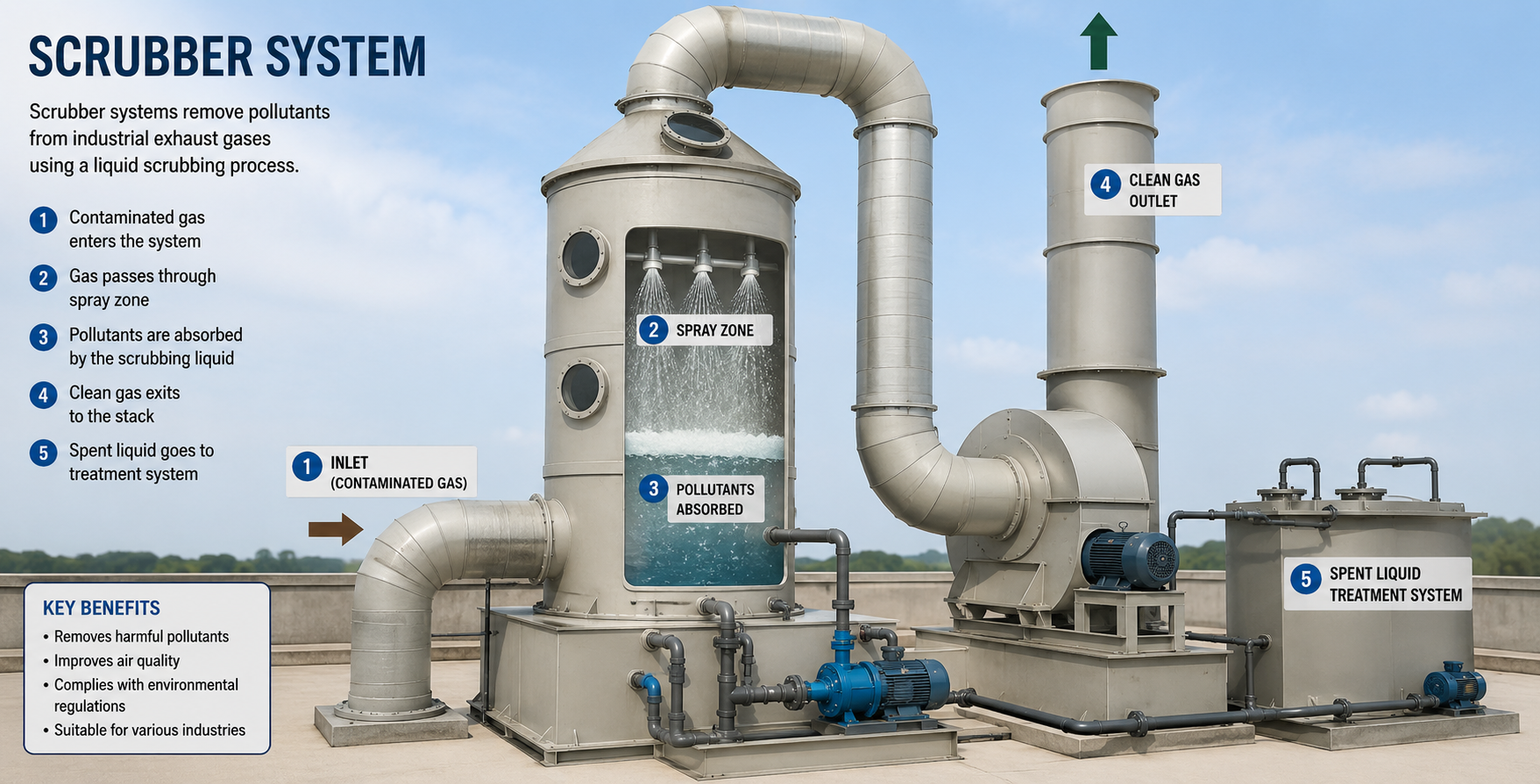
The Global Scrubbers System market was valued at more than USD 5.59 Billion in 2025, and expected to reach a market size of more than USD 9.73 Billion by 2031 with the CAGR of 9.94% from 2026-31.
 We are friendly and approachable, give us a call.