

 By Reecha Roy
 Top 6 Companies in Global Power Inverter Market
Global Power Inverter Market is anticipated to cross USD 100 Billion by 2029, increasing from USD 74.48 Billion in 2023.

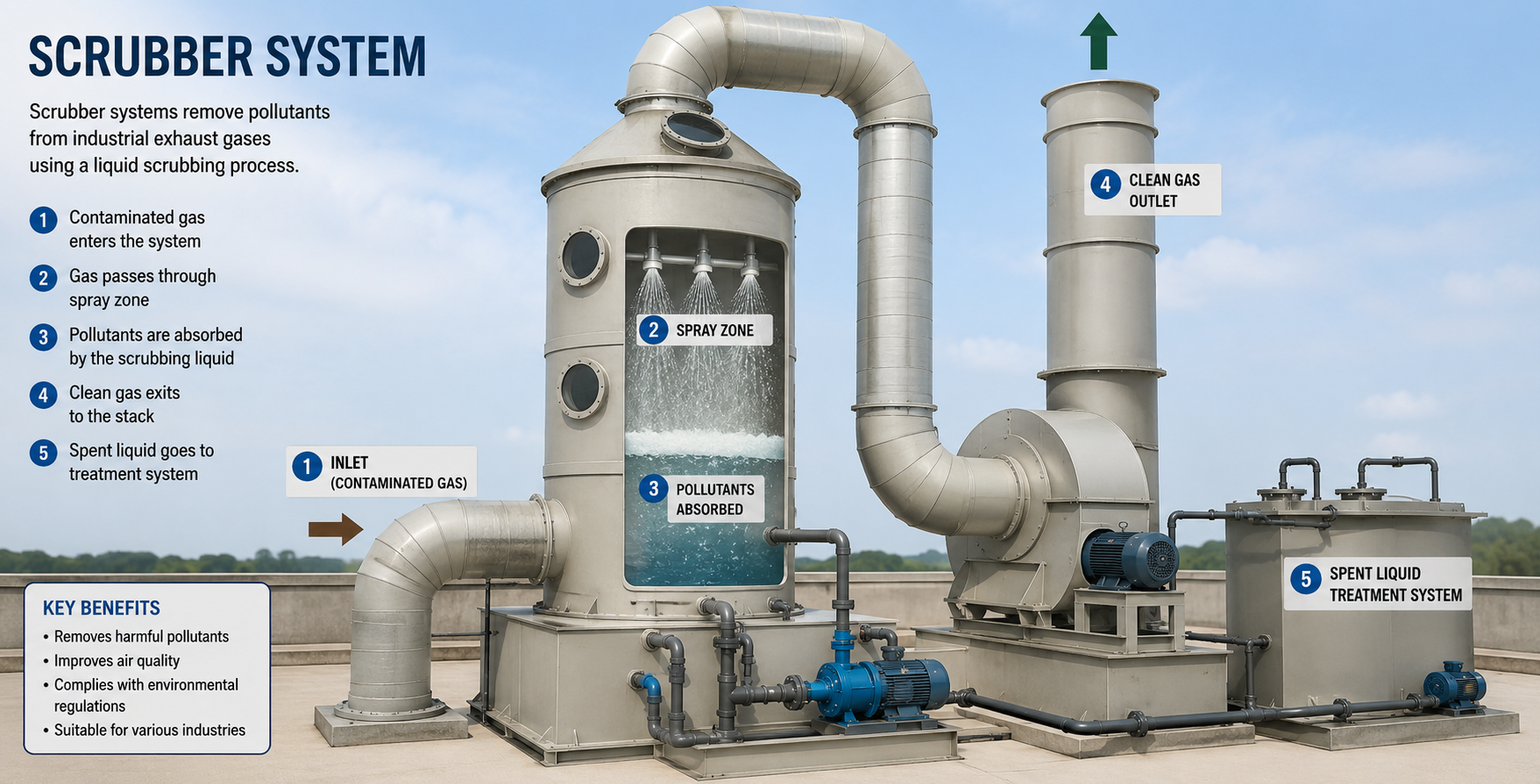
The Global Scrubbers System market was valued at more than USD 5.59 Billion in 2025, and expected to reach a market size of more than USD 9.73 Billion by 2031 with the CAGR of 9.94% from 2026-31. This growth trajectory reflects a fundamental shift in how industries approach emissions management, extending far beyond traditional compliance to encompass operational efficiency and sustainability objectives. From maritime shipping and power generation to chemical processing and metal manufacturing, scrubber systems have become indispensable in the industrial air pollution control value chain.
The Evolution of Emission Control
Industrial air pollution control has reached an inflection point where regulatory stringency, stakeholder expectations, and technological maturity converge to reshape how companies manage their environmental footprint. The scrubber system landscape, long dominated by engineering tradeoffs between capital intensity and pollutant removal efficiency, now faces a broader set of priorities that include lifecycle sustainability, digital integration, and modular deployment options. As firms pursue decarbonization and circularity goals, scrubber technologies are increasingly evaluated not only for immediate pollutant capture but also for their compatibility with byproduct recovery, water management, and energy efficiency initiatives.
Regulatory Drivers Shaping the Market
The International Maritime Organization's (IMO) global sulfur cap has fundamentally altered the maritime industry's approach to fuel consumption and emissions compliance. Approximately 4,000 ships globally were equipped with Exhaust Gas Cleaning Systems in 2024, accounting for roughly 8% of the global trading fleet. The enforcement landscape is becoming increasingly complex, with jurisdictions expanding restrictions to cover wash water disposal, creating a specific demand for retrofitting vessels with closed-loop or hybrid capabilities. Marine Log reported in September 2024 that Wartsila received a strategic order to upgrade four Color Line ships with closed-loop functionality, ensuring continued compliance with Denmark's impending ban on open-loop discharges.
The economic calculus behind scrubber adoption remains compelling, driven by the favorable price spread between high-sulfur and low-sulfur fuels. According to a March 2024 report by Integr8 Fuels, the price differential between VLSFO and HSFO widened to between USD 175 and USD 200 per metric tonne in East of Suez markets, reinforcing the financial attractiveness of the technology. Hellenic Shipping News reported in 2024 that the global fleet of scrubber-fitted vessels reached a total of 5,597 ships.
Technological Advancements and Innovation
Technological innovation continues to improve every aspect of scrubber design and performance. Advances in materials science and process engineering are enabling higher-efficiency absorption and adsorption media that reduce footprint and chemical consumption. Concurrent developments in sensorization and predictive analytics allow operators to move from reactive maintenance to condition-based intervention, thereby improving uptime and lowering lifecycle costs. Regulatory trends are also altering the competitive calculus, with more granular monitoring requirements and expectations for continuous emissions verification pushing suppliers to bundle performance guarantees with digital monitoring ecosystems.
The convergence of scrubbers with carbon capture technologies is fundamentally reshaping the market as suppliers engineer systems to support maritime decarbonization beyond simple sulfur compliance. According to Offshore Energy in May 2025, Wartsila commercially launched its CCS-integrated scrubber solution following the successful operation of a full-scale pilot unit on the gas carrier Clipper Eris, transforming the scrubber from a compliance tool into a transitional decarbonization asset. The development of multi-pollutant abatement solutions is also gaining traction as regulatory attention expands to encompass nitrogen oxides and particulate matter. The Chemical Engineer reported in July 2025 that a new integrated scrubber system developed by STAX Engineering demonstrated the capability to remove 99% of particulate matter and 95% of nitrogen oxides during vessel trials, utilizing advanced filtering ducts and catalytic processes.
Asia-Pacific Leads the Global Market
Asia-Pacific represents the fastest-growing region for scrubber systems, driven by rapid industrial expansion, diverse energy mixes, and ambitious national air quality programs. Regions with heavy coal dependence or concentrated petrochemical clusters exhibit strong interest in high-capacity wet and dry scrubber systems, while advanced manufacturing hubs increasingly adopt adsorption-based and modular solutions to meet local emission standards. China's 14th Five-Year Plan aggressively drives environmental compliance, mandating FGD installations and retrofits across its massive coal-fired power fleet. Singapore and South Korea serve as major maritime hubs, with their ports seeing a high concentration of scrubber-equipped vessels due to stringent port state controls.
Competitive Landscape and Market Players
Leading suppliers differentiate through integrated solution sets that combine high-performance removal technologies with lifecycle services such as predictive maintenance, spare parts logistics, and remote performance analytics. Key industry players include Alfa Laval AB, Babcock & Wilcox Enterprises, Wärtsilä Corporation, Fuji Electric Co., Ltd., Nederman Holding AB, Valmet Oyj, and Yara Marine Technologies AS-5. Strategic partnerships and M&A activity are shaping product portfolios, enabling companies to offer complementary technologies such as adsorption media, biological remediation units, and tailored corrosion-resistant materials.
See how you can up your career status

Global Power Inverter Market is anticipated to cross USD 100 Billion by 2029, increasing from USD 74.48 Billion in 2023.

Global Renewable Energy Market Outlook, 2030 is projected to reach market size of USD 1890 Billion by 2030 increasing from USD 1091.21 in 2024

Global Solar Tracker Market Outlook, 2030 is projected to reach market size of USD 25.43 Billion by 2030.
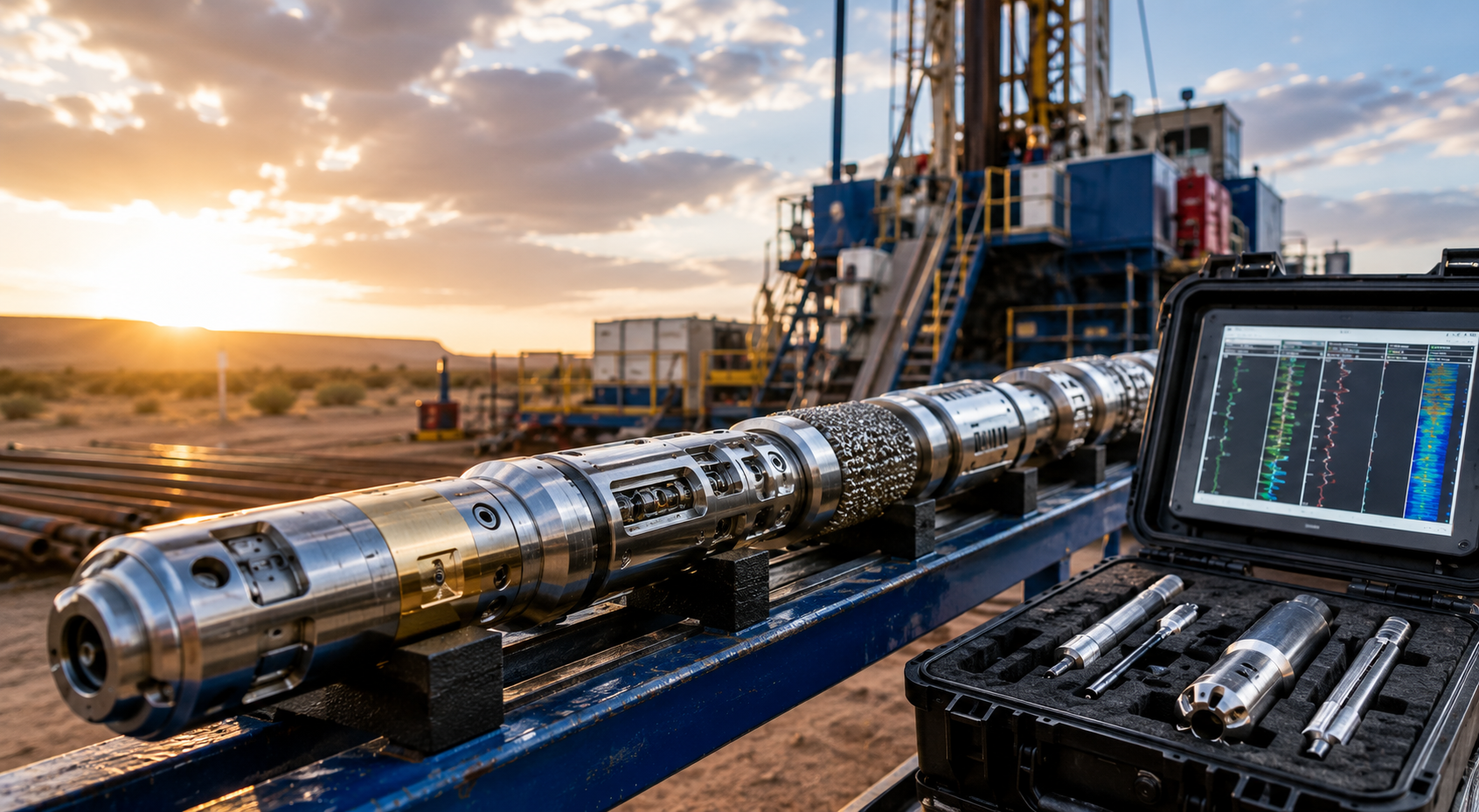
The global well logging tools market was valued at USD 8.11 billion in 2025 and is expected to reach USD 13.63 billion by 2031, rising at a CAGR of 9.28%.
 We are friendly and approachable, give us a call.