The Global Green Cement Market was valued at more than USD 42.41 Billion in 2025 and is projected to reach more than USD 74.59 Billion by 2031, at a 10.12% CAGR from 2026-2031.
The Global cement industry is entering a new phase of development as decarbonization shifts from a long-term ambition to an operational priority for producers, policymakers, and construction stakeholders. Rather than relying on a single technology pathway, the sector is adopting a combination of approaches, including reduced clinker dependency, optimized cement formulations, circular use of industrial by-products, alternative energy sources, and carbon management solutions. From limestone calcined clay cement (LC3) and Portland-limestone cement (PLC) to clinker-free binders and blended cement formulations, green cement solutions ensure that the built environment can expand without exacerbating the climate crisis. Increasing demand for low-carbon building materials, stringent emission reduction targets, operational efficiency gains, and growing corporate ESG commitments are driving innovation across the industry, enabling developers and contractors to construct environmentally responsible structures while maintaining performance and cost-effectiveness.
Strengthening regulatory frameworks are accelerating green cement adoption worldwide
Governments across the globe are implementing increasingly rigorous carbon reduction frameworks that mandate substantial decreases in emissions from the construction sector. In Europe, the Carbon Border Adjustment Mechanism (CBAM) is creating a new carbon-linked trade environment for cement imports, with financial obligations beginning in 2026 as the mechanism moves beyond its transitional phase. The European Union's CBAM ensures that imported cement bears an equivalent carbon cost to domestic production under the EU Emissions Trading System (EU ETS), with the phase-out of free allowances from 2026 to 2034 creating a powerful economic incentive for emissions reduction. China has expanded emissions trading coverage to include cement, introducing carbon pricing pressure across one of the world's largest cement manufacturing bases. India has also strengthened industrial climate regulation through its Greenhouse Gas Emission Intensity Target Rules, requiring 186 cement plants to meet facility-specific reduction targets during the 2025–27 compliance cycle. Beyond direct regulation, demand-side measures are gaining importance, with the Industrial Deep Decarbonisation Initiative (IDDI) supporting low-carbon public procurement frameworks across several economies. This regulatory pressure has created significant capital investment opportunities, making environmental compliance a primary driver of revenue for technology suppliers across the globe.
Investment activity and technological advancement are reshaping industry standards
Investment activity across the green cement value chain is accelerating as companies seek access to strategic resources, advanced technologies, and scalable solutions for reducing emissions. The acquisition of Eco Material Technologies by CRH for US$2.1 billion in September 2025 highlights the growing importance of supplementary cementitious materials as manufacturers secure alternative inputs to reduce clinker consumption. Hoffmann Green Cement Technologies achieved a major milestone by tripling its low-carbon, 0% clinker cement production to 50,700 tonnes in 2025 and set a 2026 target of 100,000 tonnes. Heidelberg Materials launched evoZero®, the world's first carbon captured net-zero cement, achieving its net-zero footprint through the application of carbon capture and storage (CCS) technology at the Heidelberg Materials plant in Brevik, Norway. Technology partnerships are also expanding, with companies exploring carbon mineralization, novel binders, and next-generation cement formulations to overcome the limitations of conventional production methods. Limestone Calcined Clay Cement (LC3) has emerged as a promising solution, offering potential CO₂ reductions of approximately 30–40% compared with traditional cement systems in suitable markets. Noida International Airport became the first large-scale project in India to utilize LC3, pioneering a viable path for more sustainable infrastructure.
Sustainability and circular economy are reshaping cement production
Environmental sustainability has become a strategic priority for cement manufacturers seeking to decarbonize their operations. The growing emphasis on sustainable construction techniques and the use of green building materials is driving market expansion. The Global Cement and Concrete Association (GCCA) launched the world's first Low Carbon Ratings (LCR) for Cement and Concrete in April 2025, a transparent global rating system that enables cement and concrete to be identified based on their carbon footprints. The ratings are divided into seven bands (AA to F) and are designed to help customers prioritize sustainability when selecting construction materials. The GCCA reported that the CO₂ intensity of cementitious products has declined by approximately 25% since 1990. The growing emphasis on Environmental Product Declarations (EPDs) and lifecycle carbon assessments is creating a transparency-driven market where producers must demonstrate verifiable environmental performance to remain competitive. As part of efforts to lessen emissions, manufacturing processes can be adjusted to significantly reduce pollutants during unit operations, with leading companies like Holcim, Heidelberg Materials, and CRH advancing large-scale carbon reduction initiatives.
North America leads the Global Green Cement Market
North America currently occupies a dominant position in the global transition toward low-carbon construction, fundamentally reshaping its cement industry through an unprecedented wave of federal infrastructure investment and strong environmental awareness. The United States dominates the North American green cement market, supported by a combination of federal funding, sustainability-focused procurement policies, and increasing investments in low-carbon construction materials. Federal initiatives under the Inflation Reduction Act (IRA), together with the Federal Buy Clean Initiative and the Bipartisan Infrastructure Law (BIL), have significantly strengthened demand for lower-embodied-carbon cement by supporting domestic clean manufacturing and prioritizing sustainable materials in federally funded infrastructure projects. The Portland Cement Association (PCA) reports that Portland Limestone Cement (PLC) now accounts for well over 60% of U.S. cement shipments, following its approval by all 50 state Departments of Transportation, making it the most widely used blended cement in the country. Canada complements these efforts through the Net-Zero Emissions Accountability Act, the Greening Government Strategy, and funding programs administered by Natural Resources Canada (NRCan), which promote low-carbon industrial technologies and sustainable construction materials. The region is also witnessing significant technological innovation, exemplified by the Ash Grove Carbon 1 Mississauga project in Ontario, which will deploy Carbon Upcycling Technologies' carbon mineralization process to convert captured CO₂ and industrial by-products into supplementary cementitious materials. The Asia-Pacific region represents the fastest-growing market, with rapid urbanization and massive infrastructure investments creating substantial opportunities for green cement adoption across China, India, and Southeast Asian nations. The Middle East and Africa represent a rapidly growing regional market, with pan-African corporate expansions and tightening international carbon emissions frameworks forcing developers to adopt low-clinker and rapid-setting alternatives. Meanwhile, emerging markets across South America are creating new opportunities as urbanization accelerates and environmental awareness grows across construction sectors.
The future of the Green Cement Market will be shaped by evolving regulations, technological innovation, and sustainability imperatives across the global construction industry. As governments worldwide continue to tighten emission standards and expand compliance requirements, cement manufacturers will keep investing in advanced low-carbon technologies, digital monitoring platforms, and circular production solutions. The ongoing demand for infrastructure development in emerging economies, combined with the need to decarbonize existing production facilities in mature markets, ensures sustained growth for green cement solutions. With growing emphasis on carbon reduction, sustainable construction, and resource efficiency, green cement will remain a critical enabler of responsible urban development. Companies that successfully combine technological excellence with operational efficiency, regulatory expertise, and sustainable practices will be well-positioned to capitalize on the market's long-term growth opportunities.



 By Sunny Keshri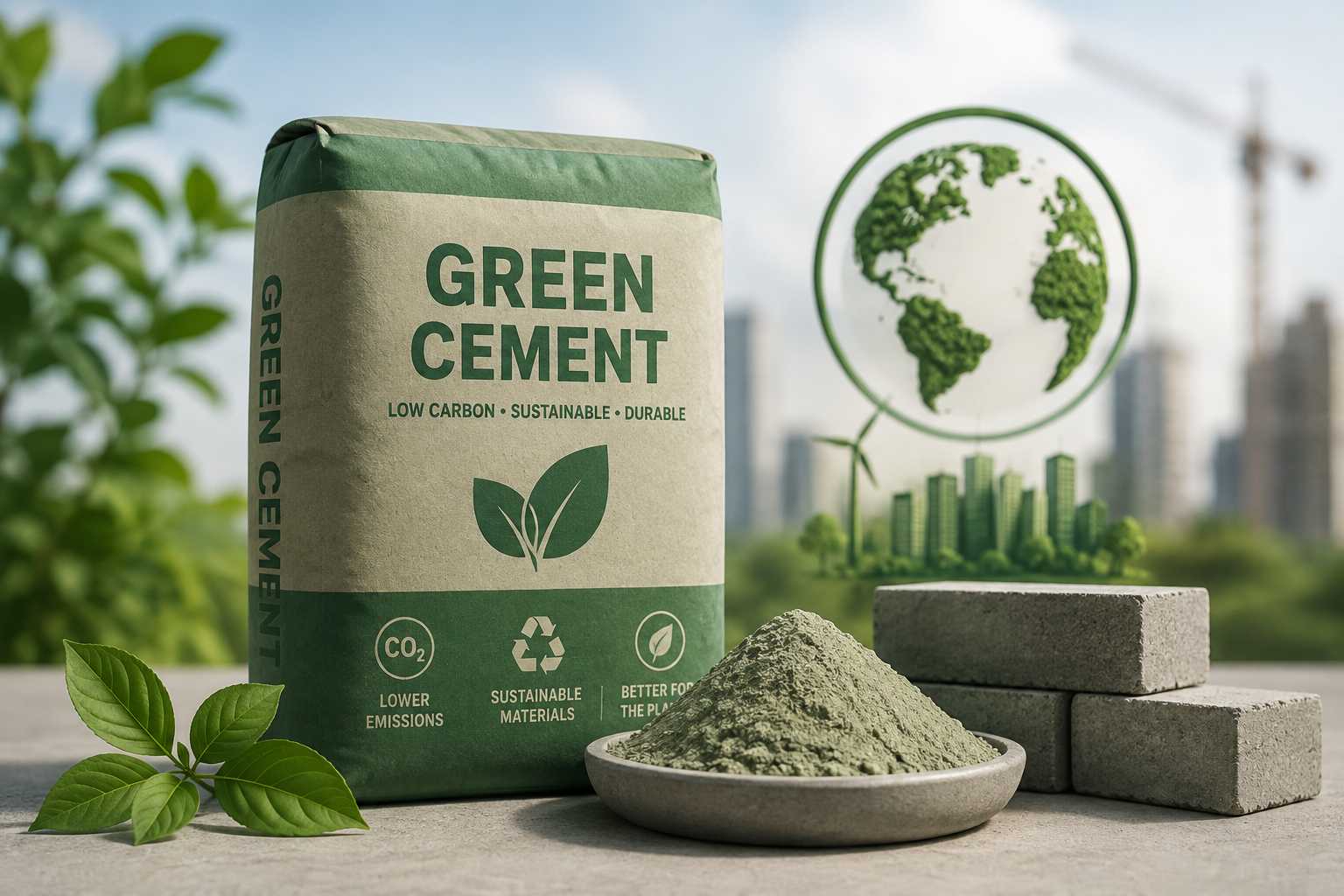
.png)


 We are friendly and approachable, give us a call.