

 By Sunny Keshri
 Restful Retreat: Choosing the Perfect Mattress for Quality Sleep
Unlock the secrets to a good night's sleep by selecting the perfect mattress. Explore different types, materials, and tips to transform your bedroom into a haven of relaxation.

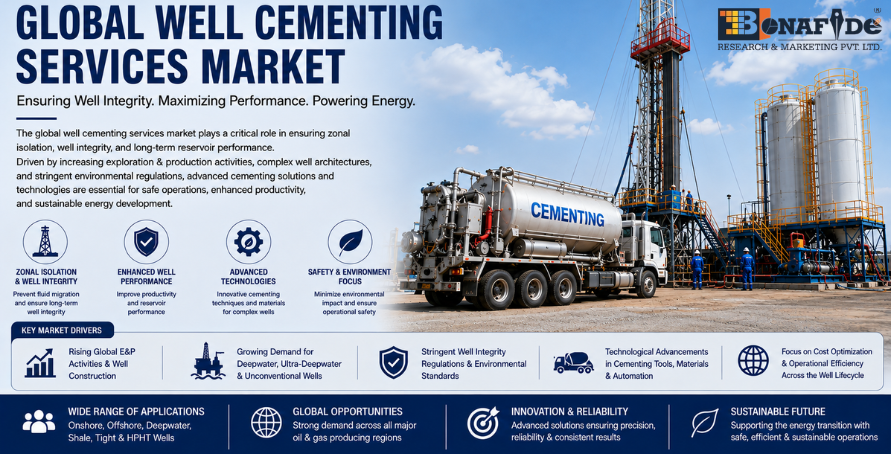
The Global Well Cementing Services Market was valued at USD 9.65 Billion in 2025 and is expected to reach USD 13.01 Billion by 2031, expanding at a CAGR of 5.24% from 2026-2031.
The Global Well Cementing Services Market is evolving as oil and gas operators place greater emphasis on well integrity, operational reliability, complex well construction, and lifecycle asset management. Well cementing remains a critical stage of well construction because it provides casing support, establishes zonal isolation, limits unwanted fluid migration, and contributes to long-term barrier integrity. Demand is supported by continued exploration and production activity across North America, the Middle East, Asia-Pacific, South America, Europe, and Africa, while mature fields generate additional requirements for remedial cementing, workovers, recompletions, and plug-and-abandonment activities. The growing use of horizontal, directional, extended-reach, deepwater, and high-pressure high-temperature wells is also increasing the need for engineered cementing programs. At the same time, emerging applications including geothermal development, carbon capture and storage, and other subsurface energy projects are creating additional opportunities for specialized cementing technologies. As operators balance production objectives with increasingly demanding well-integrity and environmental requirements, cementing is becoming a more technically sophisticated and strategically important component of well lifecycle management.
Increasing well complexity is strengthening demand for advanced cementing solutions
The growing complexity of well architectures is becoming a major factor shaping cementing requirements across global oil and gas operations. Horizontal and extended-reach wells require effective cement placement across long casing intervals and complex trajectories, while deepwater and high-pressure high-temperature wells demand carefully engineered slurry systems capable of maintaining performance under challenging pressure and temperature conditions. Narrow formation-pressure margins can further complicate cement placement, increasing the importance of accurate displacement planning, laboratory testing, and engineering simulations. Service providers are responding through specialized lightweight, high-temperature, gas-tight, and other engineered cement systems designed for specific formation and wellbore conditions. Automated cementing equipment and real-time monitoring are also improving operational consistency by providing greater control over pumping and placement activities. These developments are shifting competition beyond basic cement delivery toward engineering expertise, technical reliability, equipment performance, and the ability to manage increasingly demanding well environments. As operators continue optimizing well designs to improve reservoir access and production efficiency, the technical requirements associated with cementing are expected to become increasingly important across new drilling and completion programs.
Remedial cementing and well abandonment are expanding lifecycle service opportunities
Cementing demand is increasingly extending beyond initial well construction as operators manage aging assets and focus on maintaining well integrity throughout the productive life of their wells. Mature producing regions contain large populations of existing wells that require workovers, recompletions, casing repairs, squeeze cementing, zonal-isolation restoration, and other intervention activities. Remedial cementing therefore provides an important recurring revenue stream for service providers, particularly in mature basins across North America and Europe. Plug-and-abandonment programs are also creating additional demand as operators retire uneconomic or depleted wells and regulators strengthen requirements for permanent barriers and environmental protection. These activities require specialized cement placement techniques and formulations capable of establishing reliable long-term isolation. Decommissioning activity in mature offshore regions, including the North Sea, further supports demand for specialized well-integrity services. At the same time, operators are increasingly evaluating wells on a lifecycle basis, placing greater emphasis on barrier performance from initial construction through production, intervention, and final abandonment. This broader focus is expanding the addressable market for cementing contractors beyond primary cementing and creating opportunities for companies with strong remedial engineering, diagnostic, and abandonment capabilities.
Digitalization and lower-carbon technologies are reshaping cementing operations
Technology development is becoming increasingly important as cementing service providers seek to improve placement accuracy, operational efficiency, and environmental performance. Digital job-design platforms, real-time monitoring, automated pumping systems, modeling tools, and data analytics are being incorporated into cementing workflows to improve decision-making before and during field operations. These technologies can help engineers evaluate slurry behavior, pressure conditions, displacement requirements, and potential operational risks before cement is placed. Real-time data can also support faster identification of deviations during a cementing job, helping reduce non-productive time and improve execution consistency. Alongside digitalization, service providers are developing lower-carbon cement systems, alternative formulations, electric-powered equipment, and other technologies intended to reduce the emissions associated with well construction. These solutions are particularly relevant as operators face increasing environmental expectations across conventional oil and gas developments and emerging applications such as carbon capture and storage. The combination of automation, advanced materials, engineering software, and lower-emission equipment is therefore creating a more technology-intensive competitive environment in which service providers increasingly differentiate themselves through measurable improvements in reliability, efficiency, well integrity, and environmental performance.
North America leads while emerging and mature regions create diverse growth opportunities
North America remains the largest regional market for well cementing services, supported by extensive unconventional drilling, a large installed base of producing wells, mature-field intervention activity, and offshore development in the Gulf of Mexico. Asia-Pacific provides substantial demand through large-scale onshore operations in China and India and offshore developments across Southeast Asia, while the Middle East benefits from continued investment in large conventional fields across Saudi Arabia, the UAE, Iraq, and other producing countries. South America is supported by Brazil's offshore pre-salt development and Argentina's Vaca Muerta unconventional activity. Europe maintains a significant role through mature North Sea operations, intervention programs, and increasing plug-and-abandonment requirements. Africa contributes through established production and exploration activity in countries including Nigeria, Egypt, and Algeria. Regional market characteristics differ considerably, with some markets emphasizing new well construction and others generating stronger demand from mature-well intervention or decommissioning. This geographic diversity provides cementing companies with opportunities across both conventional and emerging applications while reducing reliance on a single drilling environment.
The Well Cementing Services Market is therefore moving toward a more technically differentiated and lifecycle-oriented competitive landscape in which primary cementing remains the core demand base while remedial, abandonment, and emerging energy applications broaden market opportunities. Future industry development is expected to be shaped by drilling activity, well complexity, regulatory requirements, digital technologies, advanced cement formulations, and lower-carbon operational solutions. Service providers capable of combining reliable field execution with sophisticated slurry design, real-time monitoring, automation, and long-term well-integrity expertise will be better positioned to capture opportunities across conventional oil and gas developments as well as geothermal and carbon-storage applications. As operators increasingly evaluate well construction and intervention through the entire asset lifecycle, cementing services are becoming more closely connected with production efficiency, environmental protection, and long-term barrier performance. This shift is supporting continued investment in specialized technologies and creating a broader role for well cementing services within the evolving global energy infrastructure.
See how you can up your career status

Unlock the secrets to a good night's sleep by selecting the perfect mattress. Explore different types, materials, and tips to transform your bedroom into a haven of relaxation.

Global Electric Motor Market Outlook, 2029” published by Bonafide Research, the market is anticipated to cross USD 220 Billion by 2029, increasing from USD 141.37 Billion in 2023.

Global Cement Paint Market Outlook, 2030 are expected to reach a market size of more than USD 3074.13 Million by 2030
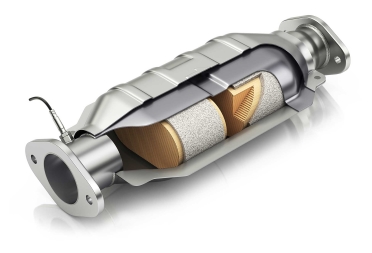
Global Catalytic Converter Market Outlook, 2030 is projected to reach market size of USD 132.21 Billion by 2030
 We are friendly and approachable, give us a call.