

Top Six Companies Global Airless Packaging Market
Global Airless Packaging Market Outlook, 2030 is projected to reach market size of USD 12.50 Billion by 2030

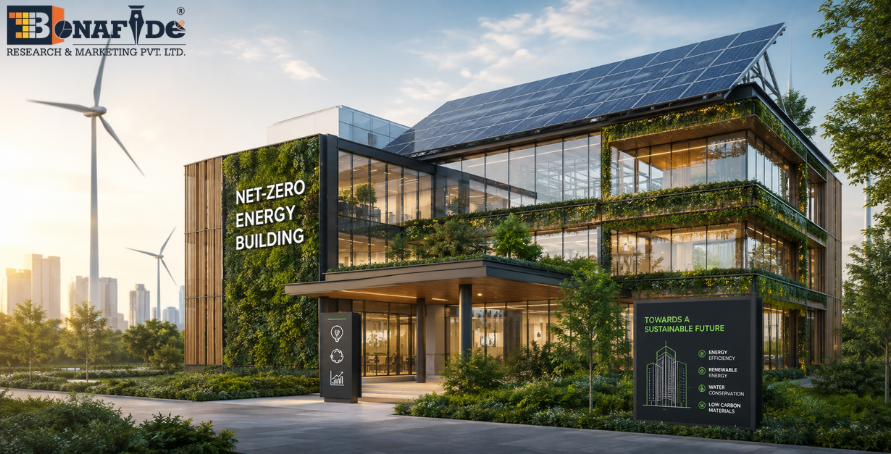
Net-Zero Energy Buildings Move Beyond Energy Efficiency
Net-zero energy buildings are designed to minimize energy demand and meet remaining requirements through renewable energy. These buildings combine efficient building envelopes, HVAC systems, lighting, renewable generation, energy storage, and intelligent building controls. The market is increasingly driven by building decarbonization, electrification, renewable-energy integration, energy-efficiency regulations, smart-building technologies, and demand for lower operating costs. Adoption is expanding across residential properties, offices, healthcare facilities, educational institutions, hotels, retail buildings, and industrial facilities.
New Construction Leads with Early Integration Opportunities
New construction represents the largest project segment because developers can integrate energy performance from the earliest design stages. Building orientation, insulation, glazing, HVAC, lighting, renewable generation, and energy storage can be planned as one coordinated system. Growing urban development and construction activity are creating opportunities to incorporate net-zero principles into new residential, commercial, institutional, and industrial buildings. Government policies and rising energy-performance expectations are further supporting adoption.
Non-Residential Buildings Create Strong Growth Opportunities
Offices, healthcare facilities, educational campuses, hotels, retail properties, and institutional buildings have significant energy requirements, creating opportunities for efficient HVAC, lighting, ventilation controls, renewable generation, and automated building-management systems. Corporate sustainability goals and demand for lower operating costs are encouraging commercial building owners to move beyond basic efficiency measures toward measurable and continuously managed energy performance.
Equipment Remains a Major Market Segment
Equipment represents the largest component category, supported by demand for HVAC systems, heat pumps, ventilation equipment, solar PV systems, batteries, lighting, sensors, and control hardware. Efficient heating and cooling systems can significantly reduce building energy consumption, while renewable-energy systems and battery storage help meet remaining energy requirements. Connected equipment is also becoming increasingly important as buildings adopt integrated management platforms.
Asia-Pacific Leads the Global Market
Asia-Pacific is the fastest-growing regional market. Rapid urbanization, large-scale construction, strong manufacturing capabilities, and expanding energy-performance policies are supporting demand. China, Japan, India, South Korea, Australia, and other markets are increasing their focus on energy efficiency, renewable energy, electrification, and low-energy construction. The region's strong manufacturing base for solar PV, batteries, HVAC equipment, and electrical technologies further supports market development.
Building Decarbonization Drives Market Growth
The growing focus on reducing building-related energy consumption and carbon emissions is one of the major market drivers. Governments are strengthening building-energy codes, efficiency standards, renewable-energy requirements, and low-carbon construction policies. Building owners are also focused on lower operating costs, energy resilience, indoor comfort, and long-term asset performance. This is creating opportunities across new construction, renovation, electrification, renewable-energy integration, smart controls, and energy-performance services.
Smart Buildings Are Becoming Active Energy Participants
Solar generation, batteries, smart meters, flexible HVAC systems, and automated controls are transforming buildings from passive energy consumers into active energy participants. Building-management platforms increasingly use occupancy data, weather information, equipment performance, and energy-system signals to optimize consumption. Artificial intelligence is also being applied to predictive maintenance, fault detection, demand forecasting, and automated controls.
Lifecycle Performance Is Reshaping the Market
The market is increasingly focused on building performance after construction. Continuous monitoring, remote management, predictive maintenance, digital analytics, and commissioning can help identify the difference between expected and actual energy performance. This is creating opportunities for recurring optimization and performance-management services, shifting the market from one-time technology installation toward long-term building performance management.
Integrated Solutions Are Reshaping Net-Zero Buildings
A major trend is the growing demand for integrated solutions that combine efficient building envelopes, HVAC, lighting, renewable generation, storage, smart controls, and digital management platforms. This integration can improve energy performance, comfort, resilience, and operating efficiency. As construction activity, decarbonization targets, renewable-energy adoption, and smart-building technologies continue to expand, integrated net-zero solutions are expected to remain a major force behind market growth through 2031.
See how you can up your career status

Global Airless Packaging Market Outlook, 2030 is projected to reach market size of USD 12.50 Billion by 2030

Global Payroll Services Market Outlook, 2030 is projected to reach market size of USD 18.24 Billion by 2030.
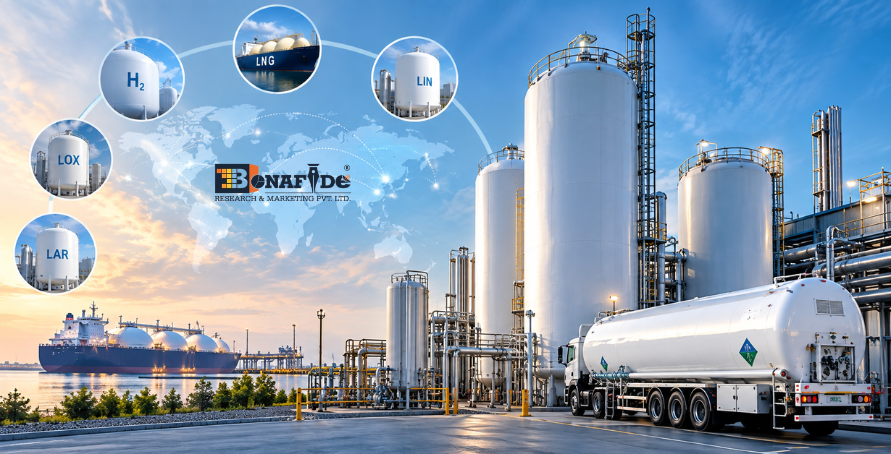
The Global cryogenic tanks market was valued at more than USD 11.28 billion in 2025 and is projected to reach more than USD 16.11 billion by 2031, expanding at a CAGR of 6.27% during 2026–2031.

According to the research report "Global Ready-Mix Concrete Market Outlook, 2031," published by Bonafide Research, the Global Ready-Mix Concrete Market was valued at more than USD 590.00 Billion in 2025 and is expected to reach a market size of more than USD 778.20 Billion by 2031, with a CAGR of 4.84% from 2026–2031.
 We are friendly and approachable, give us a call.