

Fit for Life: Choosing the Right Fitness Equipment for Your Journey
Navigate the world of fitness equipment, from home gyms to commercial setups. Discover the factors to consider when selecting the right equipment for your fitness journey.

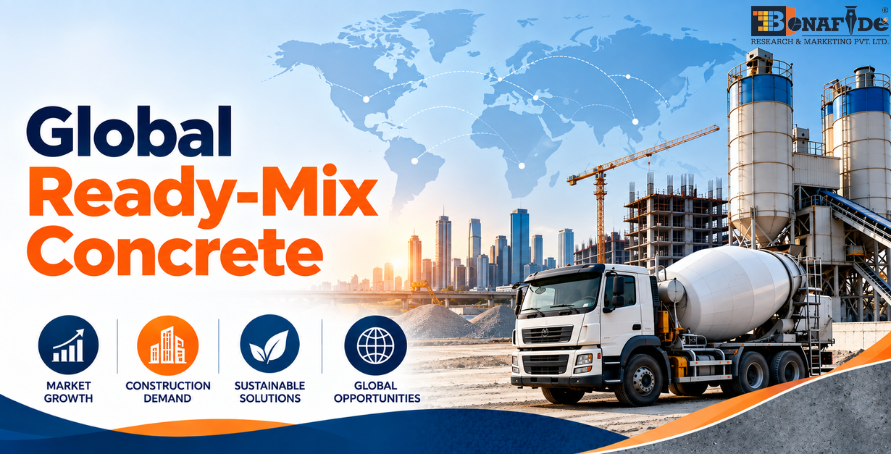
The Global Ready-Mix Concrete Market is entering a new phase as rapid urbanization, housing requirements, infrastructure investment, construction modernization, and sustainability objectives reshape demand for concrete. Ready-mix concrete is increasingly becoming an essential part of modern construction because it enables controlled production, consistent quality, efficient transportation, and faster execution across residential, commercial, industrial, and infrastructure projects.
According to the research report "Global Ready-Mix Concrete Market Outlook, 2031," published by Bonafide Research, the Global Ready-Mix Concrete Market was valued at more than USD 590.00 Billion in 2025 and is expected to reach a market size of more than USD 778.20 Billion by 2031, with a CAGR of 4.84% from 2026–2031. The expansion reflects continued construction activity across developed and emerging economies, supported by housing development, infrastructure modernization, urban expansion, and industrial investment.
One of the most important changes taking place across the industry is the increasing shift from conventional on-site concrete preparation toward professionally managed ready-mix production. RMC is manufactured at centralized batching plants according to specified mix designs and delivered to construction sites using specialized mixer trucks. This approach provides greater control over cement, aggregates, water, and admixtures while helping contractors manage construction schedules, material handling, and quality requirements.
Urbanization and housing development are creating another important source of demand. The United Nations estimates that around 45% of the global population currently lives in cities, while housing shortages and rapid urban expansion continue to create requirements for residential buildings and supporting infrastructure. Ready-mix concrete is therefore increasingly used across apartment developments, housing communities, commercial buildings, roads, utilities, and other projects associated with expanding urban areas.
Infrastructure investment is simultaneously increasing the requirement for large-volume and performance-oriented concrete. Roads, bridges, railways, airports, ports, metros, water systems, energy facilities, and industrial infrastructure require concrete with controlled strength, durability, workability, and delivery schedules. Government infrastructure programs across Asia-Pacific, North America, Europe, the Middle East, and South America are therefore creating opportunities for RMC producers with strategically located plants and reliable distribution networks.
Sustainability is also changing the competitive environment. Concrete producers are increasingly developing lower-carbon products through optimized mix designs, supplementary cementitious materials, recycled materials, alternative binders, and other technologies. The Global Cement and Concrete Association has established an industry pathway toward net-zero concrete by 2050, while its decarbonization roadmap includes a target to reduce concrete-related emissions by 25% by 2030. These objectives are encouraging RMC manufacturers to improve material efficiency and expand sustainable concrete portfolios.
By product type, Transit Mixed Concrete remains an important part of the market because it provides flexibility for transporting freshly batched concrete to construction sites. Central Mixed Concrete and Shrink Mixed Concrete also serve projects requiring different combinations of centralized production, transportation flexibility, and mixing control. The choice of product type depends on project scale, transportation distance, plant configuration, concrete specifications, and site requirements.
By grade, the market includes Conventional, High-Strength Concrete, and High-Performance Concrete. Conventional concrete continues to serve general construction applications, while high-strength concrete is used where structural elements require higher load-bearing capabilities. High-performance concrete is gaining attention for projects requiring enhanced durability, workability, permeability resistance, or specialized performance characteristics.
By application, Residential, Commercial, Infrastructure, and Industrial construction represent major areas of RMC consumption. Residential construction benefits from urban housing requirements and large-scale developments, while commercial construction includes offices, retail facilities, hotels, warehouses, and other buildings. Infrastructure projects require substantial volumes for transportation and public works, while industrial applications include manufacturing facilities, logistics centers, processing plants, and energy infrastructure.
By construction type, New Construction and Renovation & Replacement represent the principal market opportunities. New construction continues to generate requirements for concrete across housing, commercial buildings, industrial facilities, and infrastructure. At the same time, aging infrastructure and buildings are creating additional demand for rehabilitation, structural replacement, upgrading, and renovation activities.
The regional landscape is increasingly influenced by differences in construction cycles, infrastructure spending, urbanization, environmental regulations, and housing requirements. Asia-Pacific remains a major center of construction activity, supported by large-scale infrastructure and housing development in China and India. North America is influenced by infrastructure modernization and residential development, while Europe is focusing increasingly on renovation and lower-carbon construction. South America continues to see infrastructure and housing opportunities, while the Middle East & Africa region is being shaped by major urban development and infrastructure programs.
For RMC manufacturers, the competitive landscape is therefore moving beyond production capacity alone. Customers increasingly require reliable delivery, consistent quality, specialized concrete formulations, sustainability credentials, digital monitoring, and efficient logistics. Companies such as CEMEX S.A.B. de C.V., Holcim Ltd., Heidelberg Materials AG, CRH public limited company, Vicat SA, and Votorantim Cimentos S.A. are participating across different parts of the concrete value chain and continue to develop products and capabilities aligned with changing construction requirements.
The future of the Global Ready-Mix Concrete Market will be shaped not only by the volume of concrete required for new construction but also by how efficiently it can be produced, transported, optimized, and incorporated into increasingly sustainable buildings and infrastructure. Urbanization, housing development, infrastructure investment, digitalization, advanced concrete technologies, and decarbonization are therefore expected to remain central forces transforming the ready-mix concrete industry through 2031.
See how you can up your career status

Navigate the world of fitness equipment, from home gyms to commercial setups. Discover the factors to consider when selecting the right equipment for your fitness journey.

Global Land Surveying Market Outlook, 2030 is projected to reach market size of USD 12.90 Billion by 2030.

Global Acoustic Insulation Market Outlook, 2030 is projected to reach market size of USD 21.26 Billion by 2030.
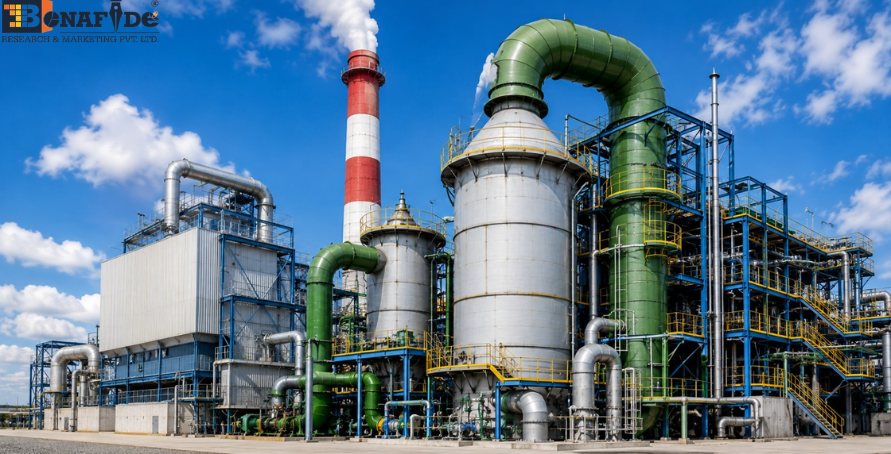
The Global Flue Gas Desulfurization Market was valued at more than USD 23.72 billion in 2025 and is projected to reach more than USD 31.94 billion by 2031, at a 5.22% CAGR from 2026-2031.
 We are friendly and approachable, give us a call.