

 By Anuj Mulhar
 Top Six Companies Global Decision Intelligence Market
Global Decision Intelligence Market Outlook, 2030 is projected to reach market size of USD 33.36 Billion by 2030


Your television is no longer just watching it's listening, learning, and recognizing The Global Automatic Content Recognition market was valued at more than USD 4.16 Billion in 2025, and expected to reach a market size of more than USD 12.02 Billion by 2031 with the CAGR of 19.85% from 2026-2031. Imagine watching a live football match on your smart TV. Seconds later, your phone displays player statistics, social media conversations, betting odds, and highlights from previous games. Switch to a commercial, and personalized advertisements begin appearing across your connected devices. Pause a movie, and your streaming platform instantly recommends similar content tailored to your viewing habits. None of this happens by coincidence. Behind these seamless experiences is Automatic Content Recognition (ACR) a technology quietly transforming how digital devices understand audio and video content in real time. As entertainment ecosystems become increasingly connected, ACR is evolving from a niche capability into one of the most valuable technologies powering modern media, advertising, and consumer analytics. Every screen is becoming a source of consumer intelligence Traditionally, broadcasters and advertisers relied on surveys and audience panels to estimate viewing behavior. While effective to an extent, these methods often lacked speed, scale, and precision. Using audio fingerprinting, video fingerprinting, watermark detection, and artificial intelligence, ACR enables smart TVs, streaming devices, smartphones, and connected platforms to identify exactly what content is being consumed within seconds. The technology converts anonymous viewing activity into valuable insights that help broadcasters, advertisers, streaming platforms, and brands better understand audience preferences. In today's data-driven media economy, content recognition has become as valuable as the content itself. Streaming wars are accelerating ACR adoption The rapid expansion of streaming services has fundamentally changed how audiences consume entertainment. Viewers now move seamlessly between live television, on-demand streaming, gaming platforms, and short-form social media content throughout the day. For content providers, understanding this fragmented viewing journey has become increasingly challenging. Automatic Content Recognition bridges this gap by tracking content engagement across multiple screens and platforms. It enables streaming providers to measure audience behavior more accurately, optimize recommendations, evaluate advertising effectiveness, and deliver highly personalized viewing experiences. As competition intensifies among streaming platforms, data generated through ACR is becoming a strategic competitive advantage. Advertising is becoming context-aware Perhaps the most exciting transformation enabled by Automatic Content Recognition is occurring within digital advertising. Rather than delivering generic advertisements, brands can increasingly serve context-aware campaigns based on the content viewers are consuming at that moment. Someone watching a travel documentary may receive vacation offers, while viewers enjoying a cooking competition may be presented with grocery or kitchen appliance promotions. This capability dramatically improves advertising relevance while increasing engagement and campaign performance. Combined with artificial intelligence and programmatic advertising, ACR is helping marketers create more meaningful consumer interactions without interrupting the viewing experience. Artificial intelligence is making content recognition smarter Artificial intelligence is taking Automatic Content Recognition far beyond simple identification. Modern ACR platforms can analyze viewing patterns, predict consumer preferences, recognize emerging content trends, and generate real-time audience insights for broadcasters and advertisers. Machine learning algorithms continuously improve recognition accuracy while processing enormous volumes of multimedia data with remarkable speed. As AI continues to evolve, ACR will increasingly support personalized entertainment, interactive television, audience measurement, and intelligent content discovery across connected ecosystems. Regional outlook North America remains the largest market for Automatic Content Recognition, driven by widespread smart TV adoption, advanced digital advertising infrastructure, and the strong presence of leading technology companies and streaming platforms. Europe continues to experience steady growth as connected television usage expands and broadcasters invest in advanced audience measurement technologies. The Asia-Pacific region is expected to register the fastest market growth, supported by rising internet penetration, increasing smart device adoption, expanding OTT platforms, and growing investments in digital media across countries such as China, India, Japan, and South Korea. The future of the Automatic Content Recognition market extends far beyond television. As connected vehicles, smart speakers, augmented reality devices, gaming consoles, retail displays, and Internet of Things (IoT) ecosystems become increasingly intelligent, ACR will play a vital role in enabling devices to recognize, interpret, and respond to surrounding media environments. The next generation of digital experiences will not simply deliver content they will understand it. Companies that combine Automatic Content Recognition with artificial intelligence, cloud computing, edge analytics, and privacy-conscious data strategies will shape the future of personalized entertainment, targeted advertising, and real-time consumer engagement. In the coming decade, the question will no longer be "What are people watching?" but "How intelligently can technology respond to what they're watching?"
See how you can up your career status
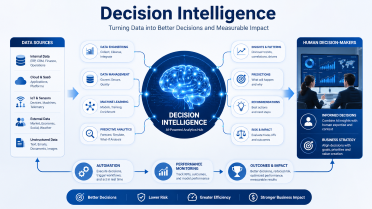
Global Decision Intelligence Market Outlook, 2030 is projected to reach market size of USD 33.36 Billion by 2030

The Global Construction Management Software market was valued at more than USD 7.43 Billion in 2025, and expected to reach a market size of more than USD 13.13 Billion by 2031 with the CAGR of 10.21% from 2026-2031.

The Global Accounting Software market was valued at more than USD 20.16 Billion in 2025, and expected to reach a market size of more than USD 31.35 Billion by 2031 with the CAGR of 7.84% from 2026-2031.

Explore the Global Team Collaboration Software Market, valued at USD 21.35 billion in 2025 and projected to exceed USD 44.29 billion by 2031, growing at a 13.27% CAGR from 2026–2031.
 We are friendly and approachable, give us a call.