

Top Six Companies Global Dental Consumables Market
Global Dental Consumables Market Outlook, 2030 is projected to reach market size of USD 60.49 Billion by 2030.

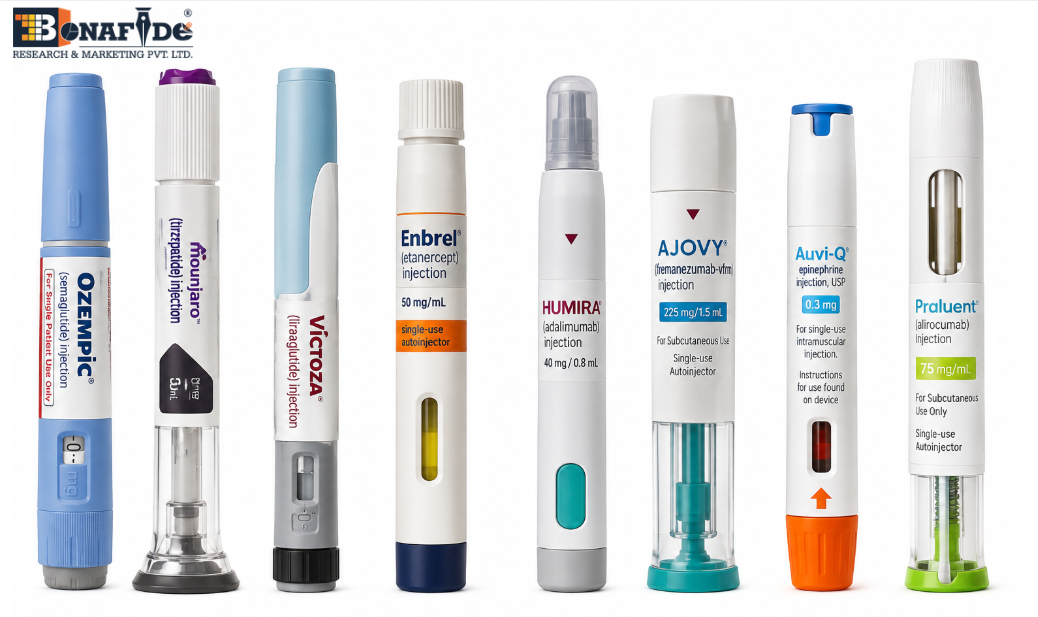
The Global Autoinjectors Market is an important segment of the medical device and drug-delivery industry, driven by the growing need for convenient, safe, and patient-friendly administration of injectable therapies. Autoinjectors are increasingly used for the delivery of biologics, peptides, proteins, small molecules, and other injectable medicines across chronic and acute conditions, including rheumatoid arthritis, multiple sclerosis, diabetes, obesity, migraine, anaphylaxis, and other immune-mediated and metabolic disorders.
According to Bonafide Research, Global Autoinjectors Market is expected to cross USD 181.23 Billion market size by 2031, with 15.62% CAGR by 2026-31, supported by the increasing prevalence of chronic and autoimmune diseases, rising adoption of self-administered medicines, expansion of biologic therapies, and the shift toward home-based healthcare.
The market is undergoing a major structural shift as pharmaceutical companies increasingly move injectable therapies from hospital-based administration toward self-administration at home. The growth of biologics, GLP-1 therapies, specialty medicines, and high-viscosity formulations is creating demand for increasingly sophisticated autoinjector platforms capable of delivering larger volumes and more complex formulations.
Why Autoinjectors matter in modern healthcare
Traditional injectable therapies have historically required administration by healthcare professionals using syringes or other conventional injection systems. Autoinjectors have changed this model by enabling patients or caregivers to administer certain medicines with minimal training.
Autoinjectors are particularly important because they can improve ease of use, dosing consistency, patient convenience, and treatment adherence, while reducing the psychological and operational barriers associated with conventional injections.
They are increasingly relevant across:
The shift toward self-administration is also closely connected with the expansion of home healthcare. Current market analysis identifies chronic disease prevalence, patient convenience, and the movement toward home-based treatment as major factors supporting autoinjector adoption.
Rising demand for autoinjectors in chronic and specialty diseases
The increasing prevalence of chronic diseases is one of the most important growth drivers for the global autoinjectors market. Conditions such as rheumatoid arthritis, multiple sclerosis, diabetes, obesity, and migraine frequently require long-term injectable treatment. Repeated administration creates a strong incentive to replace conventional syringes with simpler self-injection technologies.
Rheumatoid arthritis has historically been an important application because many biologic therapies are administered subcutaneously and can be delivered using autoinjector or pen-based systems. Multiple sclerosis is also becoming increasingly important as more injectable disease-modifying therapies transition toward patient-administered formats.
The GLP-1 revolution creates a major growth opportunity
One of the biggest structural changes in the autoinjector industry is the emergence of GLP-1 and related metabolic therapies. The rapid adoption of injectable treatments for obesity and type 2 diabetes is creating significant demand for convenient injection systems. Pharmaceutical companies are increasingly developing drug-device combinations that allow patients to administer these medicines at home.
Companies such as Eli Lilly, Novo Nordisk, Amgen and other pharmaceutical manufacturers are therefore becoming increasingly important to the autoinjector ecosystem. The impact extends beyond pharmaceutical companies to device manufacturers such as SHL Medical, Ypsomed, BD, Gerresheimer, Owen Mumford and West Pharmaceutical Services, which develop platforms and components used for self-injection and combination products.
Shift toward home-based self-administration
One of the most important trends in the industry is the transition from hospital and clinic administration toward home care. Autoinjectors allow patients to administer many injectable medicines without visiting a healthcare facility for every dose. This can reduce the burden on healthcare systems while improving convenience for patients requiring long-term treatment.
The shift is particularly relevant for:
Market research identifies home-based treatment and patient-centric delivery as important factors accelerating autoinjector adoption. This trend is also encouraging pharmaceutical companies to invest more heavily in human-factors engineering, ergonomic design, audible and visual feedback, needle-safety mechanisms, and simplified activation procedures.
The shift toward prefilled disposable autoinjectors
Another important development is the increasing adoption of prefilled disposable autoinjectors. Prefilled systems combine the drug container and injection mechanism into a single ready-to-use product. This reduces the number of preparation steps required before administration and can minimize dosing and handling errors.
Prefilled disposable systems are particularly attractive for:
The market is therefore moving toward integrated drug-device combination products, rather than standalone injection hardware.
Biologics drive technology development
The increasing use of biologic medicines is another major growth opportunity for autoinjector manufacturers. Monoclonal antibodies and other biologics can have challenging characteristics such as:
These requirements are pushing manufacturers to develop more sophisticated injection systems. The industry is consequently moving beyond simple spring-driven devices toward high-viscosity, large-volume, electronic, connected and reusable systems.
See how you can up your career status
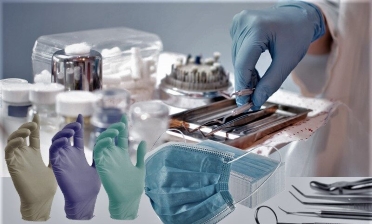
Global Dental Consumables Market Outlook, 2030 is projected to reach market size of USD 60.49 Billion by 2030.
Global MedTech Market Outlook, 2030 is projected to reach market size of USD 1018.30 Billion by 2030
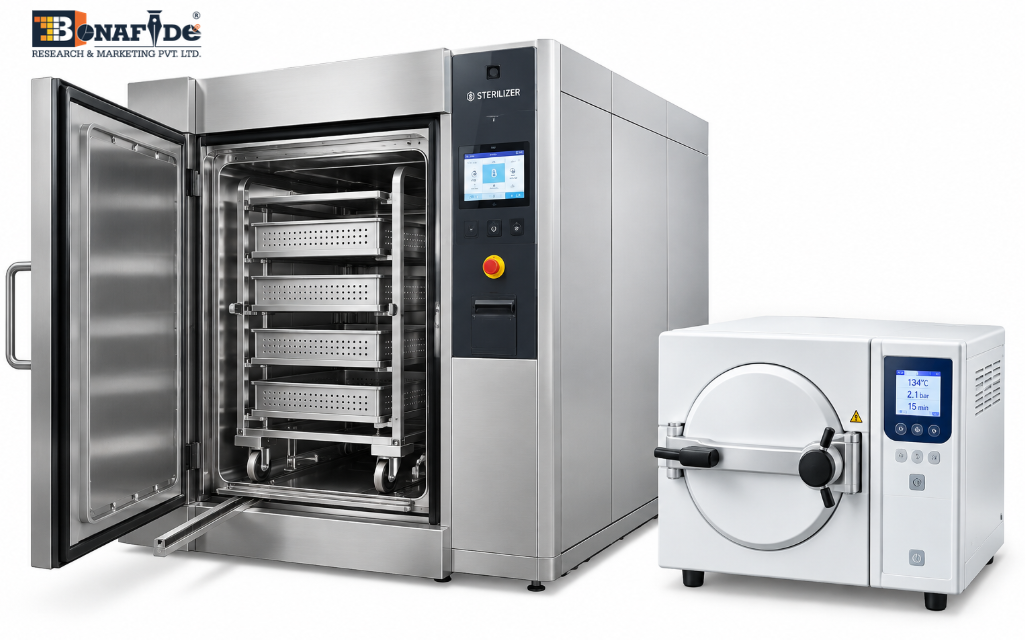
Global Sterilization Equipment Market is expected to cross 27.76 Billion market size by 2031, with 8.71% CAGR by 2026-31.

The global ambulatory EHR market was valued at more than USD 7.19 billion in 2025 and is expected to reach more than USD 10.65 billion by 2031, growing at a CAGR of 6.93% from 2026 to 2031.
 We are friendly and approachable, give us a call.