The global dairy blends market is witnessing steady development as increasing demand for value-added
dairy products, protein-based nutrition, convenient food formulations, and processed dairy products reshape the global
dairy ingredient industry. Dairy blends include combinations of
milk-based ingredients such as milk solids,
milk powder, cream, butterfat, whey, lactose, and dairy proteins that are formulated to provide specific nutritional, functional, sensory, and processing characteristics. These products are increasingly used across dairy products, beverages,
frozen desserts, bakery and confectionery,
infant formula and nutrition, processed foods, and foodservice applications. The market is also benefiting from expanding food-processing activities, growing consumption of packaged dairy products, product diversification, and the increasing use of specialized
dairy ingredients by manufacturers seeking consistent quality and formulation flexibility.
According to the research report "Global Dairy Blends Market Outlook, 2031," published by Bonafide Research, the Global Dairy Blends Market was valued at more than USD 3.87 Billion in 2025 and is anticipated to reach more than USD 5.79 Billion by 2031, expanding at a CAGR of 7.14% during 2026–2031. Consumer preferences are increasingly moving toward dairy products that combine nutrition, functionality, convenience, taste, and consistent quality, encouraging manufacturers to improve dairy formulations and develop more differentiated products. High-protein dairy products, fortified formulations, functional nutrition, premium dairy products, specialized nutrition, and application-specific ingredients are becoming important areas of product development. Manufacturers are increasingly combining milk proteins, whey, milk powders, cream, butterfat, lactose, and other dairy components to achieve targeted levels of protein, fat, milk solids, texture, viscosity, creaminess, flavor, solubility, and stability. At the same time, the expansion of
yogurt, dairy beverages,
ice cream,
bakery products, nutritional foods, and other processed applications is creating broader opportunities for dairy blends across different consumer groups and markets.
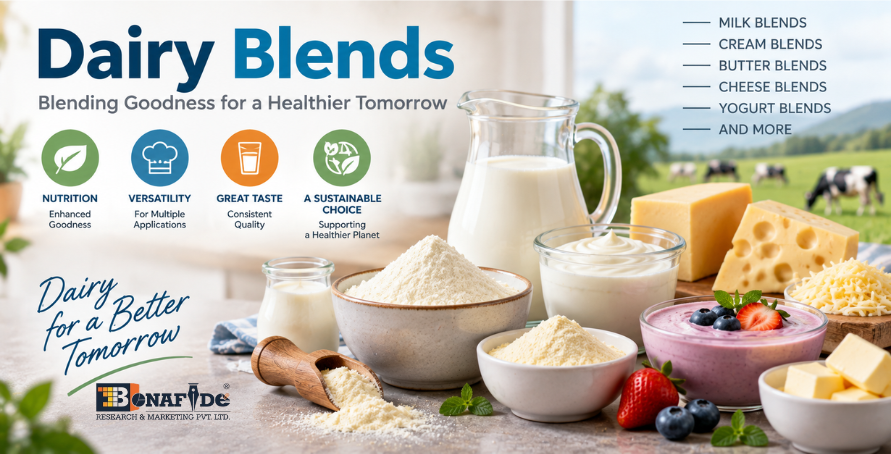
By Product Type, Milk Blends represent the largest category within the global dairy blends market, supported by their broad application across dairy products, beverages, bakery and confectionery, frozen desserts, processed foods, and nutrition products. Milk blends combine different milk-derived components to achieve specific levels of milk solids, protein, fat, texture, flavor, and processing characteristics according to individual product requirements. Their versatility allows manufacturers to develop formulations for yogurt, dairy beverages, ice cream, desserts, bakery products, nutritional products, and other processed foods while maintaining consistent product characteristics. The category also benefits from established milk-processing infrastructure and the widespread availability of milk-derived ingredients across major dairy-producing markets. Increasing demand for value-added dairy products, protein-enriched formulations, convenient dairy beverages, and nutritionally enhanced foods is further encouraging manufacturers to use blended milk ingredients, while the ability to customize formulations according to product specifications, processing requirements, and target consumer preferences continues to support the leading position of Milk Blends.
By Application, Dairy & Frozen Desserts represent the largest category within the global dairy blends market, supported by the extensive use of dairy ingredients in ice cream, frozen desserts, dairy-based desserts, and other indulgent and value-added products. Dairy blends enable manufacturers to achieve desired levels of milk solids, dairy fat, protein, creaminess, body, texture, flavor, and melting characteristics while maintaining consistency during production. The application is also benefiting from premiumization, product innovation, new flavors, convenient serving formats, and increasing development of differentiated frozen dairy products. Manufacturers are using combinations of milk, cream, butterfat, whey, and dairy proteins to improve product performance and develop formulations suited to different consumer preferences and price segments. The established consumption of dairy and frozen desserts across major markets, together with the expansion of branded and packaged products, provides a broad application base and continues to support the dominant position of Dairy & Frozen Desserts.
By Form, Powder represents the largest category within the global dairy blends market, supported by its suitability for large-scale food manufacturing and its advantages in storage, transportation, handling, and formulation. Powdered dairy blends can incorporate milk powder, whey powder, lactose, milk proteins, and other concentrated dairy ingredients into standardized formulations used across dairy products, beverages, bakery and confectionery, frozen desserts, infant and specialized nutrition, processed foods, and foodservice. The powder format allows manufacturers to efficiently manage dairy ingredients, maintain formulation consistency, and transport ingredients between producing regions and processing facilities. It is particularly valuable for manufacturers operating across international supply chains because powdered ingredients generally provide greater logistical flexibility than liquid dairy components. Increasing demand for high-protein products, nutritional formulations, dairy beverages, yogurt, bakery products, and frozen desserts is creating additional opportunities for powdered dairy blends, while their ease of storage and incorporation into industrial formulations continues to make Powder the largest form in the global dairy blends market.
Regional market dynamics continue to influence the global competitive landscape. North America represents a major regional market, supported by its developed dairy-processing industry, established food and
beverage manufacturing sector, strong demand for protein-rich and value-added dairy products, and advanced retail and foodservice infrastructure. Europe maintains a mature market, supported by its established dairy industry, strong presence of dairy ingredient manufacturers, developed food-processing capabilities, and consumer interest in premium and functional dairy products. Asia Pacific represents the fastest-growing regional market, supported by increasing dairy consumption, rapid urbanization, expanding food and beverage processing, changing dietary preferences, growing demand for packaged and value-added foods, and the development of modern retail and
e-commerce channels. India and China provide significant growth opportunities because of their large consumer bases and expanding dairy and food-processing industries, while Southeast Asian markets are creating additional opportunities through rising packaged-food consumption and increasing investment in modern food manufacturing.
South America provides additional opportunities for dairy blends as processed dairy consumption, food manufacturing, and modern retail networks continue to expand. Brazil represents the largest country market in the region, supported by its large population, established dairy-processing sector, extensive food manufacturing base, and broad distribution network. The Middle East & Africa market is developing through urbanization, expanding packaged-food consumption, modern retail development, and increasing demand for dairy beverages, yogurt, frozen desserts, and nutrition products. Saudi Arabia represents the largest country market in the region, supported by its established dairy industry, developed processing infrastructure, modern retail channels, and growing demand for value-added dairy products.
The supply landscape is supported by a wide range of dairy ingredients, including milk, milk powder, cream, butterfat, whey, lactose, casein, milk proteins, and whey proteins. Raw-material availability, milk quality, ingredient consistency, processing characteristics, and supply-chain reliability remain important considerations for dairy-blend manufacturers. Processing technologies such as separation, concentration, drying, blending, homogenization, and specialized dairy-ingredient processing are important for achieving consistent nutritional and functional characteristics. Manufacturers are also increasingly focusing on sourcing flexibility and efficient inventory management as changes in milk production, feed costs, energy prices, transportation expenses, and global dairy commodity conditions can influence ingredient availability and production economics.

















 We are friendly and approachable, give us a call.