Heightened focus on measurable customer acquisition and retention has elevated
campaign management software into a strategic control layer for global marketing operations, particularly as enterprises recalibrate budgets toward channels that deliver traceable outcomes. Over the past five years, rapid expansion of retail media networks and walled garden ecosystems such as Amazon Ads and Google Ads has forced marketers to coordinate campaigns across closed and open environments, increasing reliance on centralized orchestration tools that can unify performance tracking and audience activation. The deprecation of third-party
cookies by Google Chrome has accelerated investment in identity resolution technologies and clean room environments, enabling brands to collaborate with partners while maintaining compliance with privacy regulations. Countries including Germany and France have enforced strict data protection interpretations under GDPR, pushing vendors to incorporate advanced consent frameworks and regional data storage capabilities. Growth is also supported by the expansion of
digital payment ecosystems and super apps in markets such as India and Southeast Asia, which generate high-frequency user data that can be leveraged for targeted campaigns. Advancements in real-time data streaming technologies, including Apache Kafka-based architectures, have enabled near-instant campaign adjustments based on user behavior. Constraints remain visible in the form of fragmented data ecosystems, high implementation costs, and the need for specialized talent to manage complex campaign logic and analytics. Alternative approaches such as in-house built marketing stacks are being explored by large enterprises, yet scalability challenges and maintenance overhead continue to favor commercial platforms. Increasing convergence between marketing, commerce, and customer service functions signals a shift toward unified experience platforms, positioning campaign management software as a critical enabler of integrated
digital engagement strategies across global markets.
According to the research report "Global Campaign Management Software Market Outlook, 2030," published by Bonafide Research, the Global Campaign Management Software market was valued at more than USD 6.29 Billion in 2025, and expected to reach a market size of more than USD 11.64 Billion by 2031 with the CAGR of 11.08% from 2026-2031. Evolving enterprise priorities have reshaped competitive positioning within the global campaign management software market, with vendors increasingly differentiating through ecosystem depth, interoperability, and advanced analytics capabilities. Adobe has strengthened its Experience Cloud by integrating real-time customer data and journey orchestration features, while Salesforce has expanded its Marketing Cloud with AI-driven personalization through Einstein capabilities. Oracle continues to enhance its CX suite with data-driven campaign optimization tools, and SAP has aligned its offerings with enterprise resource planning systems to provide unified customer insights. HubSpot and Zoho have gained traction among mid-sized businesses by offering simplified, cost-effective platforms with integrated CRM and marketing automation features. Strategic acquisitions and partnerships have become a key growth lever, enabling vendors to add capabilities in areas such as customer data platforms, content management, and analytics. Pricing strategies increasingly reflect value-based models, linking costs to usage, data volume, and campaign performance metrics. The value chain now includes cloud providers, data enrichment firms, and system integrators that support deployment and customization, highlighting the ecosystem-driven nature of the market. User behavior trends indicate a growing preference for platforms that enable real-time engagement, cross-channel consistency, and measurable attribution, particularly in sectors such as
e-commerce, financial services, and
telecommunications. Investment flows continue to target
artificial intelligence, automation, and privacy-enhancing technologies, reinforcing the importance of innovation in maintaining competitive advantage. Vendors that can deliver scalable, compliant, and insight-driven solutions are positioned to capture sustained enterprise demand in an increasingly complex and data-intensive marketing environment.
Mobile marketing has advanced significantly due to contemporary customers dedicating a substantial amount of their day to engaging with cellphones for communication, shopping, entertainment, and social media. Companies are developing campaigns tailored for mobile devices, encompassing app-based messaging, push notifications, SMS marketing, and mobile-optimized content. The immediacy and simplicity of mobile communication enable marketers to deliver immediate, location-specific offers to audiences that traditional channels such as email or search marketing cannot facilitate. Mobile marketing is enhanced by integrated monitoring and analytics technologies, enabling organisations to monitor user behaviour in real time, assess engagement, and dynamically adapt campaigns for improved results. The rise of mobile applications, e-commerce platforms, and social networking on portable devices has led consumers to anticipate rapid, personalised interactions, compelling corporations to emphasise mobile-first initiatives. Moreover, mobile marketing facilitates interactivity with elements like clickable links, QR codes, and gamified campaigns, hence augmenting user engagement and brand retention. The intersection of mobile internet prevalence, app ecosystem expansion, and consumer inclination for portable access renders mobile marketing essential, enabling marketers to execute precisely targeted, contextually pertinent campaigns. Companies in various industries, including retail, banking, and travel, are utilising mobile platforms to enhance conversions, cultivate loyalty, and obtain actionable insights. The efficacy of mobile campaigns in establishing direct and personal connections with customers elucidates their status as the most rapidly expanding segment in global campaign management software, paving the way for advancements in mobile-first marketing solutions globally.
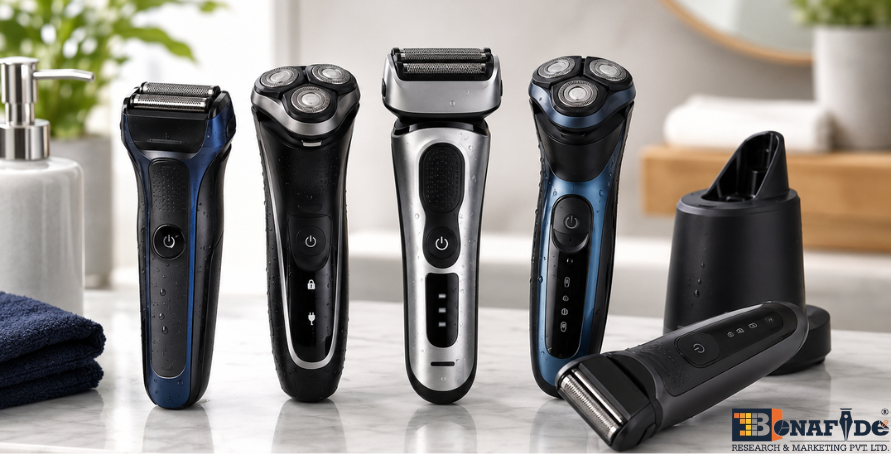
Foil shavers have established themselves as the leading product type in the global
electric shavers market because they successfully combine precision, comfort, and technological innovation, making them suitable for a wide variety of consumers across different regions. Their operating mechanism, which uses oscillating blades positioned beneath a thin perforated metal foil, enables facial hair to be cut extremely close to the skin while minimizing direct blade contact. This design significantly reduces the risk of cuts, razor burn, and skin irritation, making foil shavers particularly attractive for individuals who shave frequently or have sensitive skin. Manufacturers such as Braun and Panasonic have continuously improved foil shaving technology by introducing intelligent beard-density sensing, high-speed linear motors, flexible shaving heads, precision cutting elements, waterproof wet-and-dry operation, and automatic cleaning systems that enhance both shaving efficiency and user comfort. Braun's advanced foil systems, for example, are designed to capture more hair in fewer strokes while automatically adjusting
motor power according to beard density, reducing repeated passes and helping protect sensitive skin. These innovations have strengthened consumer confidence and encouraged replacement purchases as users upgrade to more advanced models. Foil shavers are also widely used by professional barbers for finishing fades, neckline detailing, and achieving clean, smooth facial results, reinforcing their reputation for precision grooming. The growing popularity of premium personal care products, rising grooming awareness among both younger and working-age consumers, and expanding availability through supermarkets, specialty stores, electronics retailers, and e-commerce platforms have further accelerated adoption worldwide.
According to the research report "Global Electric Shavers Market Outlook, 2031," published by Bonafide Research, the Global Electric Shavers market was valued at more than USD 14.59 Billion in 2025, and expected to reach a market size of more than USD 20.13 Billion by 2031 with the CAGR of 5.65% from 2026-2031. E-commerce marketplaces have become the fastest-growing distribution channel in the global electric shavers market as digital commerce continues to reshape how consumers discover, evaluate, and purchase personal grooming products. Unlike traditional retail stores, online platforms enable consumers to compare hundreds of
electric shaver models across multiple brands, price ranges, and technical specifications within minutes. Detailed product descriptions, high-resolution images, demonstration videos, verified customer reviews, and expert ratings help buyers make informed purchasing decisions without visiting physical stores. Leading global brands such as Philips, Braun, Panasonic, Remington, and Wahl have significantly expanded their online presence by partnering with major marketplaces while simultaneously strengthening direct-to-consumer digital sales channels. Manufacturers increasingly launch new products, exclusive bundles, and promotional campaigns online, allowing them to reach consumers faster and collect valuable customer insights. The rapid growth of smartphone usage, secure digital payment systems, and improved
logistics infrastructure has further accelerated online purchasing by making transactions simple, reliable, and accessible across both developed and emerging economies. Global marketplaces such as Amazon, Alibaba, Flipkart, Mercado Libre, Lazada, and regional platforms have expanded access to premium grooming products even in smaller cities where specialized electronics retailers may be limited. Consumers also benefit from competitive pricing, seasonal discounts, cashback offers, installment payment options, hassle-free return policies, and fast home delivery, making
online shopping increasingly attractive for higher-value grooming appliances. Continuous investment in omnichannel retail strategies, personalized shopping experiences, and advanced digital marketing ensures that e-commerce marketplaces remain the fastest-growing distribution channel for electric shavers worldwide.
Cordless electric shavers have become the preferred power source worldwide as consumers increasingly prioritize convenience, portability, and efficient grooming solutions. Advances in
lithium-ion
battery technology have transformed rechargeable shavers by enabling longer operating times, faster charging, and consistent motor performance throughout a shaving session. Many modern models can now deliver multiple shaves on a single charge and offer quick-charge functionality that provides enough power for a complete shave within minutes. This has made cordless devices particularly attractive for busy professionals, frequent travelers, and consumers seeking flexible grooming routines. Leading manufacturers such as Philips, Braun, Panasonic, and Remington continue introducing cordless models equipped with waterproof wet-and-dry operation, flexible shaving heads, precision trimmers, digital battery indicators, travel locks, and ergonomic designs that enhance comfort and usability. These innovations have shifted consumer expectations toward rechargeable devices that combine high performance with everyday convenience. Cordless shavers also eliminate cable restrictions around bathroom mirrors and sinks, improving maneuverability when shaving difficult facial contours. The growing popularity of business travel, tourism, hybrid work arrangements, and mobile lifestyles has further increased demand for lightweight grooming appliances that can be easily packed and recharged in different locations. E-commerce platforms and organized retail networks have accelerated adoption by making premium cordless models and replacement accessories widely accessible across developed and emerging markets. Manufacturers are also improving battery longevity and charging efficiency to support longer product life and reduced maintenance, aligning with increasing consumer interest in durable and sustainable personal care products.
Men continue to represent the leading end-user segment in the global electric shavers market because facial hair grooming is a recurring necessity that creates consistent demand for electric shaving devices. Unlike many other personal care products that are used occasionally, electric shavers are often incorporated into daily or weekly grooming routines by millions of men for maintaining clean-shaven appearances, trimmed beards, mustaches, and sideburns. The increasing emphasis on professional appearance,
personal hygiene, and self-care has further strengthened the adoption of electric shavers across developed and emerging economies. Manufacturers such as Philips, Braun, Panasonic, Remington, and Wahl primarily design their product portfolios around male grooming needs, introducing innovations including precision beard trimmers, flexible shaving heads, high-speed motors, waterproof wet-and-dry operation, beard-density sensing technology, ergonomic handles, and long-lasting rechargeable lithium-ion batteries. These features allow users to perform multiple grooming tasks with a single device while improving comfort and reducing skin irritation. Professional barbershops and grooming salons also extensively use electric shavers for finishing, detailing, and beard styling, increasing consumer familiarity with advanced shaving technologies and encouraging home adoption. Social media, fashion trends, celebrity influence, and digital grooming content have further elevated awareness of premium grooming products among younger male consumers worldwide. In addition, expanding e-commerce platforms and organized retail networks have made electric shavers more accessible by offering a wide range of products, customer reviews, demonstrations, and replacement accessories. Continuous technological advancements, increasing investment in premium grooming appliances, and the growing acceptance of self-care as part of everyday routines continue to reinforce men's leadership in the global electric shavers market.
Premium electric shavers are experiencing rapid growth globally as consumers increasingly view grooming appliances as long-term personal care investments rather than basic shaving tools. Changing lifestyle patterns, rising grooming awareness, and stronger preference for high-quality personal care products are encouraging users to choose advanced electric shavers equipped with innovative technologies. Premium models typically offer features such as intelligent beard-density sensors, adaptive shaving systems, high-speed motors, flexible shaving heads, waterproof wet-and-dry functionality, precision trimming attachments, and advanced battery technologies that improve overall user experience. Leading manufacturers including Philips, Braun, Panasonic, Remington, and Wahl continue strengthening their premium product portfolios by focusing on comfort, efficiency, and personalized grooming solutions. For example, Philips has introduced premium electric shavers featuring SkinIQ technology that uses intelligent sensors to adapt shaving performance according to skin and hair conditions, improving comfort and reducing irritation. The expansion of e-commerce has further accelerated premium electric shaver adoption by allowing consumers to compare advanced features, read reviews,
watch product demonstrations, and purchase flagship models from global brands more easily. Online platforms have also enabled manufacturers to directly promote premium innovations and educate consumers about the benefits of upgrading from basic devices. In addition, social media influencers, professional barbers, and grooming experts frequently showcase high-end grooming technologies, increasing awareness among younger consumers. Continuous innovation in smart grooming, battery performance, skin-protection features, and multifunctional designs is strengthening consumer interest in premium electric shavers, making this price segment the fastest-growing category in the global electric shavers market.

















 We are friendly and approachable, give us a call.