

Top 6 Companies in Global Lighting fixtures Market
Global Lighting fixtures Market is anticipated to cross USD 190 Billion by 2029, increasing from USD 134 Billion in 2023.

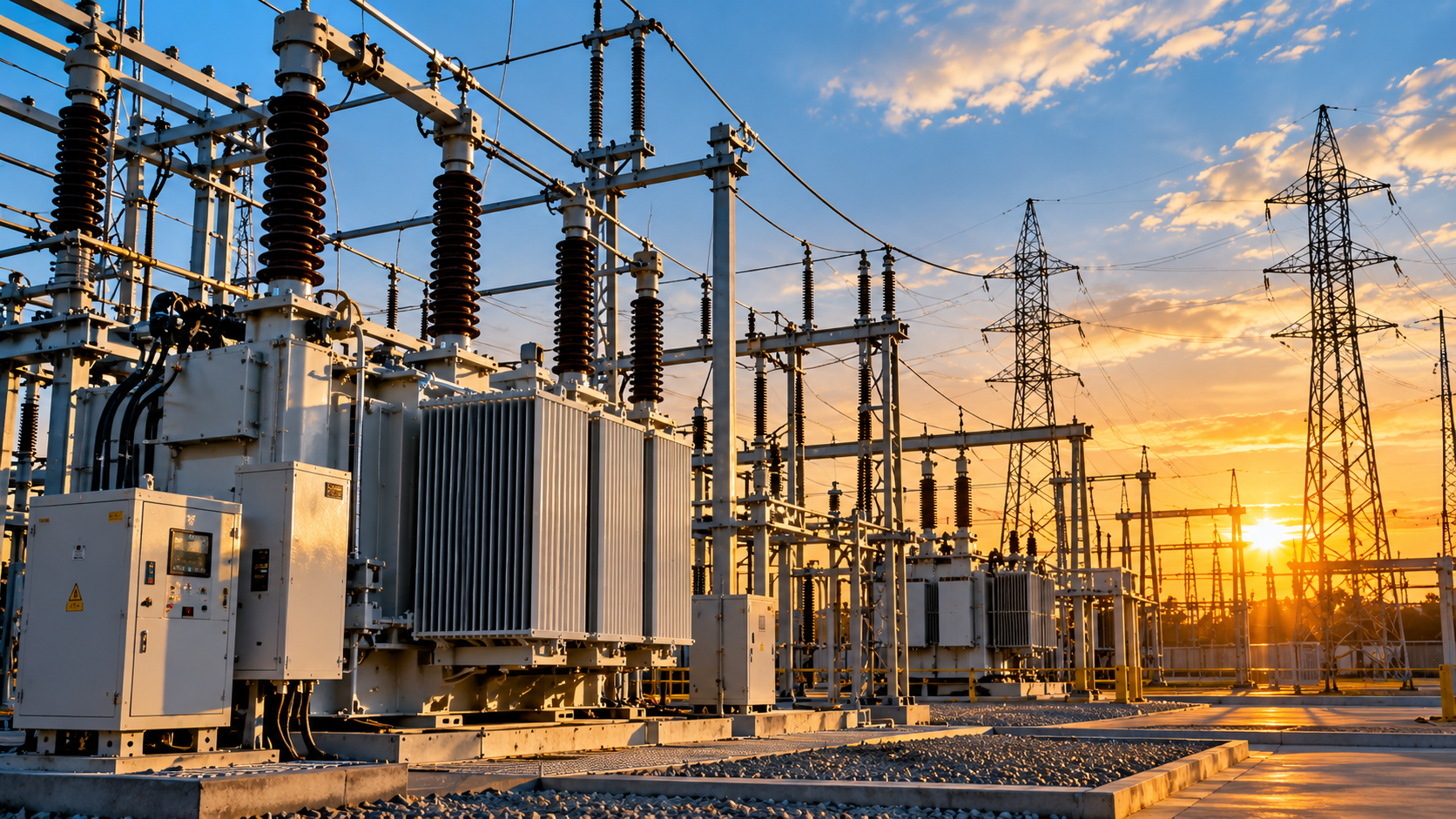
The power quality equipment industry is converging on a single operational premise: the disturbances that matter most are the ones that have not yet happened. Machine learning models, trained on waveform data and grid topology, now classify harmonic events, forecast voltage sags, and flag inverter degradation before a facility trips. The Electric Power Research Institute formalized this shift in March 2025, launching the Open Power AI Consortium alongside Microsoft and more than thirty energy companies, including Duke Energy, Exelon, Southern Company, and the Tennessee Valley Authority, to build an open AI model for the power sector and validate predictive maintenance applications in a shared sandbox environment. EPRI Fellow Mark McGranaghan described the consortium’s practical focus at Enlit Europe 2025, pointing to predictive maintenance and generative AI as near-term applications reshaping grid operations. The stakes are no longer theoretical.
The North American Electric Reliability Corporation has warned that periodic, pulse-like AI workloads and fast-ramping power-electronic loads are primary drivers of modern grid instability, noting that UPS systems and rectifiers react far faster than traditional industrial demand. A July 2024 sequence of short voltage dips on a 230 kV line in the Eastern Interconnection triggered roughly 1,500 MW of data center load to disconnect, an event that exposed the gap between conventional protection and digital-era load behavior. Against this backdrop, analytical capability has become the differentiator. The National Renewable Energy Laboratory’s Energy Systems Integration Facility supported an AI method for detecting high-impedance faults with 90 percent accuracy, and the Department of Energy’s Pacific Northwest National Laboratory introduced ChatGrid, a natural-language interface that lets operators query power flow and voltage conditions in real time. CIGRE’s 2025 symposium program placed power quality performance and AI tools for operation and maintenance in the same technical session, a structural signal that the research community now treats intelligence and power quality as inseparable.
Monitoring Becomes Intelligence
The equipment itself is changing character. A power quality meter once recorded disturbances after the fact; an AI-enabled analyzer correlates those disturbances with topology, load behavior, and inverter switching patterns to produce a forward-looking risk signal. A systematic review published in IEEE Access in January 2025 surveyed AI applications across detection, classification, and improvement, identifying converter control for renewable energy sources as a critical underdeveloped frontier. A separate IEEE Access study demonstrated that convolutional neural networks can classify seventeen distinct power quality disturbance classes with 99.39 percent accuracy, including under noisy conditions, by examining waveform images rather than relying on manually engineered features. Graph neural networks are now being applied to distribution networks to detect, classify, and localize disturbances using Waveform Measurement Units, leveraging the topological structure that conventional meters ignore. Neural network state estimation offers a further step change: research presented at a May 2025 conference showed accurate harmonic and transient estimation on a 44-busbar CIGRE low-voltage reference grid using only three physical power quality meters, suggesting that software can compensate for sparse hardware deployment in complex distribution networks. The implication for equipment economics is direct. Monitoring density no longer scales linearly with capital expenditure, and the value of a meter shifts from measurement to inference.
Forecasting Harmonics in Inverter-Dominated Grids
Predictive capability is proving most consequential where renewable integration has outpaced conventional power quality analysis. Bayesian neural networks trained on National Renewable Energy Laboratory grid voltage and current data now forecast harmonic distortions with quantified prediction uncertainty, addressing the stochastic behavior that deterministic fast Fourier transform methods cannot capture under variable renewable output. CIGRE’s low-voltage reference grid research achieved 100 percent validation accuracy in locating failures and power quality issues by analyzing third-harmonic amplitude across buses, a proof of concept for topology-aware diagnostics. These methods matter because the growth of inverter-based resources has made harmonic behavior nonlinear and condition-dependent; a filter tuned for nominal conditions may underperform when irradiance fluctuates or wind speed shifts. AI models that learn the relationship between weather, generation output, and harmonic spectra allow operators to adjust compensation dynamically rather than oversizing passive filters.
Association-Led Validation and the Consortium Model
The Open Power AI Consortium represents a deliberate institutional response to the validation gap. Individual utilities can train models on their own data, but the resulting tools often fail to generalize across regions, voltage classes, and equipment vendors. The consortium’s sandbox environment, developed with utilities, startups, academia, and national laboratories, is designed to test AI applications against shared datasets before commercial deployment. Founding members span North America, Europe, the Middle East, and Asia, including RTE, KEPCO, ENOWA, MISO, the New York Power Authority, and the Saudi Electricity Company. This geographic breadth matters because power quality phenomena are shaped by grid architecture and regulatory regime; a model validated on North American transmission dynamics requires adaptation for European distribution codes or Middle Eastern load profiles. The consortium’s open-source orientation also lowers the entry barrier for smaller utilities that cannot fund proprietary AI development, potentially accelerating adoption beyond the largest vertically integrated players.
Operator Interfaces and the Human-in-the-Loop Question
Predictive analytics do not remove the operator from the decision chain; they change the operator’s relationship with data. ChatGrid’s natural-language interface allows users to ask spoken questions about power flow and voltage characteristics and receive visual and text-based answers in real time, a deliberate design choice that complements human judgment rather than replacing it. The DOE’s fiscal year 2025 stewardship summary documented an AI method for high-impedance fault detection at 90 percent accuracy, alongside a grid controls demonstration in Connecticut and power quality validation work with CorePower’s flagship inductor, illustrating that the research portfolio spans detection, control, and hardware verification rather than analytics alone. This combination matters for adoption. Utilities remain conservative about autonomous action on the grid, and AI tools that explain their outputs and leave final authority with operators face fewer regulatory and cultural barriers than black-box control systems.
The Competitive Implication
For equipment manufacturers, the trend reframes where value accumulates. A meter that measures voltage and current is a commodity; a meter that predicts which feeder will experience a resonant harmonic condition next Tuesday is a service. The firms best positioned will be those that pair waveform capture hardware with models trained on diverse grid conditions and validated through consortium or laboratory testing. The Open Power AI Consortium’s explicit goal of reducing operating costs while improving the customer experience signals that utilities expect AI to deliver measurable economics, not pilot-project novelty. Predictive power quality is moving from research literature to procurement specification, and the vendors that treat analytics as an integrated equipment capability rather than an optional software layer will define the next phase of the market.
See how you can up your career status

Global Lighting fixtures Market is anticipated to cross USD 190 Billion by 2029, increasing from USD 134 Billion in 2023.
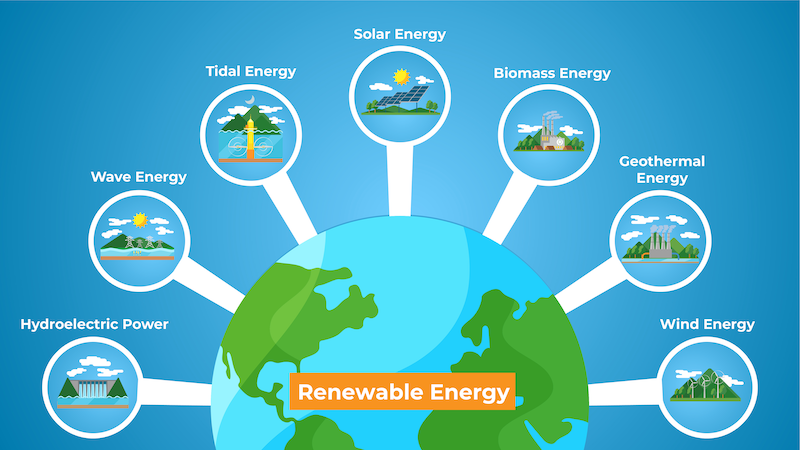
Global Renewable Energy Market Outlook, 2030 is projected to reach market size of USD 1890 Billion by 2030 increasing from USD 1091.21 in 2024
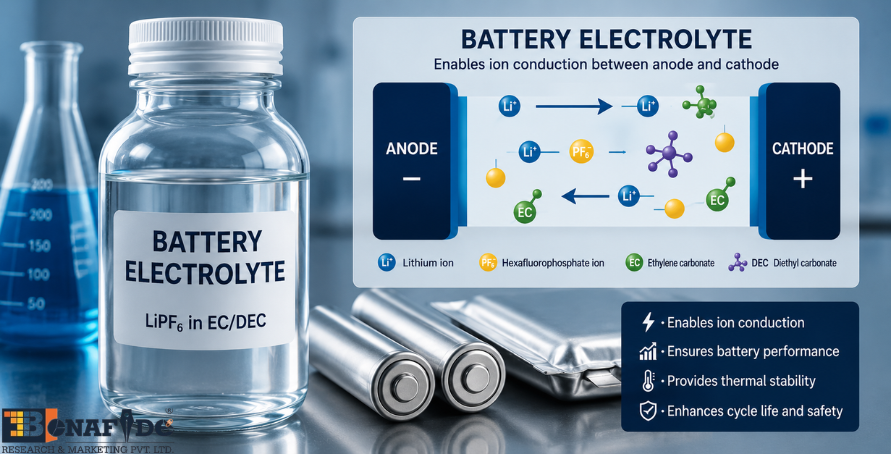
The Global Battery electrolyte market was valued at more than USD 13.41 Billion in 2025, and expected to reach a market size of more than USD 26.16 Billion by 2031 with the CAGR of 12.09% from 2026-2031.

Discover how solar thermal collectors are decarbonising industrial heat, district heating, and agriculture with 2025 data from IEA SHC, IRENA, and national agencies.
 We are friendly and approachable, give us a call.