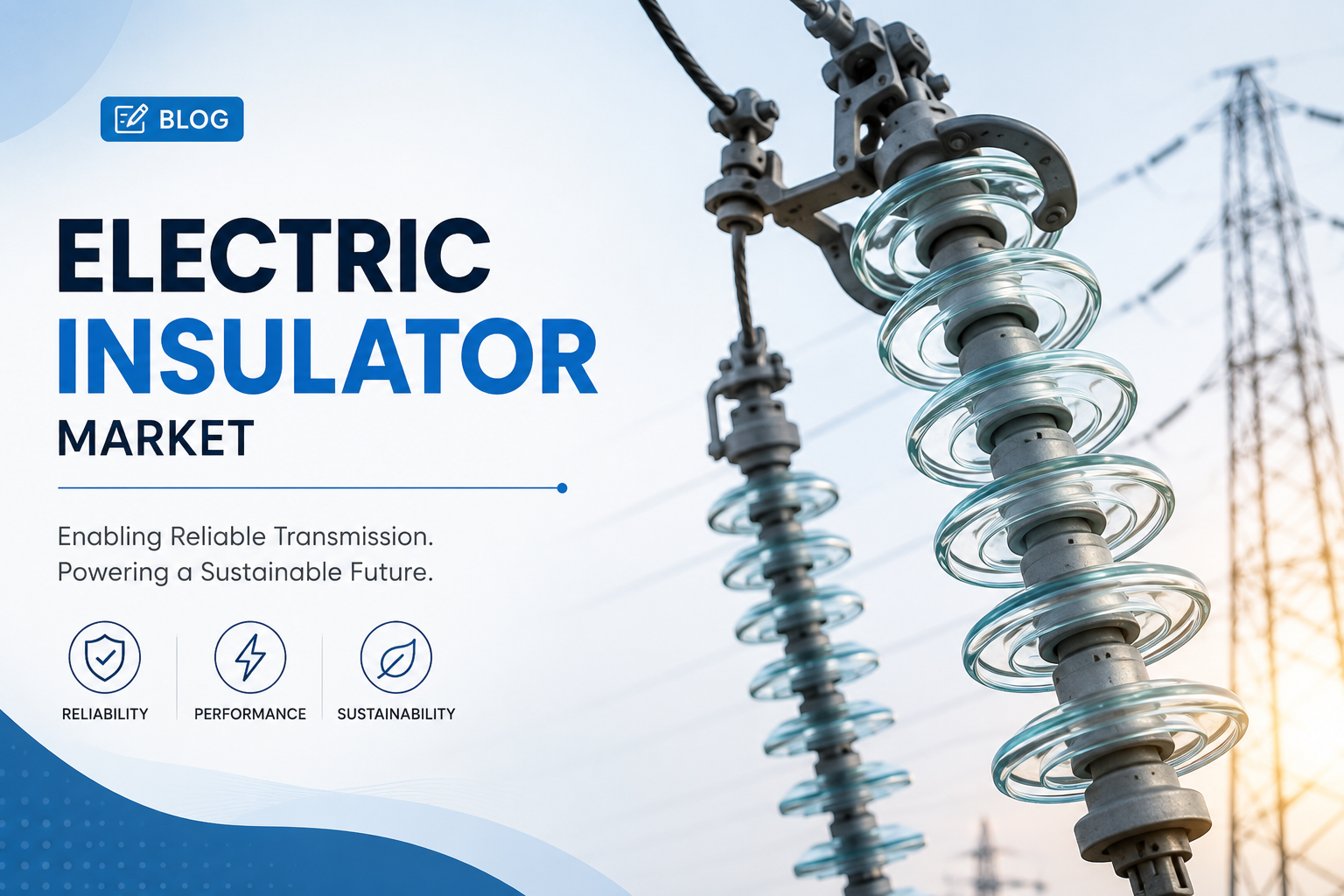
The global electric insulator market is undergoing a profound transformation, driven by one of the most significant energy transitions in modern history. At the heart of this evolution lies the unprecedented expansion of renewable energy infrastructure. As the world pivots away from fossil fuels toward solar, wind, and other clean energy sources, the demand for reliable, high-performance electric insulators has surged to record levels.
The Scale of the Transformation
The numbers tell a compelling story. The Global Electric Insulator market was valued at approximately USD 14.82 billion in 2025 and is projected to reach USD 21.58 billion by 2031, reflecting a compound annual growth rate (CAGR) of 6.63%. This growth trajectory is directly attributable to accelerating renewable-energy integration and unprecedented grid-modernization spending.
How Renewable Energy Drives Insulator Demand
The Connection Imperative: Every new solar farm, wind park, and renewable energy project requires extensive transmission and distribution infrastructure to connect to the grid. The transition toward renewable energy is fueling demand for high-quality insulators that can efficiently transmit power from renewable power plants to the grid. This creates sustained demand for insulators across transmission lines, substations, and distribution networks.
Scale of New Capacity: The expansion of renewable capacity is driving a surge in new grid infrastructure. As more renewable generation comes online particularly offshore wind and green hydrogen projects additional transmission capacity is required, which in turn drives higher insulator demand. Every new renewable project represents a fresh demand pool for millions of insulators.
Specialized Requirements: Renewable energy applications often demand insulators with specific characteristics. Offshore wind systems require corrosion-resistant materials capable of withstanding harsh marine environments. High-voltage direct current transmission systems, essential for transporting renewable power across vast distances, require advanced insulation solutions. This has spurred innovation in composite materials and polymer chemistries, enabling lighter components with improved mechanical resilience and superior hydrophobicity.
Smart Grid Integration: The emergence of smart grids, which allow for real-time monitoring and control of electric systems, is increasing the demand for stable and long-lasting insulator components. Renewable energy integration is driving the deployment of smart grid technologies, which in turn creates demand for advanced insulation systems.
Major Segments
Composite and polymer insulators represent the fastest-growing material segment, scaling at a remarkable CAGR. This growth is driven by their superior performance characteristics: lower weight (80-90% lighter than porcelain), hydrophobic surface behavior that repels moisture, resistance to shattering, and reduced maintenance needs.
Transmission lines and cables held the largest market share due to ongoing infrastructure expansion and demand for high-voltage transmission. The rapid build-out of >220 kV HVDC links, particularly in China and India, is driving demand for specialized UHV insulators. Rising technical barriers in UHV applications are gradually concentrating revenue among qualified manufacturers.
Transmission Lines & Cables segment held the largest market share, driven by ongoing infrastructure expansion and demand for high-voltage transmission. The commercial and industrial segment is expected to grow as high-voltage composite insulators are favored for their lightweight design, high mechanical strength, and superior pollution resistance.
Asia Pacific dominance is supported by continuous grid expansion, large-scale renewable integration, and rising investments in transmission and distribution infrastructure. China's extensive solar panel manufacturing base and India's rapid capacity additions are key drivers. The Asia Pacific composite insulators market alone was valued at USD 1.3 billion in 2025.
Key Drivers Shaping the Market
Grid-Hardening Spend: Utilities worldwide are redirecting budgets toward climate-resilient assets, with T&D outlays in the United States alone reaching USD 50.9 billion in 2023. Capital flows into transmission and distribution upgrades continue to enlarge order books for both traditional ceramic units and next-generation composite designs.
Rail Electrification: The Asian Development Bank's railway upgrades and the EU's Green Deal transport targets are synchronizing a rapid shift from diesel to electric traction along freight arteries. Rail electrification represents a sustained pull factor for the electric insulator market.
Aging Infrastructure Replacement: The need to replace aging transmission lines and conventional insulators to maintain uninterrupted power supply supports market expansion. Aging assets create a replacement market, especially in North America and Europe.





 We are friendly and approachable, give us a call.